“Minutes of Silence for Millions of Lives”: Event Commemorating the Anniversary of the Holodomor of 1932-1933
Admin
27 November 2025
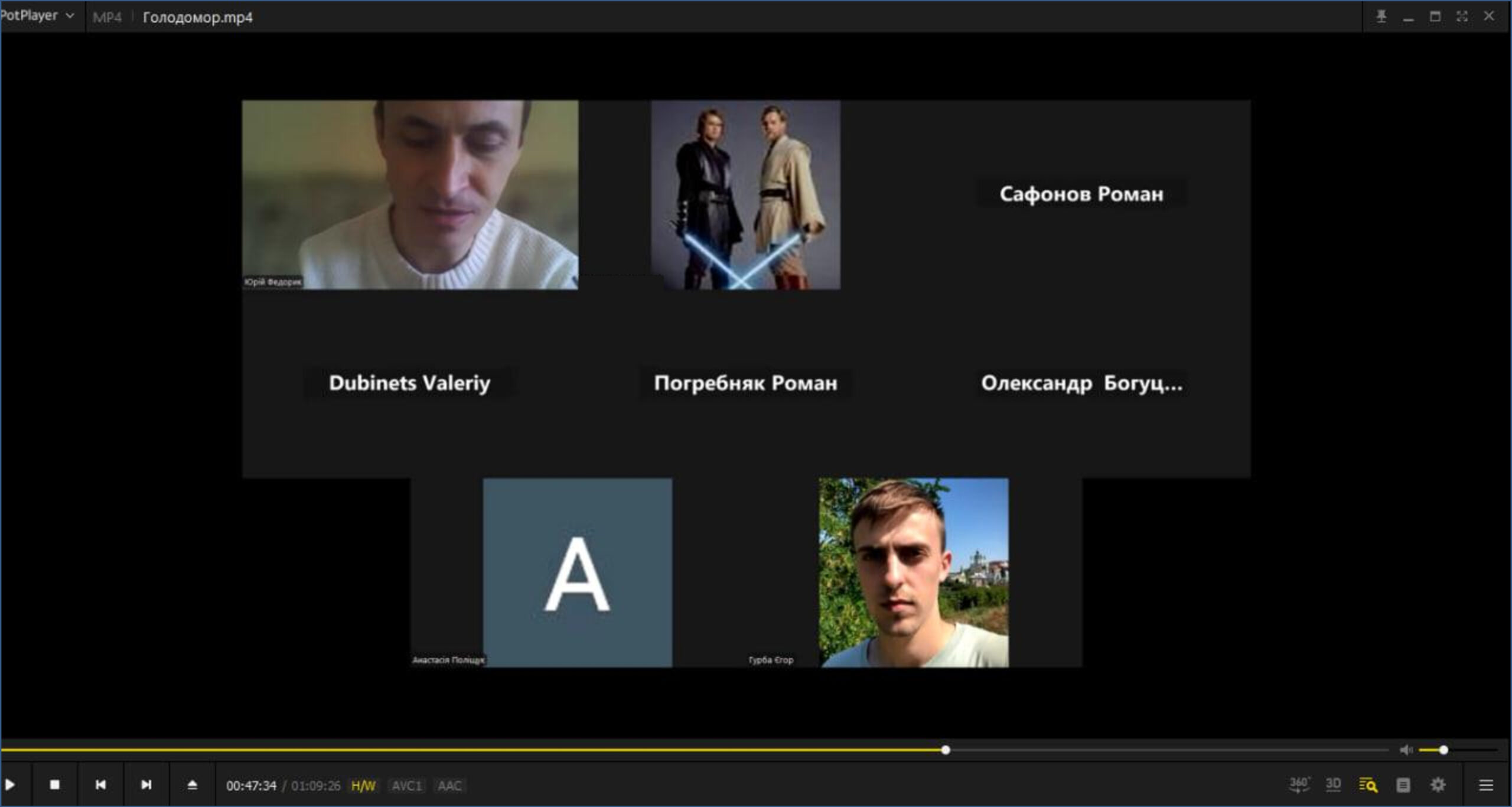
On 24 November 2025, the Department of History and Philosophy held an educational and commemorative meeting dedicated to the 92nd anniversary of the Holodomor genocide of 1932-1933. The event was organised for 1st–4th-year students of the specialities A4.03 “Secondary Education (History and Civic Education)” and B9 “History and Archaeology” and formed part of the department’s systematic work to shape the national memory and historical consciousness of future history teachers and professional historians-researchers.
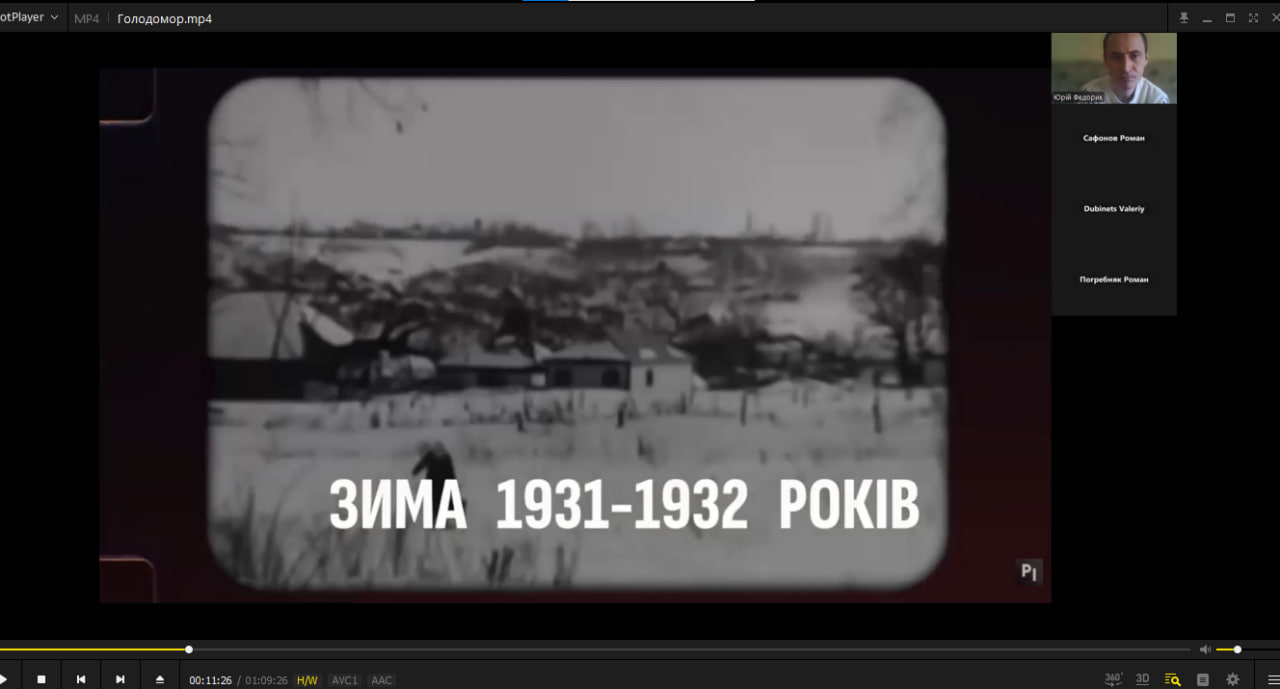
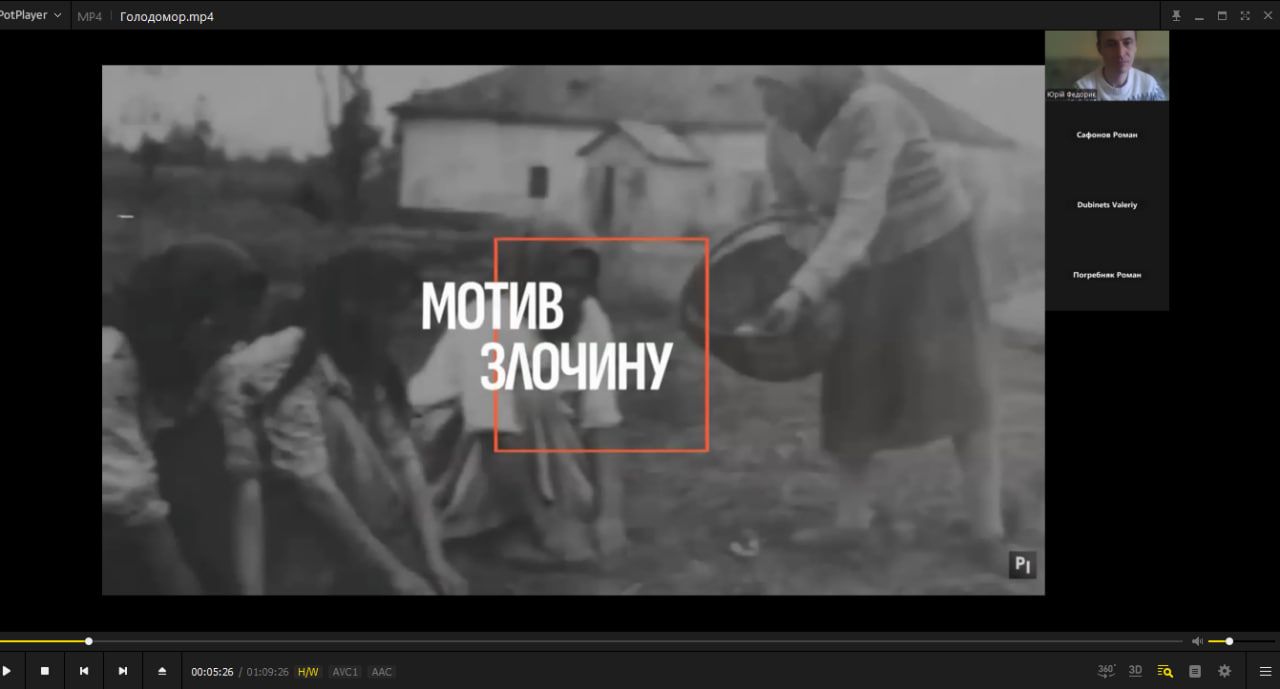
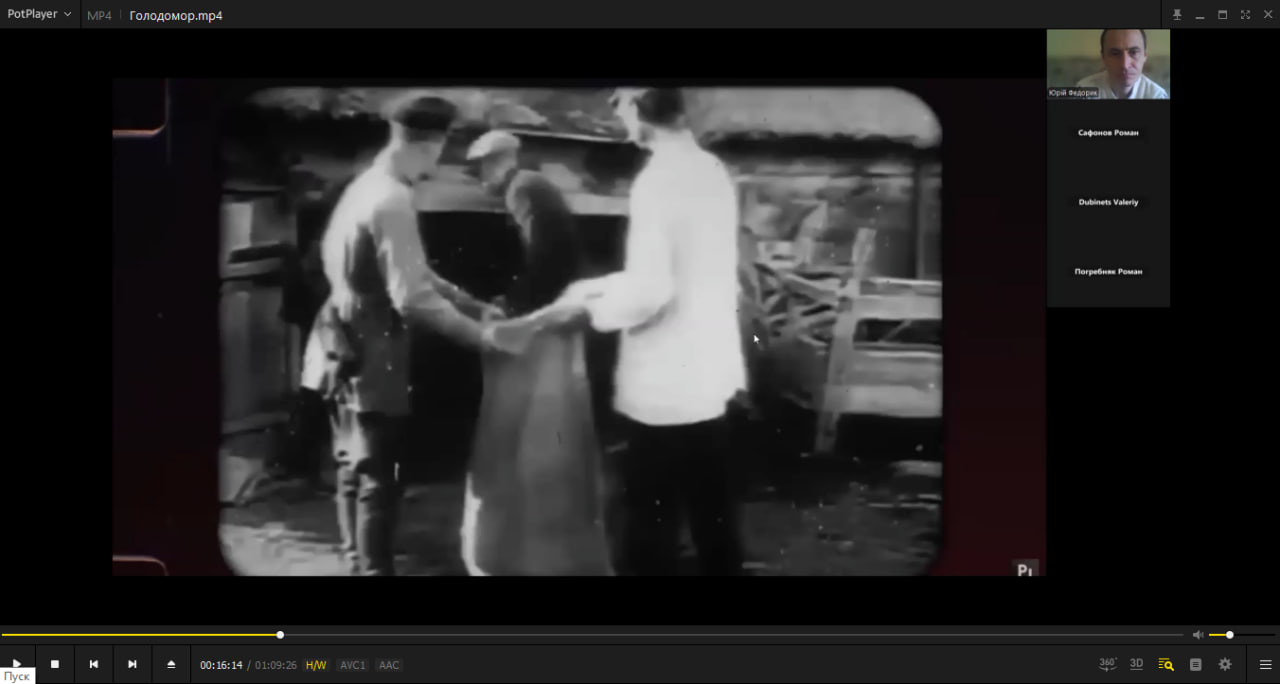
The meeting began with the screening of excerpts from the documentary film “Holodomor” produced by the “Real History” project (hosted by Akim Halimov). The video that the students watched served as an emotional introduction to the topic: testimonies of eyewitnesses, archival photographs, and video documents left no one in the audience unmoved.
This was followed by a short lecture-dialogue that examined key theoretical aspects: the definition of “genocide” (according to the 1948 UN Convention) and “Holodomor” as the genocide of the Ukrainian people (recognised by the law of Ukraine and by more than 30 countries and the European Parliament); stages and trends in the historiography of the Holodomor of 1933: from complete silencing during the Soviet period to open research beginning in the late 1980s, the contribution of the diaspora, the works of Robert Conquest, James Mace, Stanislav Kulchytsky, and contemporary regional studies; specific features of the Holodomor in the Northern Azov region and Berdyansk district (based on the book by Viktoriia Konstantinova and Igor Lyman “Oral History of the Holodomor of 1932–1933 in the Northern Azov Region: The Berdyansk Dimension”).
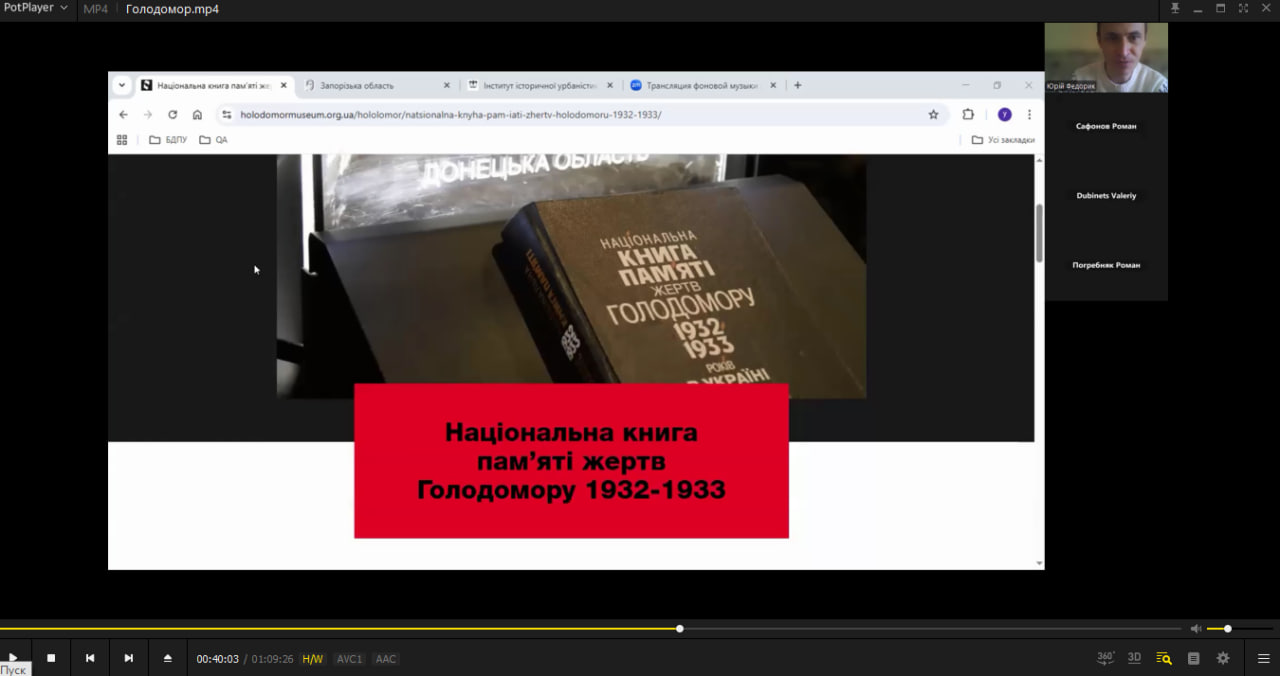
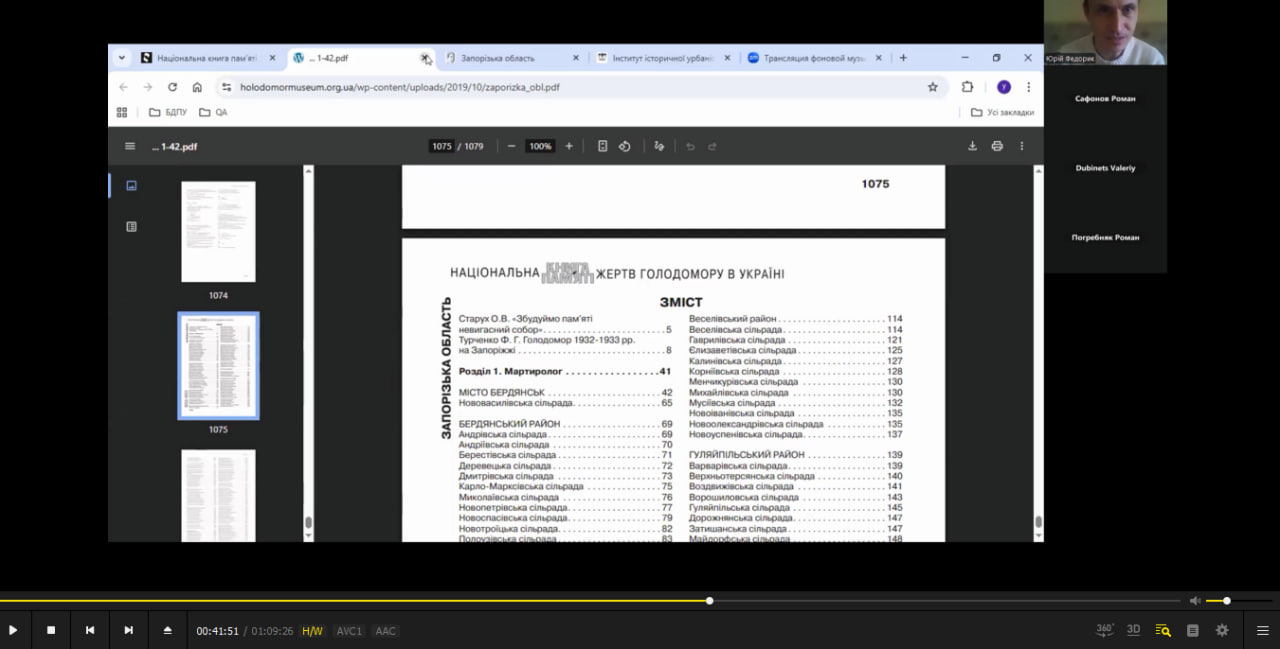
During the meeting, electronic versions of the National Book of Memory of the Victims of the Holodomor of 1932-1933 (the Holodomor Museum website) and the martyrology of Zaporizhzhia Oblast (the “Rehabilitated by History” project) were demonstrated. Future historians were able to see with their own eyes exactly how the names of perished Ukrainians are recorded in historical sources.
The most emotional and topical moment was the final part – an open discussion. Students actively debated how the totalitarian methods of the Soviet authorities in the 1930s – artificial famine, mass terror, harsh propaganda, and complete denial of the crime – bear a striking resemblance to the current practices of the russian federation. Particularly sharp were the remarks that the policy of fear, lies, and historical revisionism, tested in 1932-1933, is once again being used by the kremlin today to justify aggression against Ukraine.
This format – combining contemporary video, a scholarly lecture, and lively dialogue – proved extremely effective. Students training to become future history teachers and professional historians took part in an important meeting that guarantees the sincere and responsible transmission of the Holodomor topic to the next generations.
We remember. We unite. We will prevail.
Yuriy Fedoryk
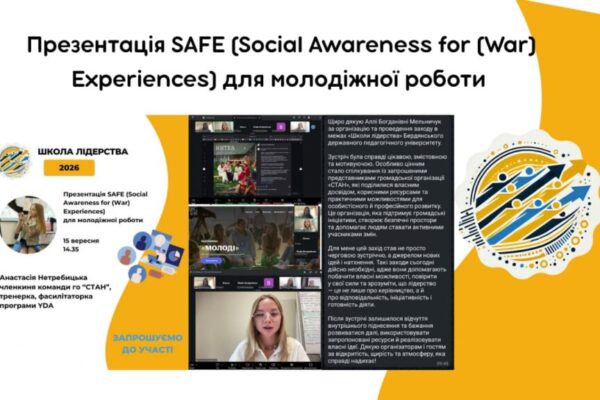
Presentation of SAFE (Social Awareness for (War) Experiences) for Youth Work
In September, the Leadership School of Berdyansk State Pedagogical University…
9 October 2026
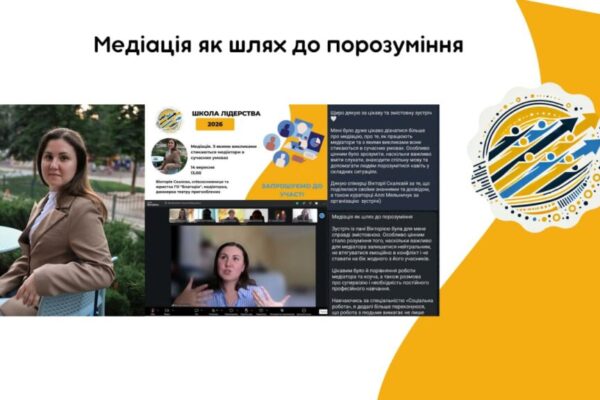
Mediation as a Path to Mutual Understanding
The Leadership School of Berdyansk State Pedagogical University (BSPU) and…
9 October 2026
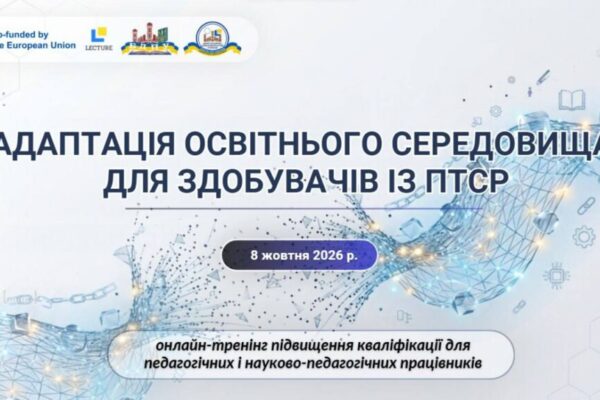
Creating a Safe Learning Environment Together with BDPU: Training on «Adapting Learning for Students with PTSD»
On 8 October 2026, as part of the international Erasmus+…
9 October 2026
Social ranking: what students need to know about the awarding of points
The Student Council of the Faculty of Psychological and Pedagogical…
9 October 2026