
Language Through the Lens of the Sign: A Guest Lecture at BSPU
Admin
15 May 2026
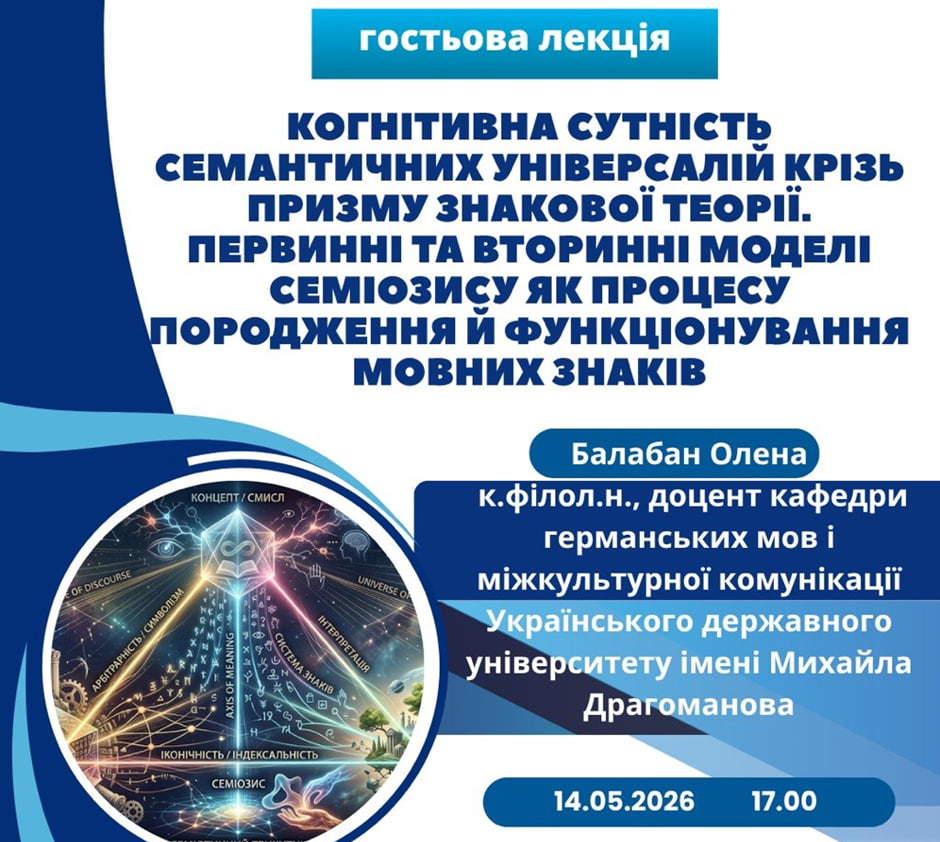
On May 14, 2026, at 5:00 PM, Berdyansk State Pedagogical University hosted a guest lecture titled “The Cognitive Essence of Semantic Universals Through the Lens of Sign Theory.” The Department of Ukrainian Language and Journalism invited the speaker – Olena Balaban, Candidate of Philological Sciences, Associate Professor of the Department of Germanic Languages and Intercultural Communication at Mykhailo Drahomanov Ukrainian State University. The aim of the lecture was to introduce participants to key aspects of linguistics.
The topic of the lecture is extremely relevant in the context of contemporary linguistics, which is increasingly turning to interdisciplinary approaches. Cognitive linguistics, semiotics, and the theory of semantic universals stand at the intersection of linguistics, philosophy, and cognitive sciences, making their study particularly valuable for philologists who seek not only to describe linguistic phenomena but also to understand the underlying mechanisms of their emergence and functioning. In an era of globalization and active intercultural contacts, knowledge of universal linguistic patterns becomes a tool for understanding both one’s own and other cultures.
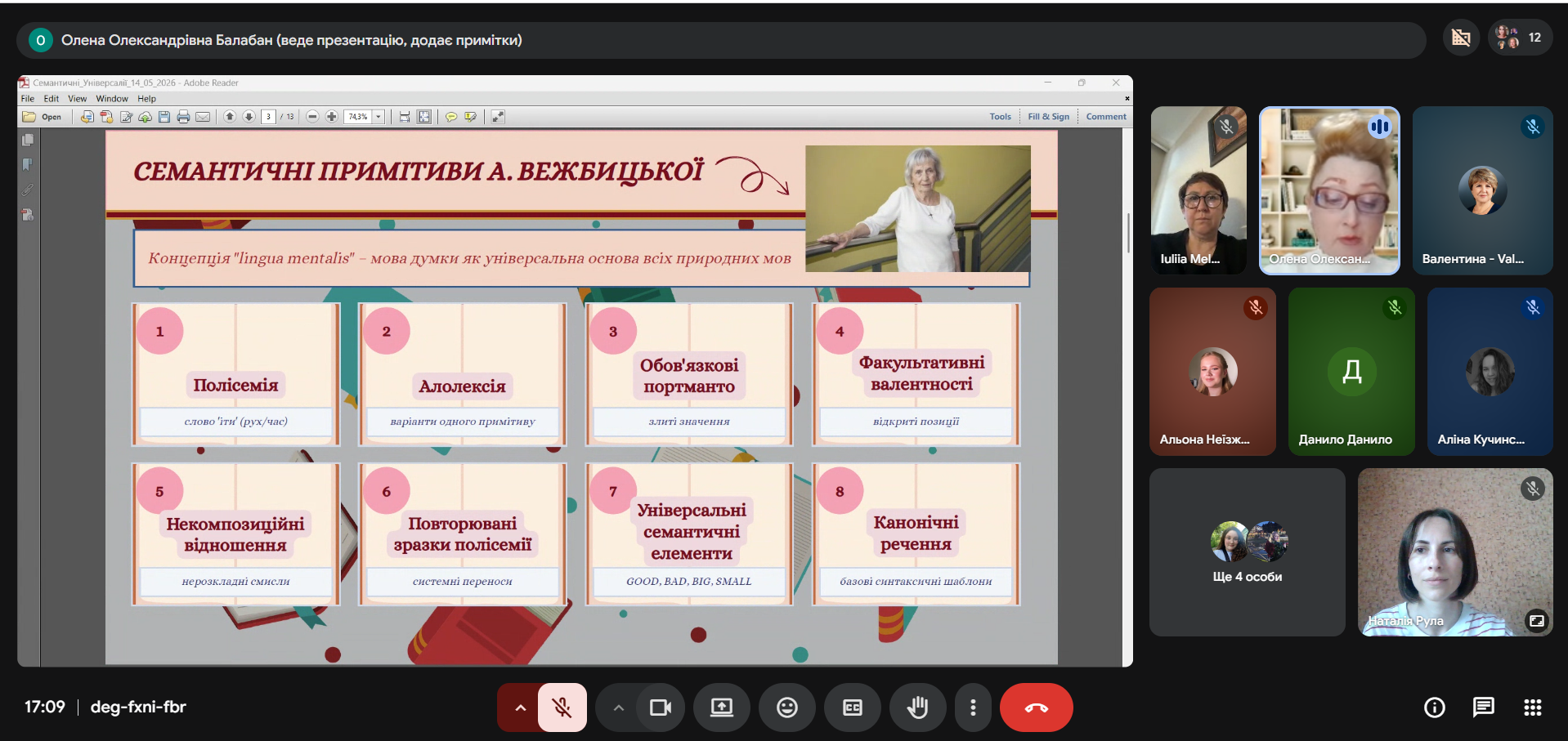
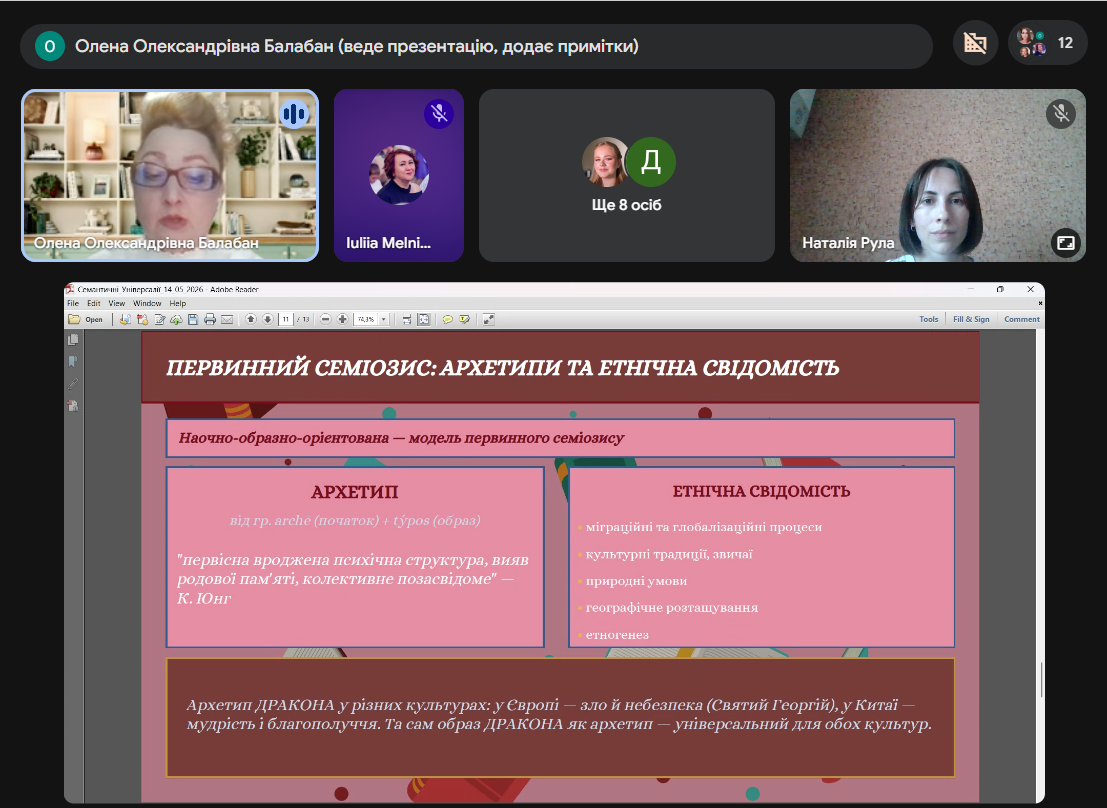
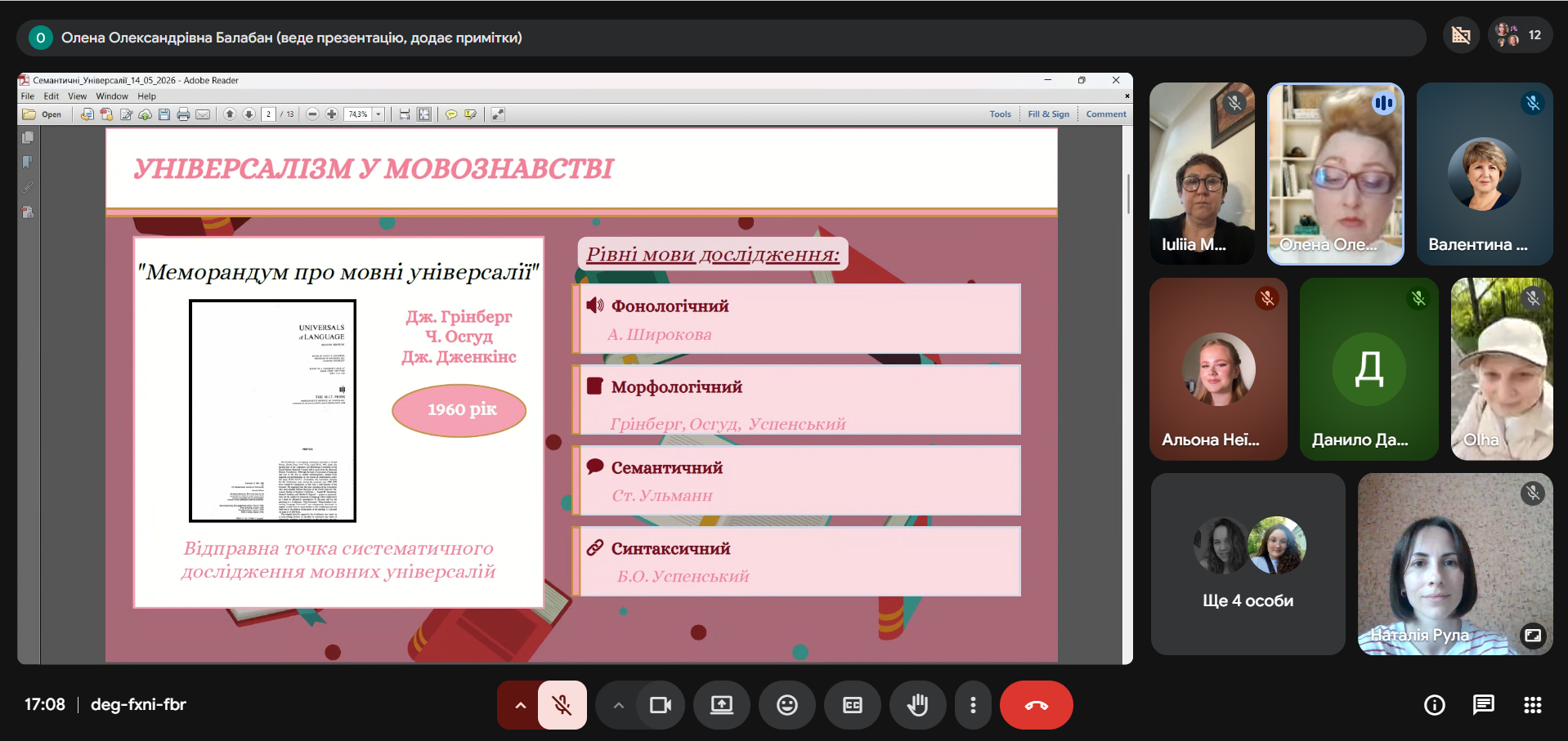
At the beginning of the lecture, the levels of linguistic research were discussed in detail, including phonological, morphological, semantic, and syntactic levels. The speaker then spoke about the semantic primitives of Polish linguist Anna Wierzbicka, which help to understand the structure of language. Next, the types of lexico-semantic universals were examined – those proposed by linguists Sagit Shafikow (universals of the semantic field, universals of field unit relations, and universals of inner form) and Stephen Ullmann (descriptive semantics, historical semantics, and the structure of the lexicon).
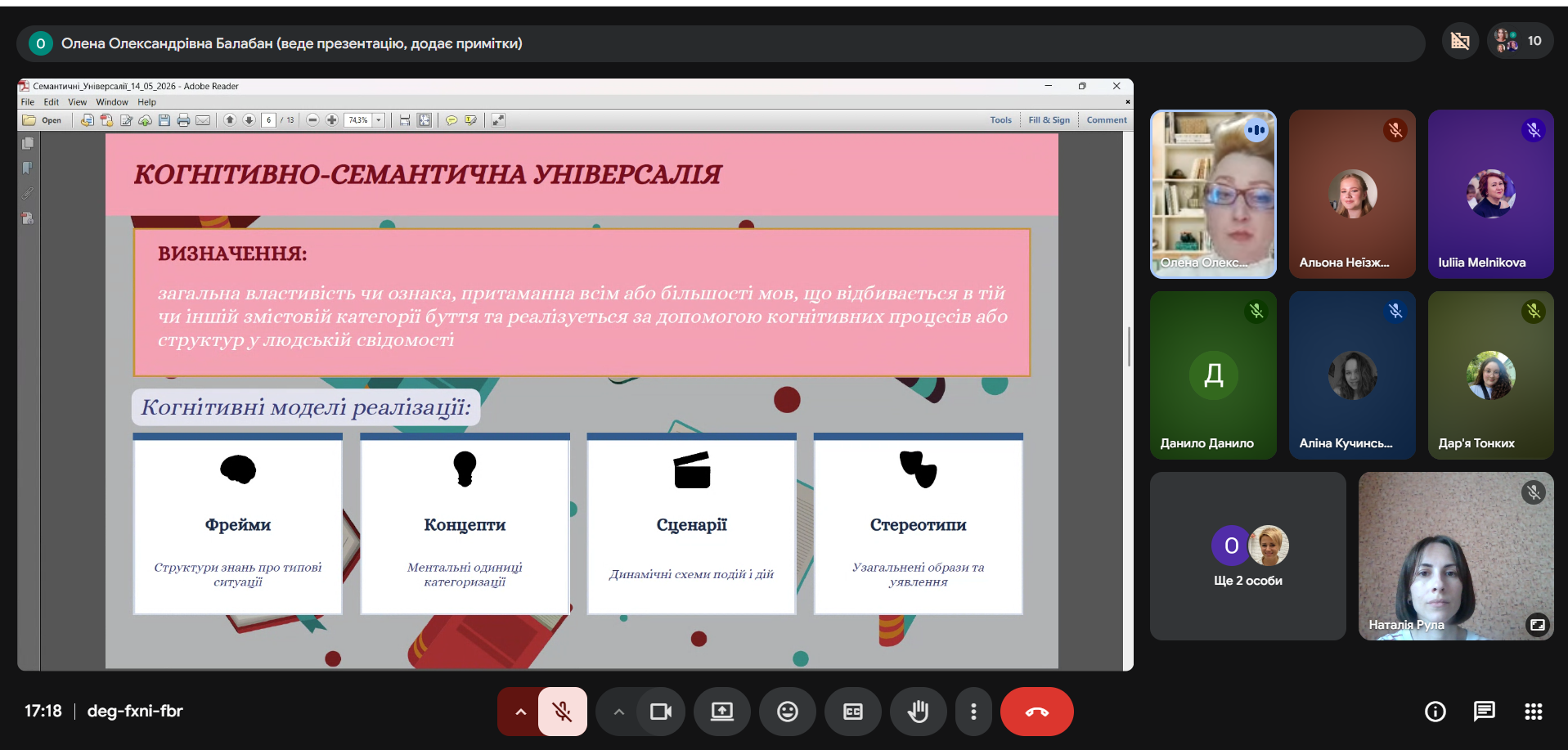
Special attention was given to cognitive models of realization (frames, concepts, scenarios, and stereotypes), the definition of semiotics, and Charles Peirce’s sign system, which includes icons, indices, and symbols.
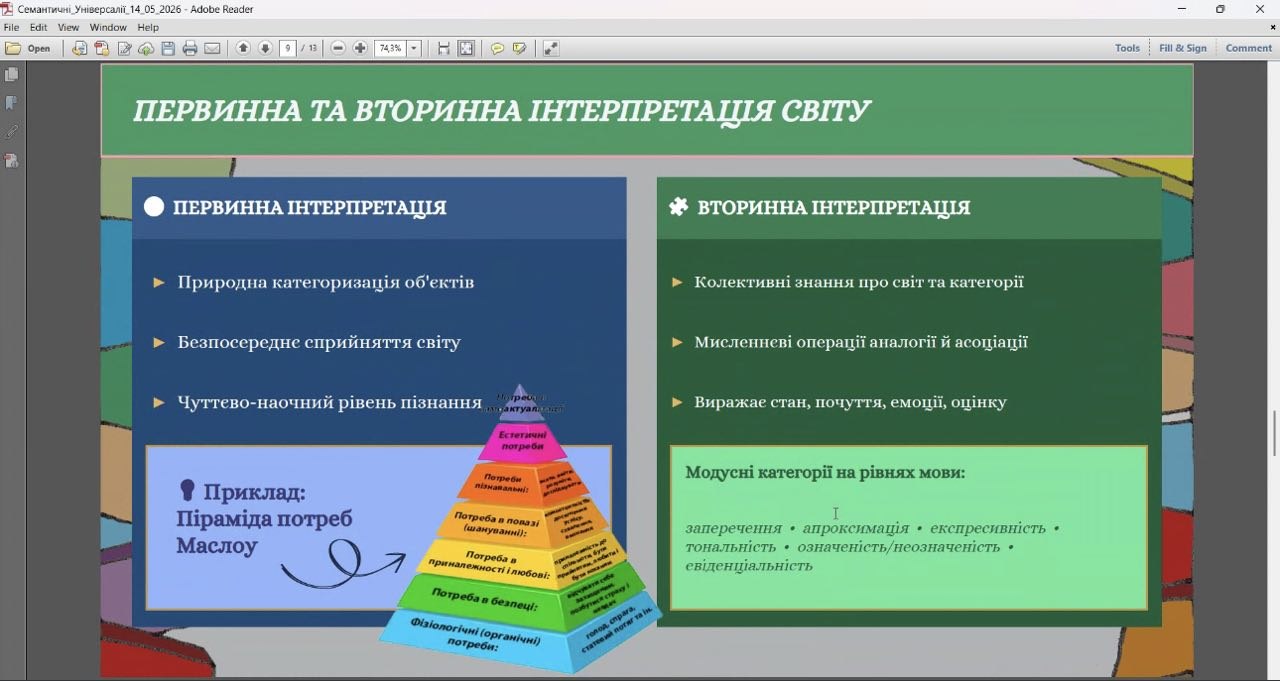
In conclusion, the primary and secondary interpretations of the world were highlighted, along with the components of collective knowledge, primary semiosis (archetypes and ethnic consciousness), and the epistemologically oriented and mentally oriented models of secondary semiosis.
For philologists, sign theory and the concept of semantic primitives open up new research horizons. Understanding how language constructs a picture of the world through frames, concepts, and stereotypes allows researchers to analyze texts at a much deeper level – not only formally, but also substantively, taking into account cultural, historical, and cognitive contexts. This is especially important in translation studies, lexicography, linguistic culturology, and other applied fields of philological science, where a precise understanding of meaning and its boundaries is a fundamental task.
Finally, reflecting on primary and secondary semiosis, archetypes, and ethnic consciousness is of utmost importance for philologists engaged in the study of the Ukrainian language and culture. In today’s world, where questions of linguistic and cultural identity are gaining particular significance, understanding the mechanisms of collective knowledge formation and the linguistic worldview becomes not merely an academic task, but also a matter of social responsibility. This is precisely why lectures such as the one held on May 14, 2026 at BSPU are an important part of the professional training of the modern philologist.
Based on materials from the Department of Ukrainian Language and Journalism
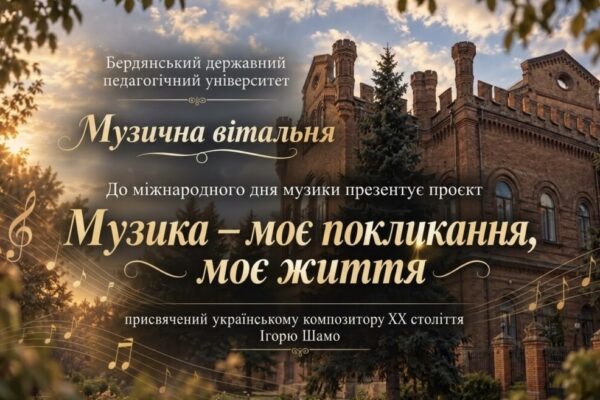
The Department of Theory and Methods of Teaching Arts Disciplines at BSPU Presents a Creative Project for International Music Day. Igor Shamo: “Music Is My Calling, My Life”
Ihor Naumovych Shamo was a prominent Ukrainian composer, virtuoso pianist,…
1 October 2026

The "Iron General" and Future Media Professionals: An Online Meeting with Valerii Zaluzhnyi
Today, September 30, 2026, aspiring media professionals gained a unique…
30 September 2026

Educational practices in the era of artificial intelligence: new opportunities for teachers' professional development
Artificial intelligence is rapidly changing the educational space, offering new…
30 September 2026
Youth Breaking Barriers: BDPU at The Youth All-Ukrainian Forum in Lviv!
On September 18, Lviv University of Trade and Economics became…
29 September 2026