Leadership school: a year of growth, partnership, and new initiatives
Admin
30 June 2026
As the academic year comes to a close, it is time to reflect on the achievements of the Leadership School of the Faculty of Preschool, Special and Social Education. Throughout the 2025–2026 academic year, the School once again served as a dynamic platform where future professionals not only acquired new knowledge but also strengthened their leadership skills, developed active citizenship, and learned how to turn ideas into meaningful initiatives.
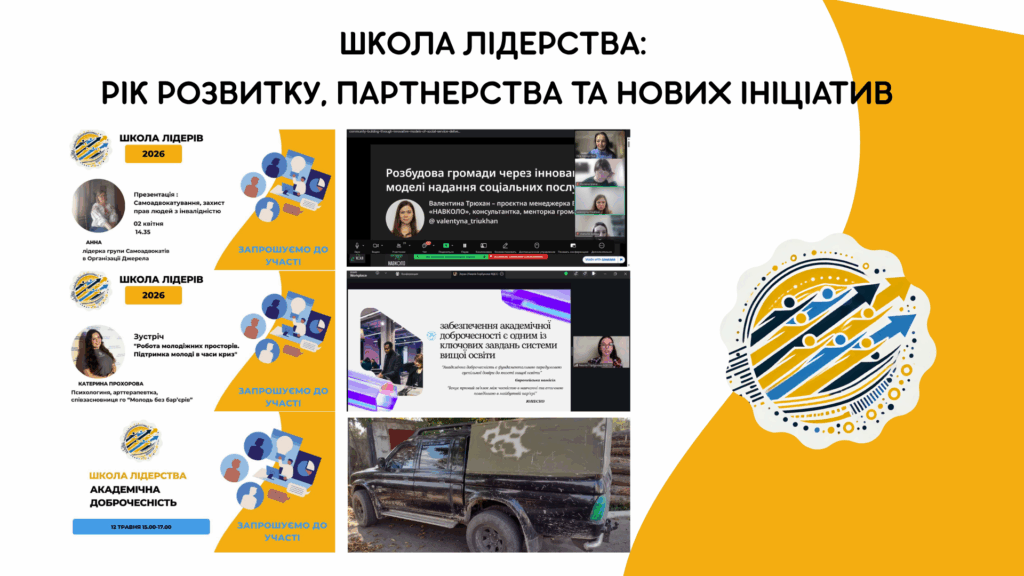
Over the course of the year, the Leadership School hosted 17 thematic sessions addressing current social challenges and professional issues. Participants explored topics such as academic integrity, Ukrainian identity and culture, self-advocacy and the protection of the rights of persons with disabilities, the experiences of Ukrainian refugees abroad, youth spaces and youth support during times of crisis, mediation, innovative models of social service provision, human resource management, community development, support for frontline communities, suicide prevention among wounded military personnel, and the principles of nonviolent communication.
One of the School’s defining features is its combination of academic learning with practical expertise. Professionals from a wide range of fields joined the programme to share their knowledge and experience. Anna Samorai, a self-advocacy leader from the NGO Dzherela, introduced participants to self-advocacy for persons with disabilities. Psychological well-being and personal development were discussed with psychologist and art therapist Kateryna Prokhorova and UNICEF psychologist-tutor Iryna Shevchenko. Mediator Nataliia Titiiova presented practical approaches to mediation, effective communication, and nonviolent communication, while HR Business Partner Olena Taran shared insights into contemporary leadership and human resource management.
Community development and social project management were another important focus of the programme. Bohdan Tkachenko, Head of the Andriivka Rural Military Administration, discussed local governance under wartime conditions. Project manager Valentyna Triukhan introduced participants to modern approaches to community development and project monitoring and evaluation, while civic activist Yelyzaveta Bonchuzhna shared practical experience in supporting communities in southern and eastern Ukraine. Rehabilitation specialist Oleksandr Pasevych, a physical therapist with the Mobile Rehabilitation Team of the Volyn Regional Organization of the Ukrainian Red Cross Society, spoke about rehabilitation and support for military personnel.
A distinctive achievement of the Leadership School was the active involvement of students themselves. Six of the seventeen sessions were entirely designed and delivered by student participants, providing valuable opportunities to strengthen their organisational, communication, and leadership competencies.
Throughout the year, participants also implemented a number of extracurricular initiatives. They took part in the National Radio Dictation of Unity, conducted sessions for an adult Ukrainian Conversation Club led by Iryna Sokolova, organised an online workshop on traditional Ukrainian Easter egg painting (pysanka) and Ukrainian cultural heritage, successfully completed the National Media Literacy Test “Filter,” and one participant created a video for the World Poetry Day competition.
Volunteering remained an integral part of the Leadership School’s activities. As part of developing fundraising and social leadership skills, participants organised a charity campaign to raise funds for the repair of a vehicle used by military medics. Thanks to the support of the university’s students and academic staff, the fundraising campaign was successfully completed, and the funds have already been transferred for the vehicle’s repair.
The outcomes of the Leadership School were presented at a regular meeting of the Employers’ Advisory Board for the interdisciplinary academic programme I10 Social Work and Counselling. Together with external partners, participants discussed further opportunities to strengthen the School as an effective platform for developing leadership potential, strategic thinking, communication skills, emotional intelligence, and adaptability among future professionals.
The Leadership School continues to bring together students, academics, and practitioners around a shared mission: preparing professionals who are ready to act responsibly, initiate positive change, and demonstrate leadership in their professional practice and community development.
The activities of the Leadership School contribute directly to the United Nations Sustainable Development Goals (SDGs), particularly SDG 4 – Quality Education, SDG 10 – Reduced Inequalities, and SDG 16 – Peace, Justice and Strong Institutions.
Based on materials provided by Alla Melnychuk,
Assistant at the Department of Social Work and Inclusive Education,
Coordinator of the Leadership School
From first introduction to partnership: First-year students begin their educational journey
On 1 October 2026, the Department of Social Work and…
5 October 2026
Artificial Intelligence as a Tool for Modernizing the Professional Training of Future Psychologists
The rapid development of generative artificial intelligence opens up new…
5 October 2026
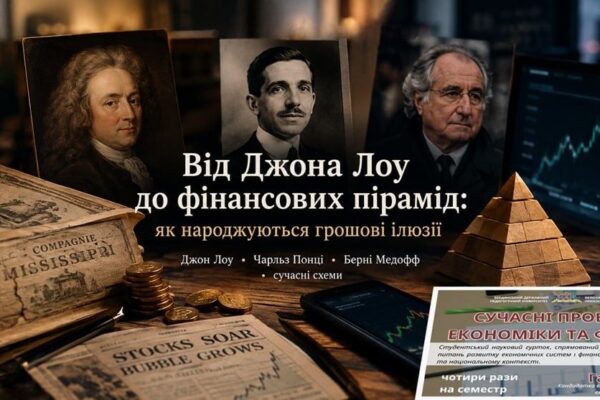
From financial bubbles to modern financial pyramids: money illusions and lessons from history in focus of the scientific club “Current issues of economics and finance”
On September 30, 2026, the next meeting of the Scientific…
5 October 2026
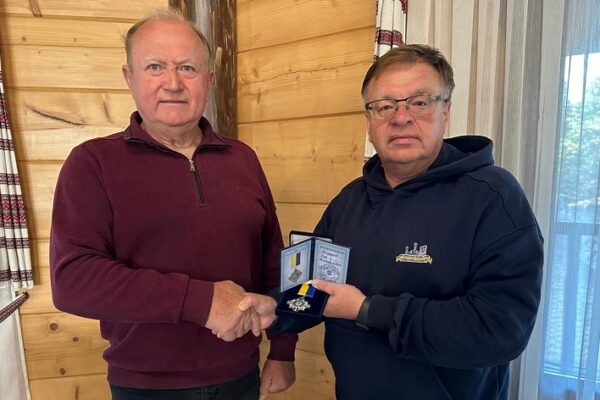
Ihor Bohdanov Awarded the Order "For the Development of Berdyansk District"
Professor Ihor Bohdanov, Rector of Berdyansk State Pedagogical University, has…
5 October 2026