
“Do No Harm”: What Should Journalists Consider When Telling Someone Else’s Story?

Admin
25 November 2026
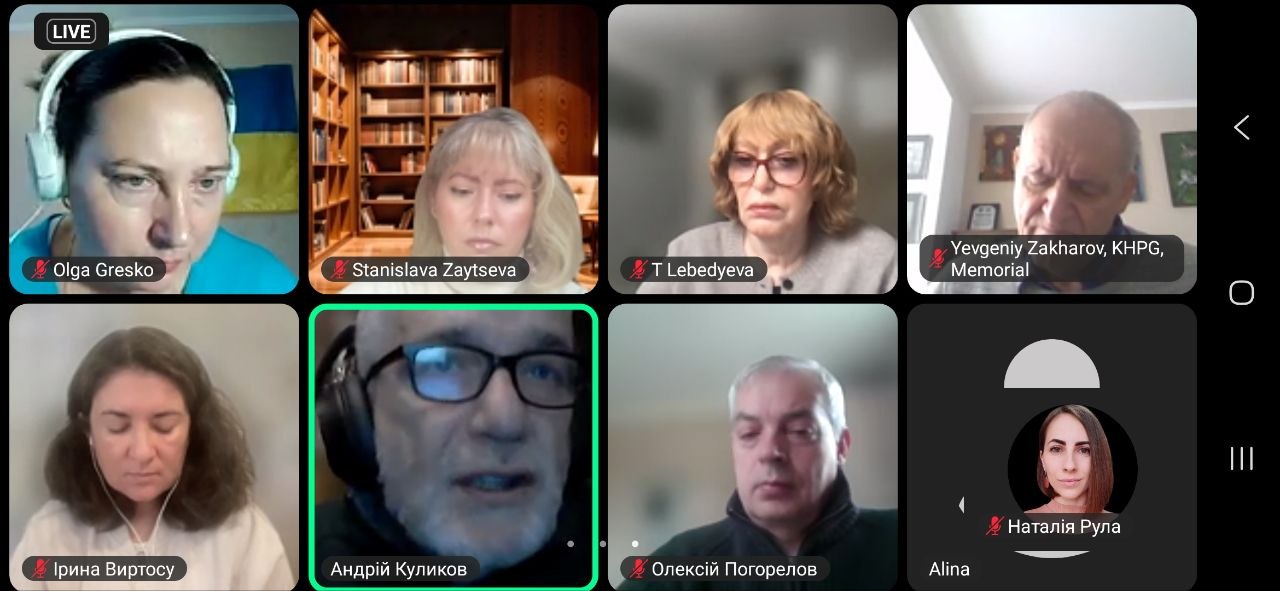
On November 24, an online workshop entitled “Reporting on Human Rights Issues and Human Rights Journalism” was held by Andrii Kulikov, Chair of the Commission on Journalistic Ethics and a media expert. As usual, the event brought together lecturers and journalism students from the Faculty of Social Sciences and Humanities at Berdyansk State Pedagogical University. How can journalists report on human rights violations and communicate such information effectively? What should journalists know before interviewing someone about their traumatic experiences to avoid causing further harm? These were the key questions discussed during the workshop.
Andrii Kulikov explained his choice of speakers with a comparison: “If you want to talk about oats, you should talk to horses; if you want to discuss human rights practices, you should talk to human rights defenders.” The invited experts were Iryna Vyrtosu, a member of the Board of the ZMINA Human Rights Centre, and Yevhen Zakharov, Director of the Kharkiv Human Rights Protection Group.
A story is told “here and now”, but the person whose experience is being shared continues to live with it long after publication. A journalist may finish their article, but its consequences can affect a person’s everyday life. That is why a human-centred approach, emphasised by Iryna Vyrtosu, requires informed consent. This means that the person understands where their story will be published, who will be able to see it, and how readers might respond to the publication. When in shock, people may be eager to speak about violations of their rights as soon as possible, without fully realising the potential consequences. All these aspects should be discussed with the person before obtaining their consent. Everyone has the right to refuse.
During his presentation, Yevhen Zakharov highlighted the preparation journalists need when tackling sensitive topics. One of his examples concerned people held in captivity. Even if a journalist does not reveal someone’s name, certain details may still make that person identifiable. According to Zakharov, it is important to speak about what happens to people in captivity, both in Ukraine and abroad. Therefore, journalists must carefully consider which materials and details can be made public, while adhering to the fundamental principle of “do no harm”. To analyse whether a particular human right is being upheld, journalists need to understand how it is protected in Ukraine and what practices are applied in other countries.
During the workshop, participants were asked whether they were preparing any stories for December 3, the International Day of Persons with Disabilities. In this regard, Andrii Kulikov noted that discussions about human rights are often postponed until commemorative dates. However, journalists can draw attention to an issue even after the chorus of voices surrounding a particular awareness day has faded.
Such meetings are particularly valuable for future journalists. Students have an opportunity to learn from professionals who work with human rights issues every day and to see how ethical principles are applied in real-life journalism. Advice on informed consent, attention to detail, and the principle of “do no harm” will be valuable to anyone who may one day tell someone else’s story.




Milana Nemchenko,
Higher Education Student
Specialty C7 Journalism

Generation that refused to kneel: educational event dedicated to the day of dignity and freedom held at the faculty of physical culture, sports and human health
On the occasion of the Day of Dignity and Freedom,…
25 November 2026

Master’s Students Presented Their Projects “Accessibility in My Community”
What has already been done to make our towns and…
25 November 2026

"The Language of Generations: Slang, Abbreviations, and Internet Communication" – A Meeting of the Student Research Group "Foreign Languages in the Modern World"
On November 13, 2026, the Department of Foreign Languages and…
24 November 2026

Education under the scope of arguments: debates on the NUS reform
On November 18, within the framework of the Technological Education…
24 November 2026