
Ethics in Wartime: Review of the CJE Webinar Series in the Context of Students’ Professional Training

Admin
11 December 2025
Contemporary journalism education is impossible without continuous “synchronization with practice,” especially when it comes to the ethical challenges posed by wartime realities. Throughout November, the Commission on Journalism Ethics (CJE), with financial support from the European Union and the Council of Europe, conducted a series of webinars dedicated to combating hate speech. Students of the S7 Journalism program at Berdyansk State Pedagogical University traditionally joined the professional discussions.
This article is an attempt to analyze the content of the webinars and to assess the practical value of the proposed case studies for our academic community.
Relevance of the Issue
The organizers adopted a strategically sound approach: instead of addressing hate speech as an abstract concept, they deconstructed it into three topics most sensitive for Ukrainian society today – threat identification, stigmatization of war-affected groups (internally displaced persons and veterans), and gender stereotypes.
For all participants, and especially for students, this provided an opportunity to see how the seemingly “dry” provisions of the Code of Ethics are transformed into real tools of media literacy and information hygiene.
Analysis of Key Case Studies
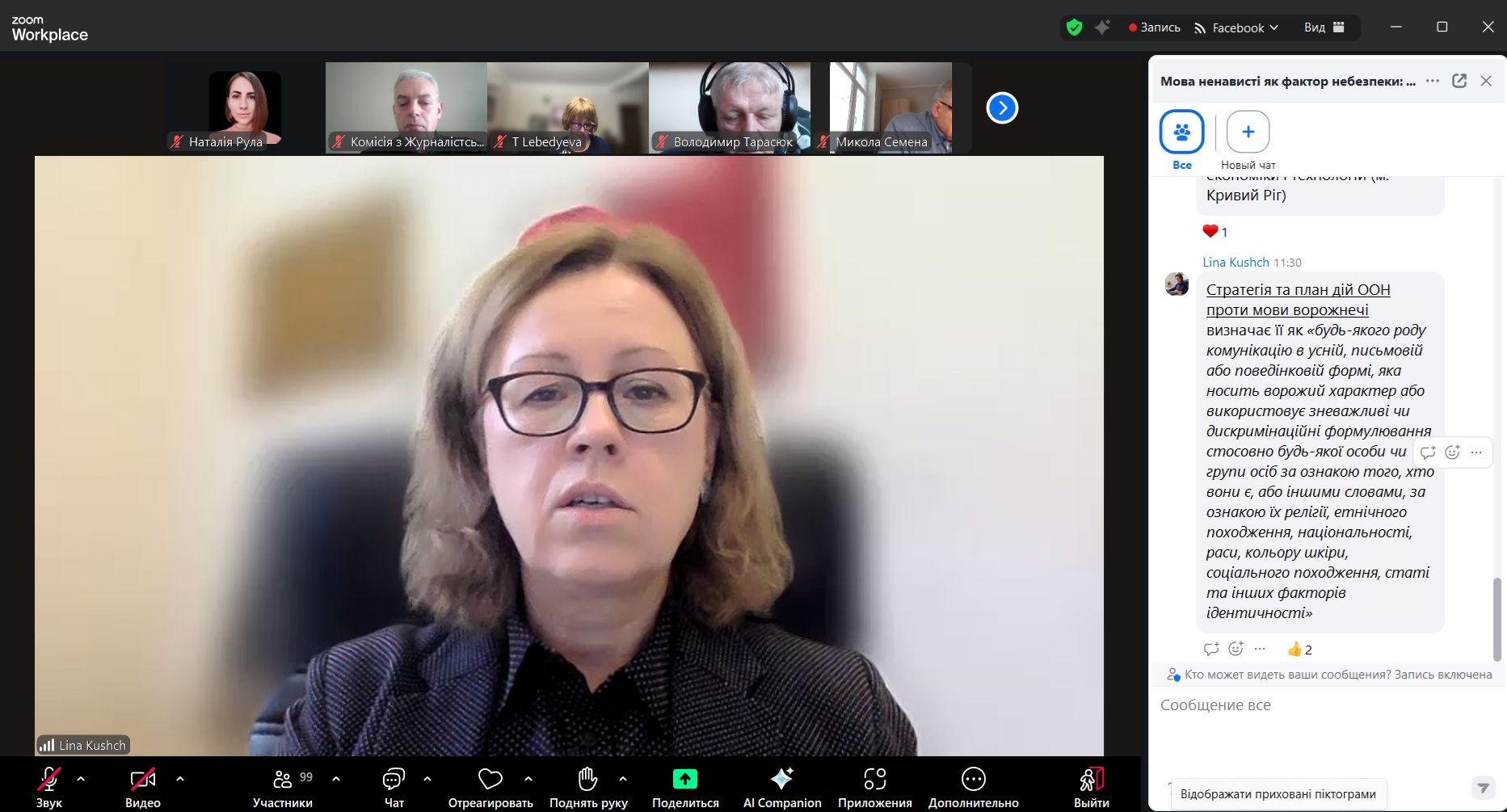
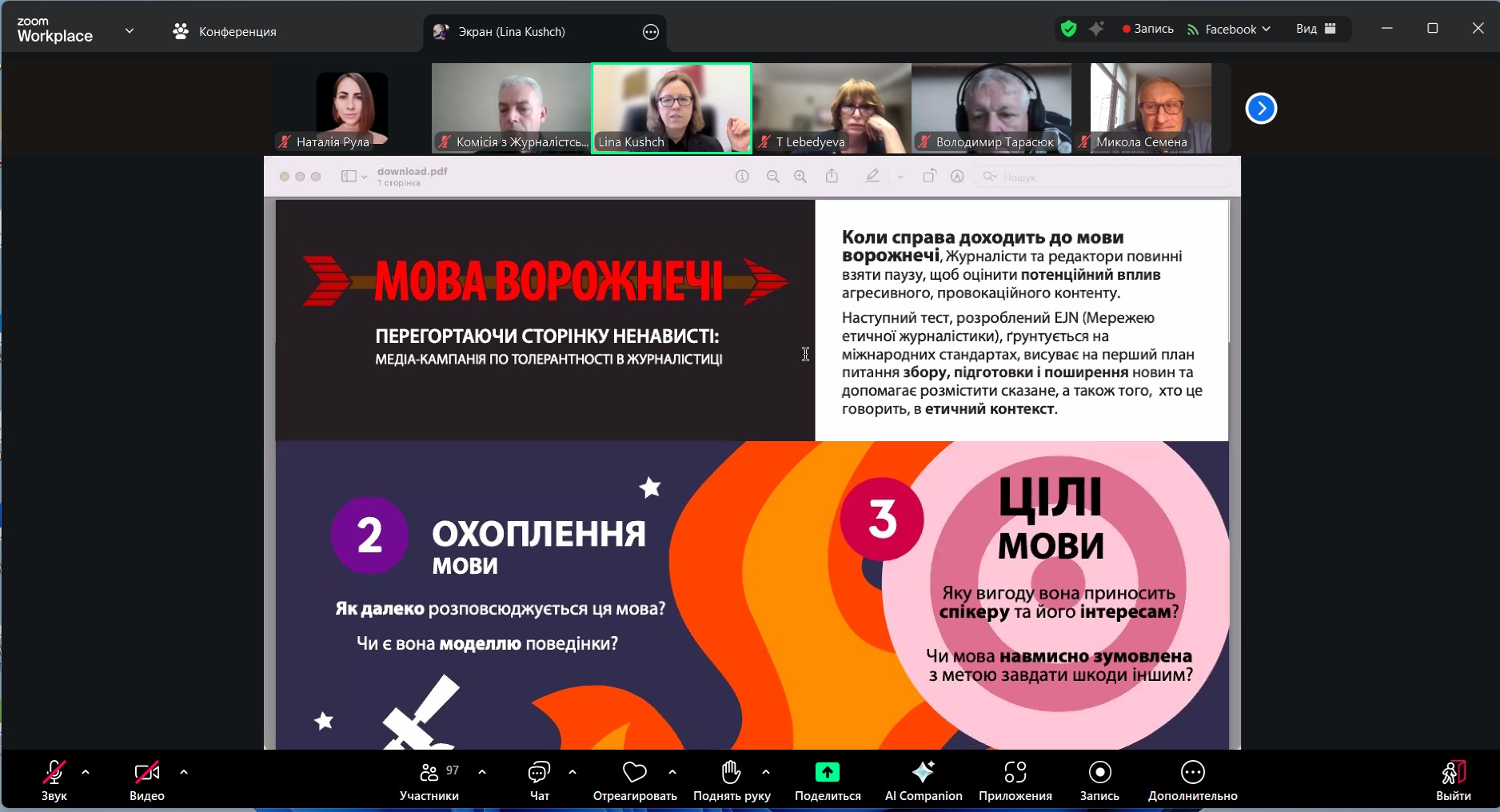
1. How to Detect Hate Speech at an Early Stage: Methodology of Recognition (Speaker: Lina Kushch, member of the CJE, First Secretary of the National Union of Journalists of Ukraine)
The first webinar aimed to explain the defining features of hate speech and to provide clear methodological tools for avoiding it. A major strength of the speaker’s approach was a precise differentiation between offensive rhetoric (which is unethical but does not constitute a violation) and hate speech itself, which entails calls for discrimination against specific social groups.
Value for students: acquiring a practical checklist for self-editing texts. This is a tool that can already be applied in the preparation of course projects, academic papers, or journalistic materials.
2. Internally Displaced Persons and Veterans: Between Empathy and Professionalism (Speaker: Diana Dutsyk, member of the CJE, Executive Director of the NGO “Ukrainian Institute of Media and Communication”)
This topic proved to be the most emotionally challenging. Diana Dutsyk emphasized the danger of what she termed “emotional swings” – ranging from glorification to victimization – and demonstrated through real examples how journalists, often unconsciously, may contribute to propaganda by overpraising (“superhumans”) or overpitying (“broken lives”) their subjects. Both approaches are equally harmful.
The speaker convincingly showed that a journalist’s patriotic position must never substitute professional standards.
Value for students: receiving specific practical guidance on vocabulary choice and interviewing techniques to avoid retraumatizing both the participants of stories and their audiences.
3. Gender Perspective (Speaker: Olha Bilousenko, Head of the Research Department of the Lviv Media Forum, media researcher)
The third block focused on issues of gender equality. Olha Bilousenko presented up-to-date statistics demonstrating the systemic nature of sexism in Ukrainian media and highlighted common narrative traps – for example, the habitual use of exclusively masculine forms when referring to Ukrainian defenders, which erases thousands of women serving in the armed forces.
Her key thesis was that media not only reflect reality but actively construct it.
Value for students: gaining a clear and workable algorithm for responding to sexist discourse from interview subjects and for avoiding the reinforcement of stereotypes themselves – from using feminatives to maintaining balanced representation in quotations. For future media professionals, this is a vital guide on preserving objectivity without becoming a platform for discrimination.
Why This Webinar Series Is Valuable for Educators and Students
Practice-oriented content: case materials are based on current wartime examples.
Evidence-based approach: speakers rely on monitoring data and academic research rather than personal opinion.
Accessibility: recordings of all webinars are freely available online, making them suitable as supplementary materials for lectures and seminars.
The CJE webinar series constitutes high-quality educational content for deepening professional knowledge and enhancing qualifications. The active participation of Berdyansk State Pedagogical University students in these events demonstrates the integration of our institution into the broader national professional community.
Bohdan Onyshchuk
First-year student
S7 Journalism Program
“Logostart”: the first step toward a great profession
Can university learning be dynamic, exciting, and at the same…
12 March 2026
Dialogue with Stakeholders on Improving the Educational Programs of the D3 Management Specialty
On March 10, 2026, a meeting with stakeholders of the…
11 March 2026
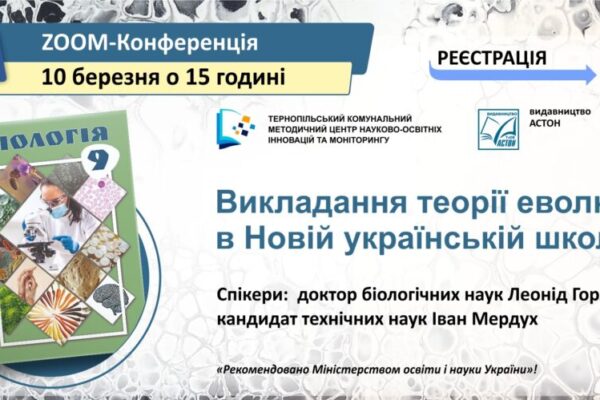
Teaching the Theory of Evolution in NUS: A Guest Lecture for Future Biology Teachers
On March 10, 2026, Doctor of Biological Sciences Leonid Horobets…
11 March 2026

Discussion of the educational and professional program “Finance, banking and insurance” with stakeholders as a component of the quality assurance system in higher education
On March 9, 2026, the Department of Economics, Management and…
10 March 2026