Functional (Psychogenic) Nonverbalism: A Professional Dialogue within Collaboration
Admin
24 March 2026
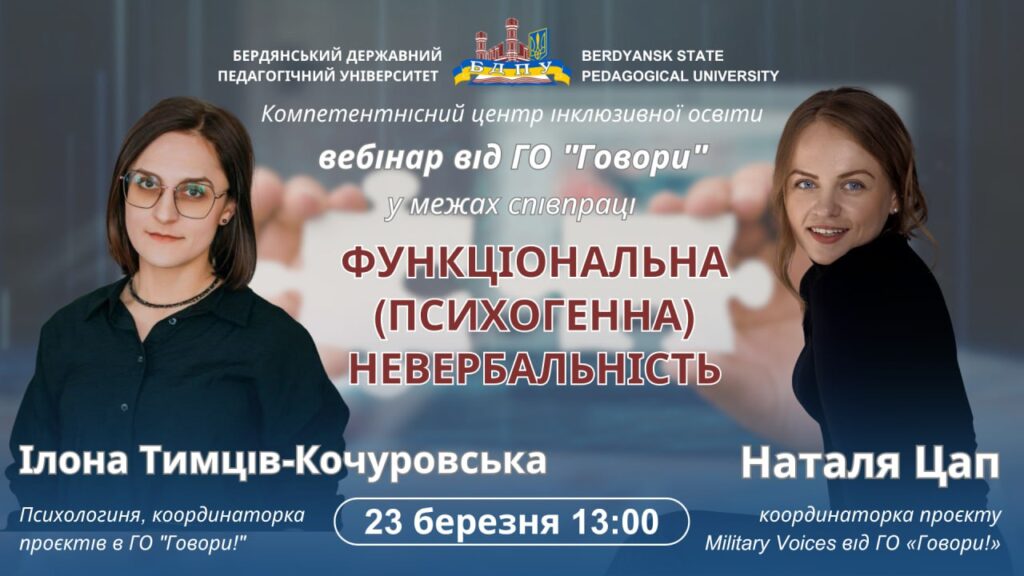
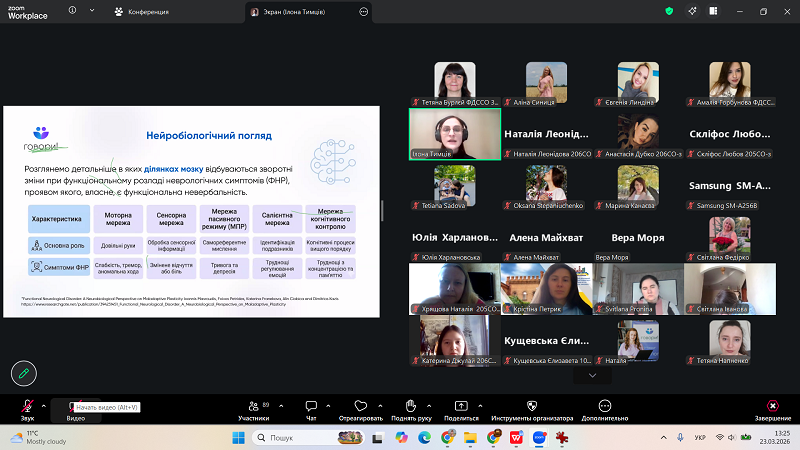
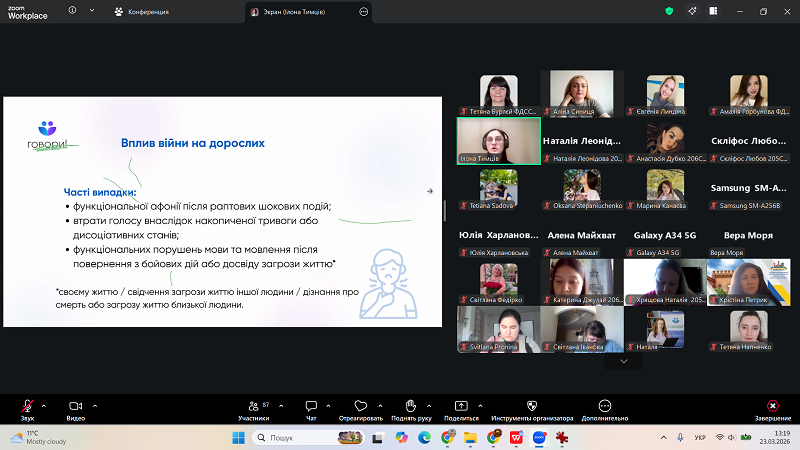
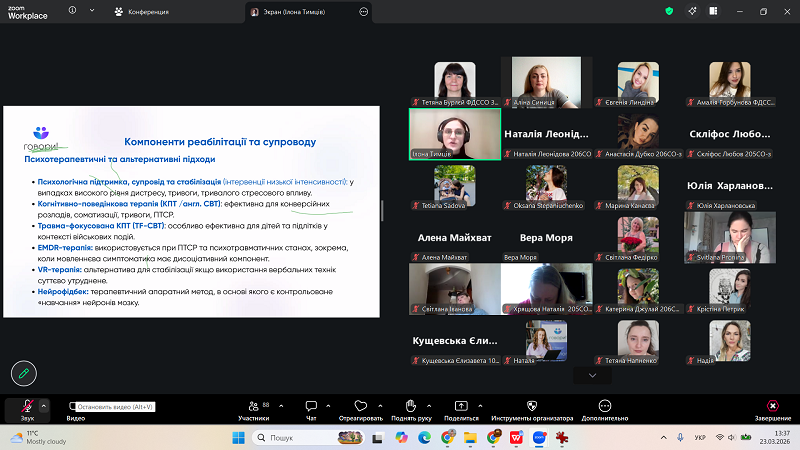
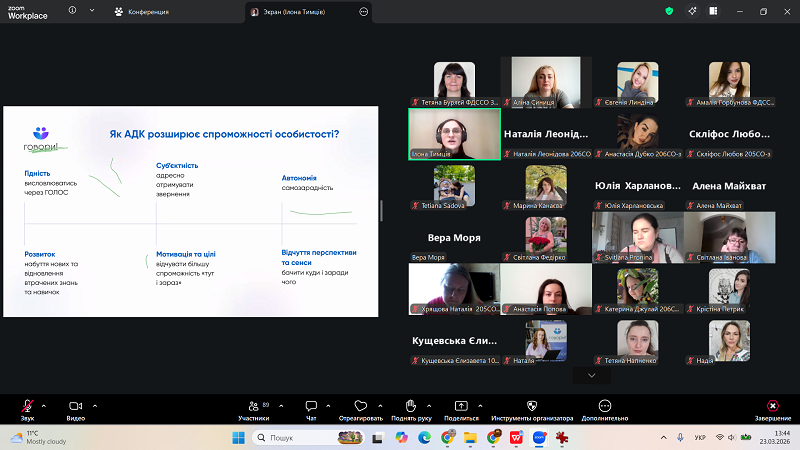
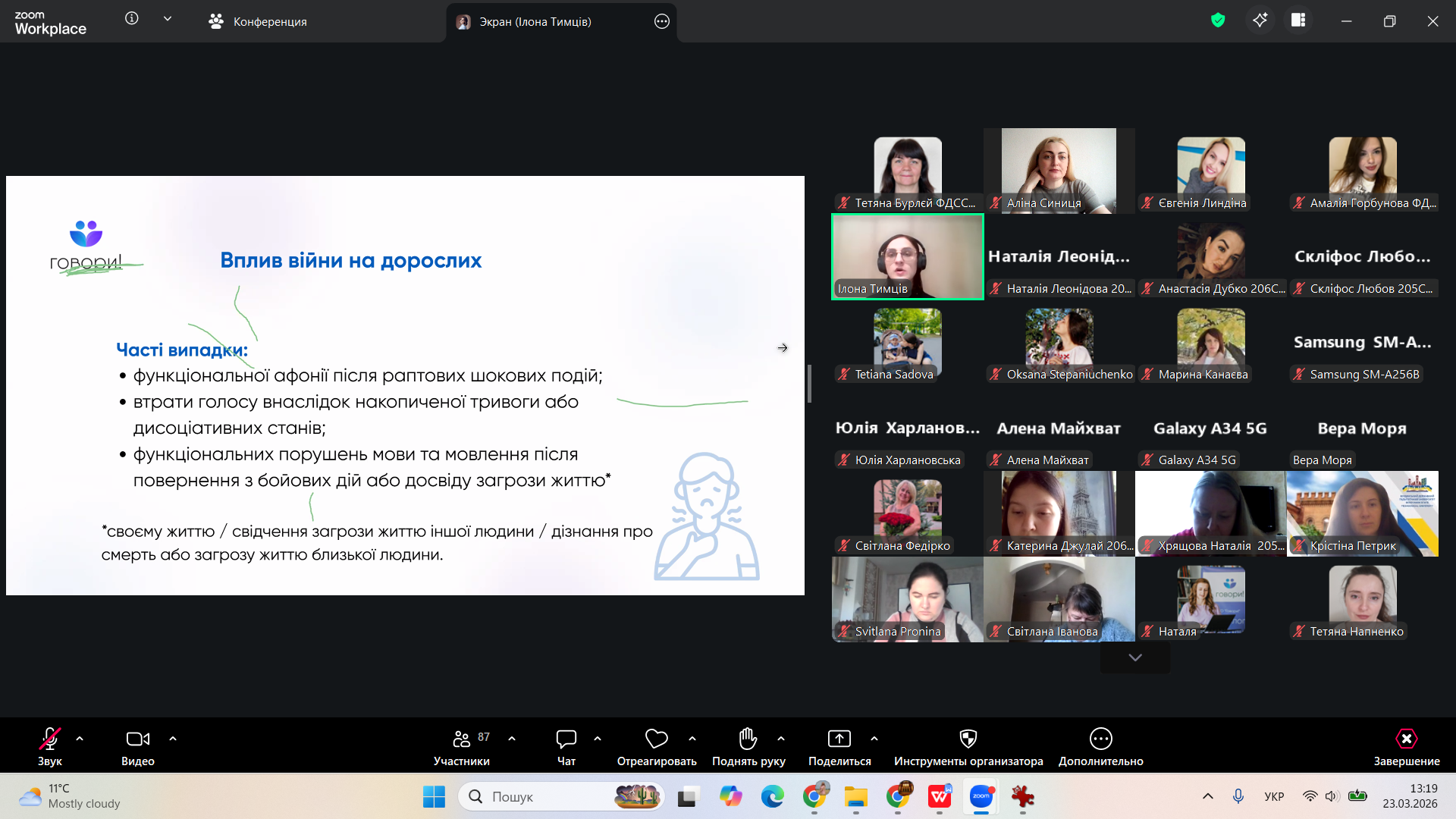
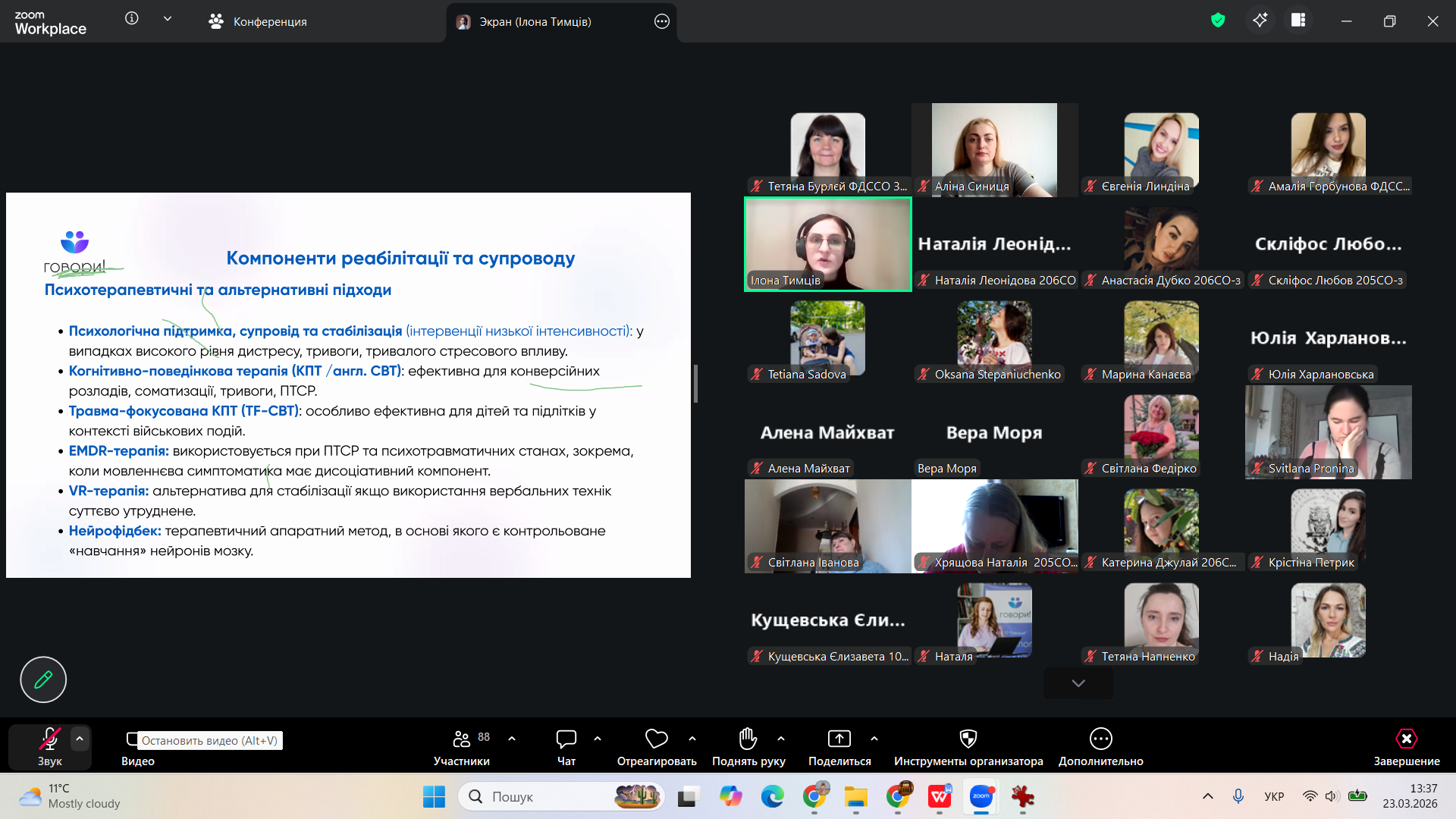
On March 23, 2026, a webinar was held within the framework of the activity plan of the Competence Center for Inclusive Education at Berdyansk State Pedagogical University, organized in cooperation with the NGO “Govory!”. The event brought together the academic and teaching community, specialists in the field of special and inclusive education, psychologists, and all those interested in speech development and supporting individuals with communication difficulties.
The topic of the webinar, “Functional (Psychogenic) Nonverbalism,” is highly relevant in the context of current social challenges, particularly considering the impact of war on the psycho-emotional state of children and adults.
The speakers of the event were Natalia Tsap, Coordinator of the Military Voices project at the NGO “Govory!”, and Ilona Tymtsiv-Kochurovska, psychologist and project coordinator of the same organization. In their presentations, they provided a systematic analysis of the phenomenon of nonverbalism, outlining its main causes and the specific features of its functional form.
Particular attention was paid to distinguishing between functional (psychogenic) and organic nonverbalism, which is crucial for accurate diagnosis and the selection of effective support strategies. Participants were introduced to a clinical case illustrating the impact of war as a powerful psychotraumatic factor contributing to the emergence of speech disorders.
The practical part of the webinar included a discussion of diagnostic recommendations and approaches to supporting individuals with functional nonverbalism. Special emphasis was placed on the importance of interdisciplinary support, the use of augmentative and alternative communication (AAC), and the creation of a safe and supportive environment for speech recovery.
The event was particularly engaging for students majoring in A6 “Special Education” and I10 “Social Work,” as its content is directly related to their future professional activities and responds to current practical needs. Participation in the webinar contributed to deepening their understanding of the nature of functional nonverbalism, its differences from organic disorders, and the development of skills for professional analysis of complex clinical cases. It also enabled future specialists to better understand the role of psychotraumatic factors, particularly the impact of war, in the emergence of communication difficulties, and to become familiar with modern approaches to providing support. Importantly, students gained insight into the principles of interdisciplinary collaboration, which is essential for effective support in inclusive settings, and received practical guidance on the use of augmentative and alternative communication.
The event was held in the format of an open dialogue, fostering active discussion, exchange of experience, and professional enrichment of participants. In conclusion, the webinar became an important platform for raising awareness of functional nonverbalism and identifying effective ways to address it in the context of contemporary challenges.
We express our sincere gratitude to the speakers for their informative presentations and professional coverage of the key aspects of functional (psychogenic) nonverbalism.
Special thanks to the Armed Forces of Ukraine for the opportunity to study, work, and hold such important professional events.
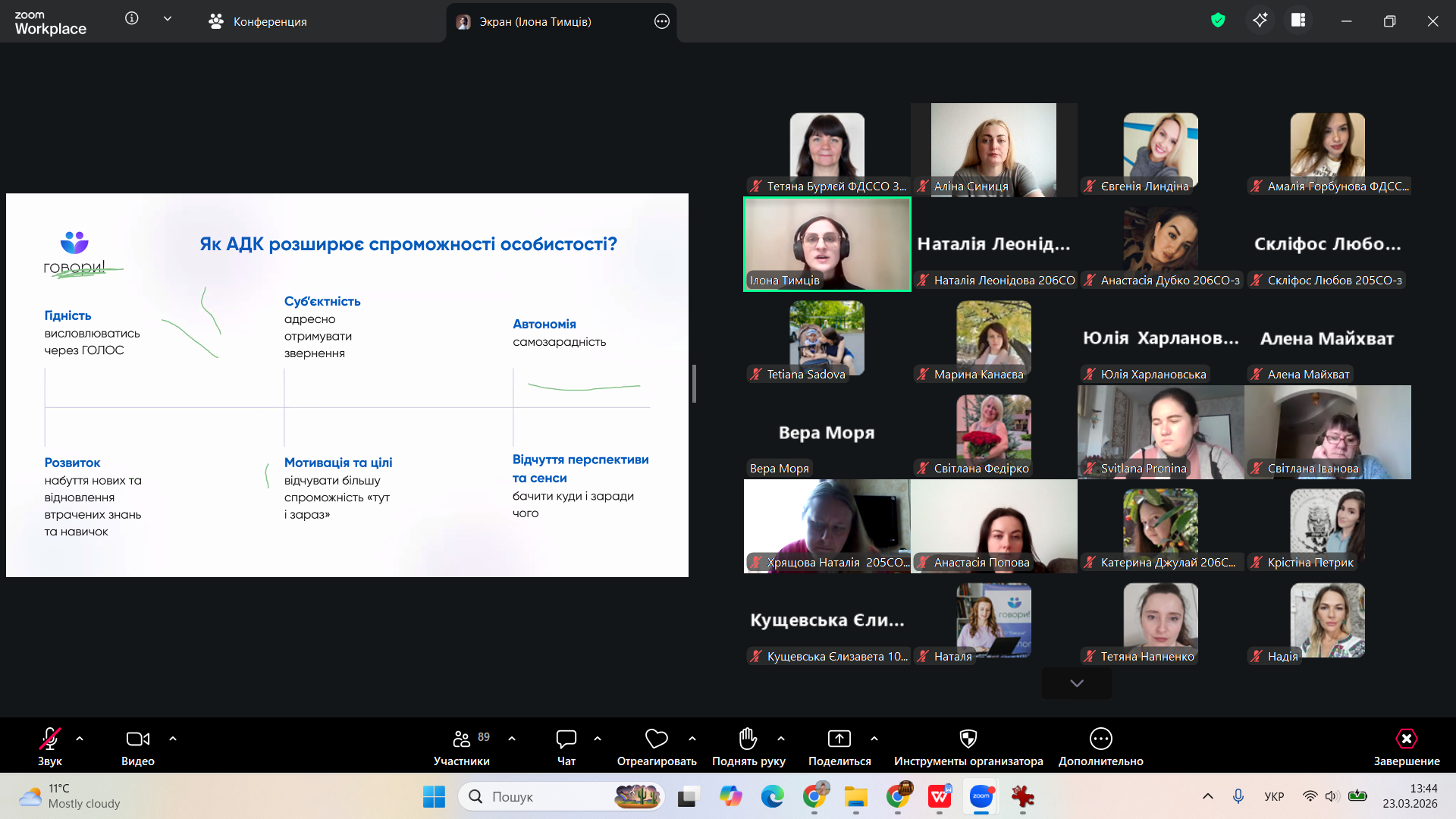
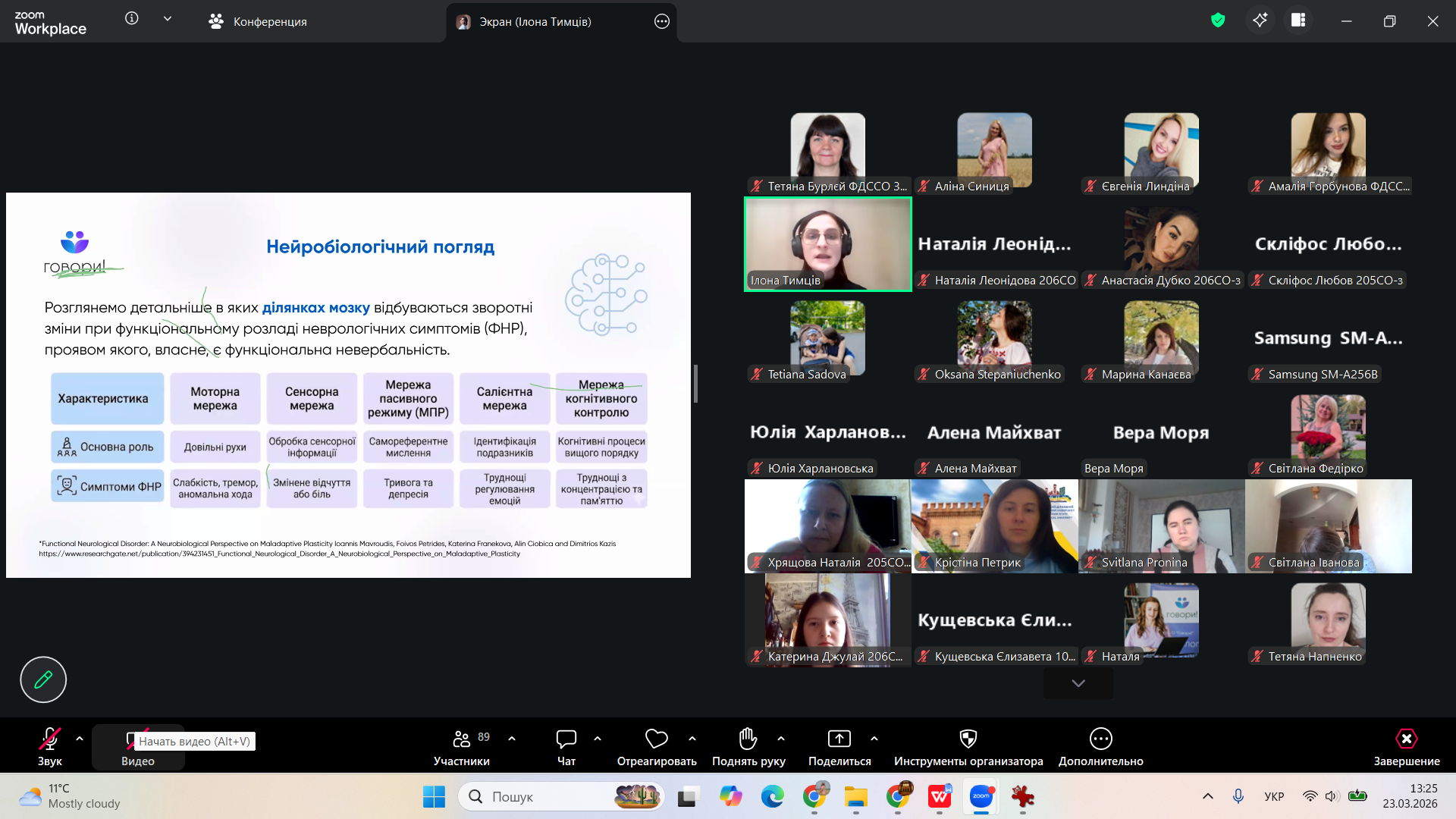
Based on materials from the Faculty of Preschool, Special and Social Education,
Competence Center for Inclusive Education, Berdyansk State Pedagogical Universit
Presentation of SAFE (Social Awareness for (War) Experiences) for Youth Work
In September, the Leadership School of Berdyansk State Pedagogical University…
9 October 2026
Mediation as a Path to Mutual Understanding
The Leadership School of Berdyansk State Pedagogical University (BSPU) and…
9 October 2026
Creating a Safe Learning Environment Together with BDPU: Training on «Adapting Learning for Students with PTSD»
On 8 October 2026, as part of the international Erasmus+…
9 October 2026
Social ranking: what students need to know about the awarding of points
The Student Council of the Faculty of Psychological and Pedagogical…
9 October 2026