
How Holidays Influence Financial Decision-Making: Summary of the Meeting of the Scientific Club “Current Issues of Economics and Finance”
Admin
30 December 2025
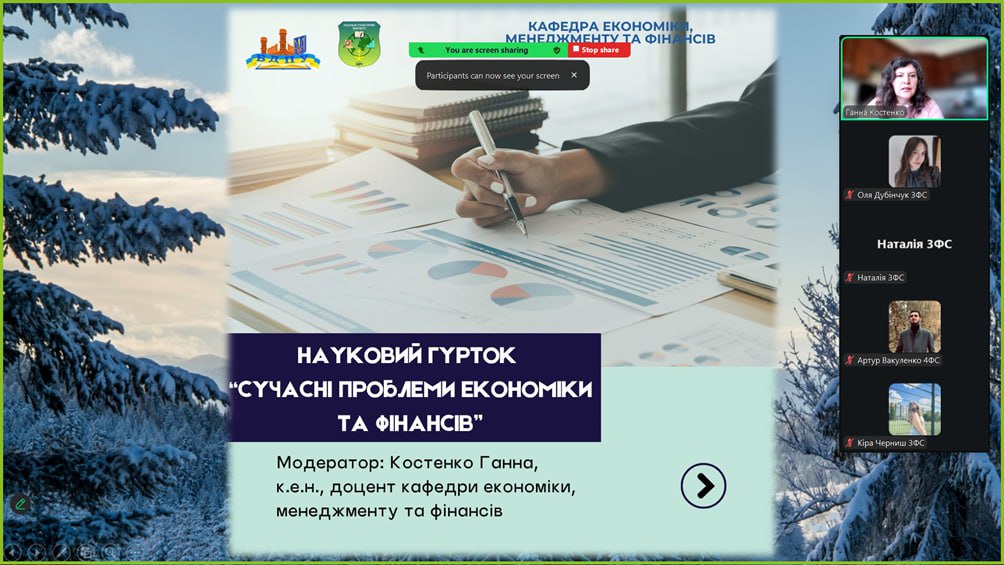
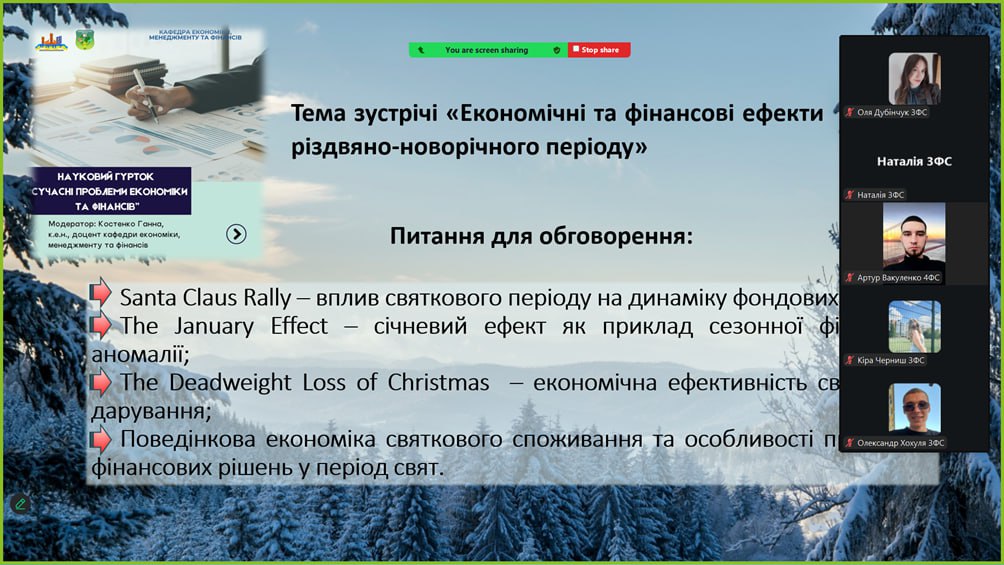
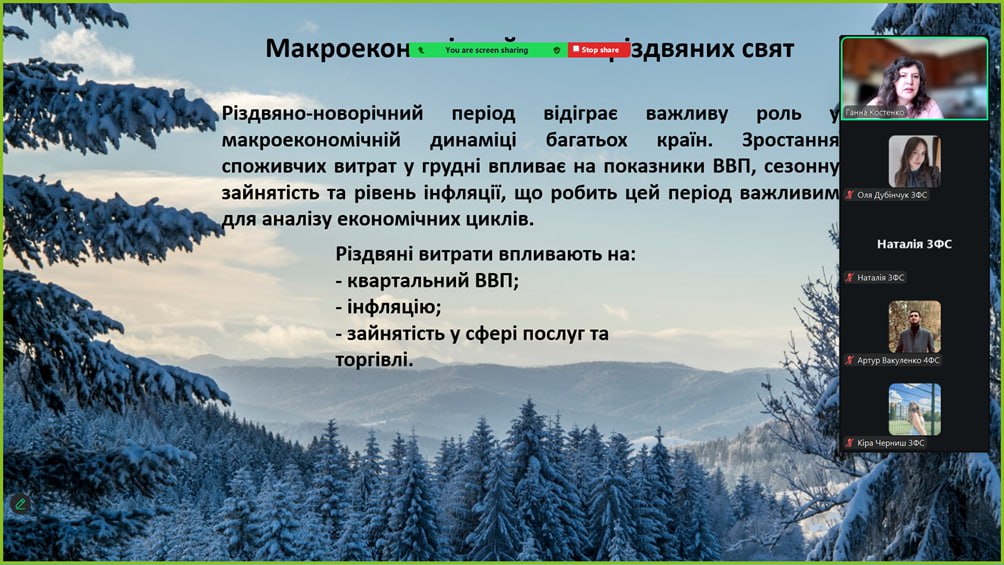
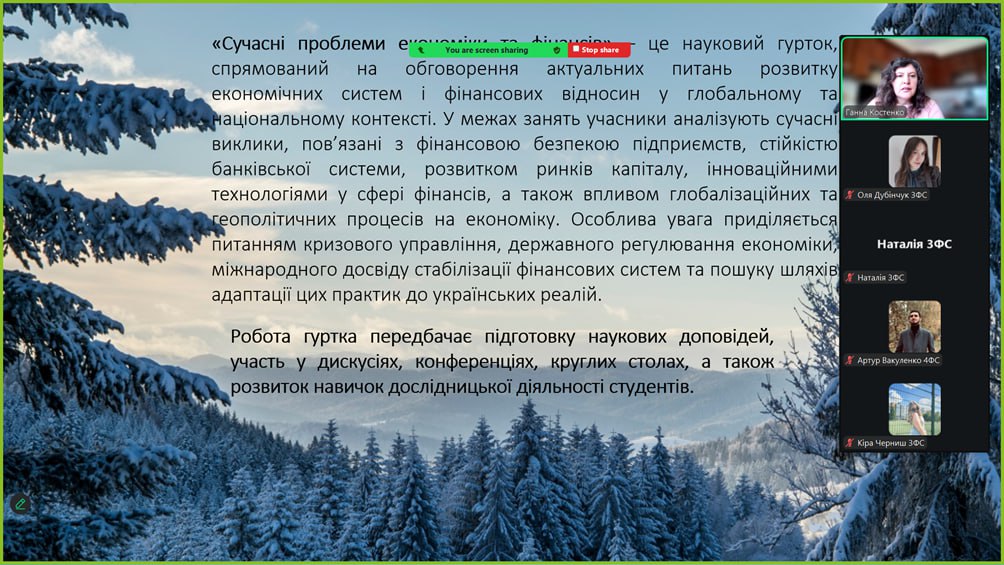
As part of the activities of the scientific club “Current Issues of Economics and Finance”, a regular meeting was held on December 30, 2025, devoted to the study of economic and financial effects of the Christmas and New Year period. The selected topic attracted considerable interest among students enrolled in the educational and professional programs “Finance, Banking and Insurance” and “Business Economics”, as the holiday season is traditionally accompanied by changes in the financial behavior of consumers and investors, which is reflected in both microeconomic and macroeconomic processes. The aim of the meeting was to deepen theoretical knowledge and to form a comprehensive understanding of seasonal anomalies in financial markets and behavioral aspects of economic decision-making.
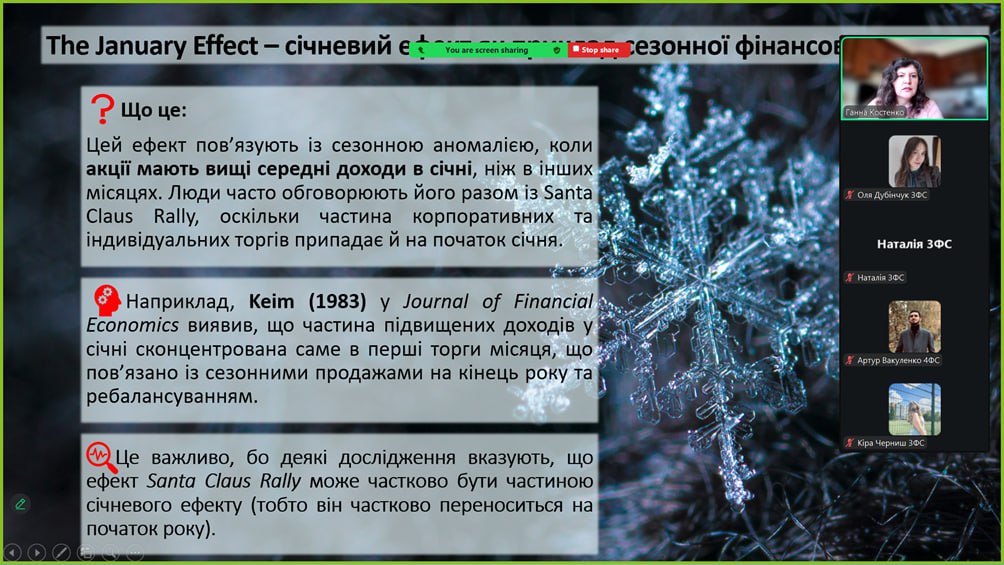
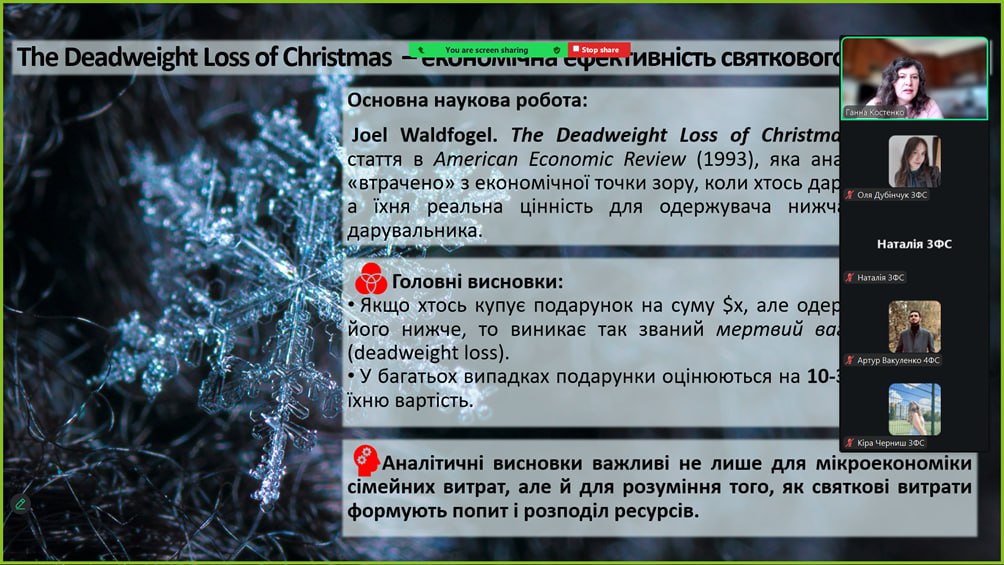
During the meeting, participants became acquainted with current scientific approaches to the study of seasonality in financial markets. In particular, the phenomenon of the Santa Claus Rally, which manifests itself in increased stock market returns at the end of the year, was examined in detail, as well as the January Effect as an example of a calendar-based financial anomaly. Special attention was paid to the study of the economic efficiency of holiday gift-giving, known as The Deadweight Loss of Christmas, which made it possible to analyze holiday expenditures from the perspective of microeconomic theory and consumer welfare.
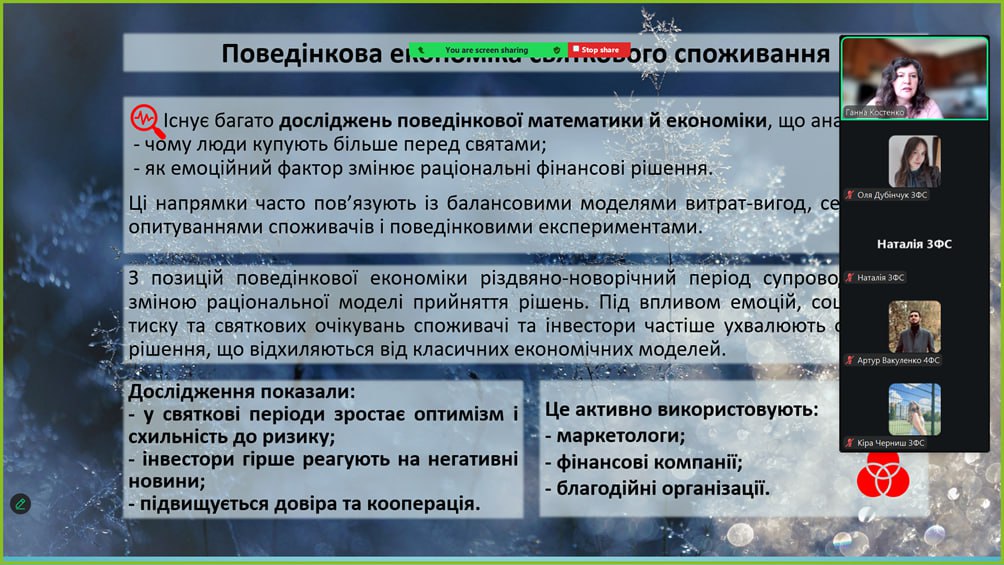
A significant part of the discussion was devoted to issues of behavioral economics of holiday consumption. The members of the research group analyzed how emotional states, social norms, and marketing incentives influence financial decisions during the holiday period. It was emphasized that under festive conditions, consumers are more likely to make impulsive decisions, exceed planned budgets, and assess financial risks less rationally. Such behavioral characteristics are considered by modern economic science as an important factor in the formation of seasonal fluctuations in demand and prices.
The meeting was held in the format of a meaningful scientific discussion, which contributed to the development of analytical thinking and critical analysis skills among students of the educational and professional programs “Finance, Banking and Insurance” and “Business Economics”. Participants actively exchanged views and provided examples from international practice and the results of contemporary research, which allowed for a comprehensive assessment of the impact of the holiday period on economic processes. The meeting confirmed the relevance of the selected topic and its importance for shaping the scientific outlook of future specialists in the field of economics and finance, as well as highlighted the significance of combining theoretical knowledge with practical analysis of real economic phenomena.
Based on materials by
Ganna Kostenko, Associate Professor Department of Economics, Management and Finance

Books that open up space for conversation
After the summer break, the reading club brought together faculty…
7 October 2026

AІ week at FPPEA: from experiment to original projects
Artificial intelligence writes texts, creates images, analyzes information and helps…
7 October 2026

From first introduction to partnership: First-year students begin their educational journey
On 1 October 2026, the Department of Social Work and…
5 October 2026

Artificial Intelligence as a Tool for Modernizing the Professional Training of Future Psychologists
The rapid development of generative artificial intelligence opens up new…
5 October 2026