Self-advocacy as a voice for change: how the rights of persons with disabilities are protected
Admin
10 April 2026
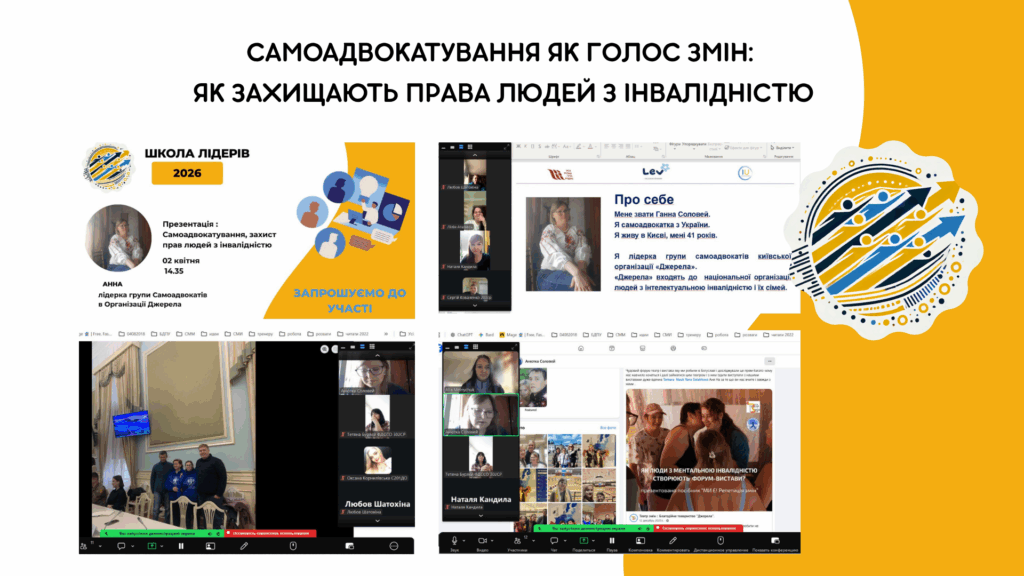
On April 2, within the framework of the BSPU Leadership School and in cooperation with the Department of Social Work and Inclusive Education, an important and inspiring event titled “Self-Advocacy and the Protection of the Rights of Persons with Disabilities” was held.
The speaker of the event was Anna Solovey, a self-advocate and leader of the self-advocates group at the NGO.
Participants had the opportunity to gain a deeper understanding of self-advocacy – a process through which persons with disabilities independently defend their rights, interests, and needs. Special attention was paid to the development of the self-advocacy movement in Ukraine and the challenges currently faced by self-advocates, particularly in the field of protecting the rights of people with intellectual and mental disabilities.
Anna Solovei shared her experience of presenting Ukrainian self-advocacy practices at the international level during events in Brussels and Denmark. She spoke about the challenges encountered in communication with public officials, as well as the importance of clearly and accessibly communicating the needs of persons with disabilities.
A particular emphasis during the meeting was placed on the use of plain language – a tool that makes information accessible to a wider audience. The speaker highlighted the necessity of implementing plain language in the work of public institutions, especially in official correspondence, as an important step toward building an inclusive society.
Mental health care was also an important topic of discussion. In today’s context, where Ukrainians face daily stress, the ability to maintain psychological well-being has become a key skill. Anna explained how peer support is organized within the self-advocates’ community and why it is a critically important resource.
The topic of using theatrical practices in self-advocacy sparked particular interest. The speaker shared her experience of participating in the creation of forum theatre performances that highlight the needs of persons with disabilities and demonstrate ways in which society can contribute to protecting their rights. These performances are presented to diverse audiences in different cities, fostering dialogue and engagement. Additionally, participation in a theatre studio that applies playback theatre techniques helps develop improvisation skills, overcome the fear of public speaking, and build confidence in expressing one’s views.
The event also included a discussion on institutional care, particularly the functioning of residential institutions for persons with disabilities. Participants learned about alternative approaches, including supported living models that promote independent living skills, socialization, and community integration.
The event became not only a source of new knowledge but also a space for open dialogue, rethinking the role of persons with disabilities in society, and recognizing the importance of supporting the self-advocacy movement in Ukraine.
The Leadership School events are implemented within the framework of engaging practitioners in the educational process of training students enrolled in the educational and professional programs “Social Work and Social Pedagogy,” “Social Work and Practical Psychology,” “Socio-Psychological Support of Resilience,” and “Post-War Socio-Psychological Rehabilitation.” This activity aims to combine theoretical training with practical experience and contributes to the implementation of the Sustainable Development Goals, in particular SDG 4 “Quality Education,” SDG 10 “Reduced Inequalities,” and SDG 16 “Peace, Justice and Strong Institutions.”
Based on materials prepared by: Alla Melnychuk,
Assistant of the Department of Social Work and Inclusive Education,
Coordinator of the Leadership School
Scientific activities: a review of the latest proposals
We offer you a digest of scientific opportunities: for students,…
10 April 2026
Social advocacy technologies through the eyes of higher education students
Third-year part-time students of the educational and professional programme “Social…
10 April 2026
An Easter Journey Around the World: How the FPPЕA Student Council United the Traditions of the World
On the bright day of Holy Thursday, the Faculty of…
10 April 2026
Tolerant Communication with War Veterans and Former Prisoners of War
On April 7, 2026, PhD students within the course “Inclusive…
9 April 2026