
«STEM on the Dnipro: The First Decade»: Guest Lecture for Students and Academic Staff of BDPU
Admin
11 November 2026
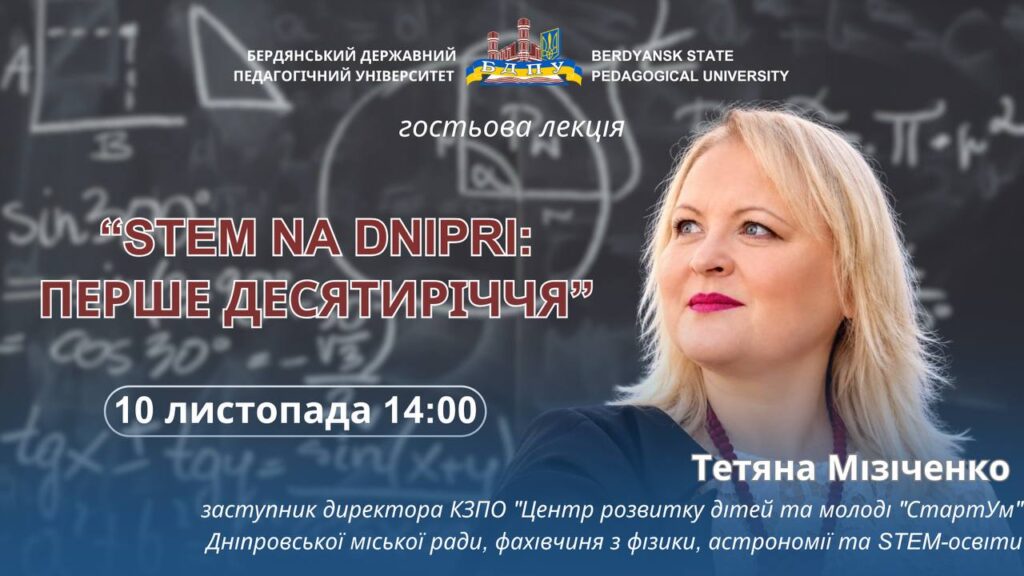
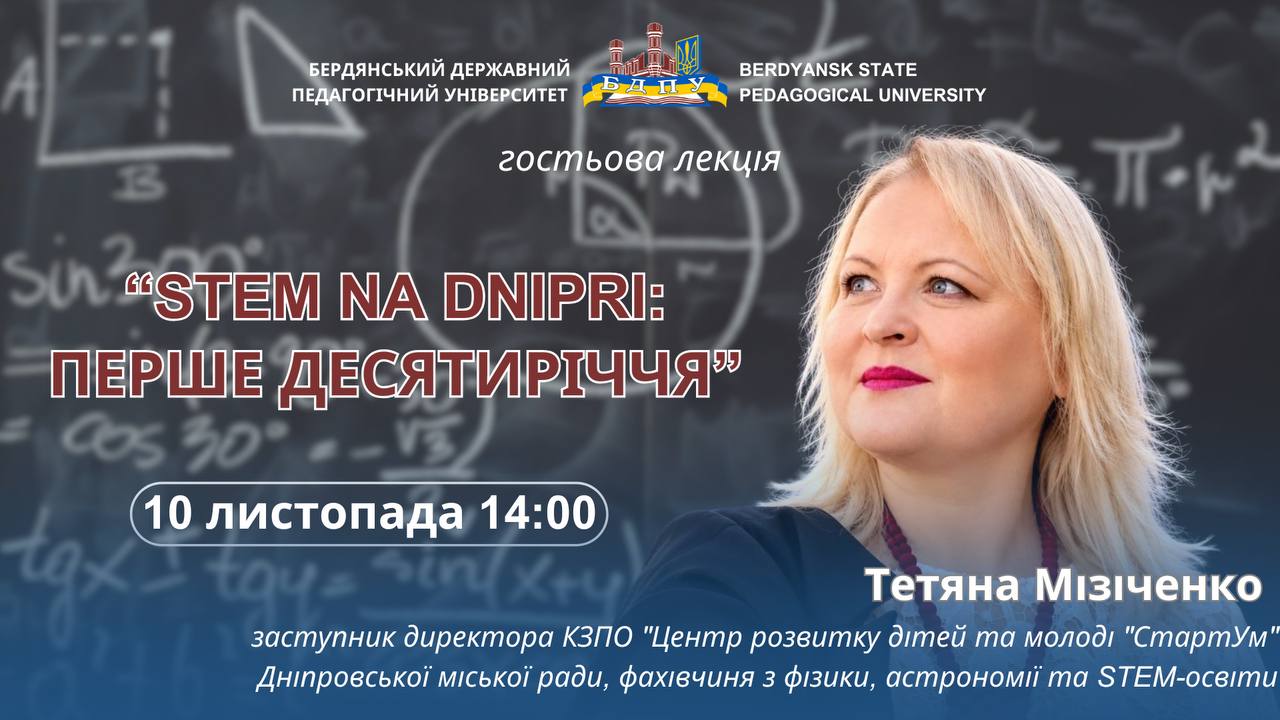
On 10 November 2026, the Department of Physics, Mathematics and Teaching Methods of Berdyansk State Pedagogical University (BDPU) hosted a guest lecture entitled «STEM on the Dnipro: The First Decade». The lecture was delivered by Tetiana Mizichenko, Deputy Director of the StartUm Centre for Children and Youth Development (Dnipro), co-author of the model curriculum STEM (Grades 7–9), the STEM-LAB extracurricular education programme, and the STEM-LAB series of educational manuals published by Osvita. The event was moderated by Hanna Kolomoiets, Candidate of Sciences in Physics and Mathematics and Associate Professor of the Department.
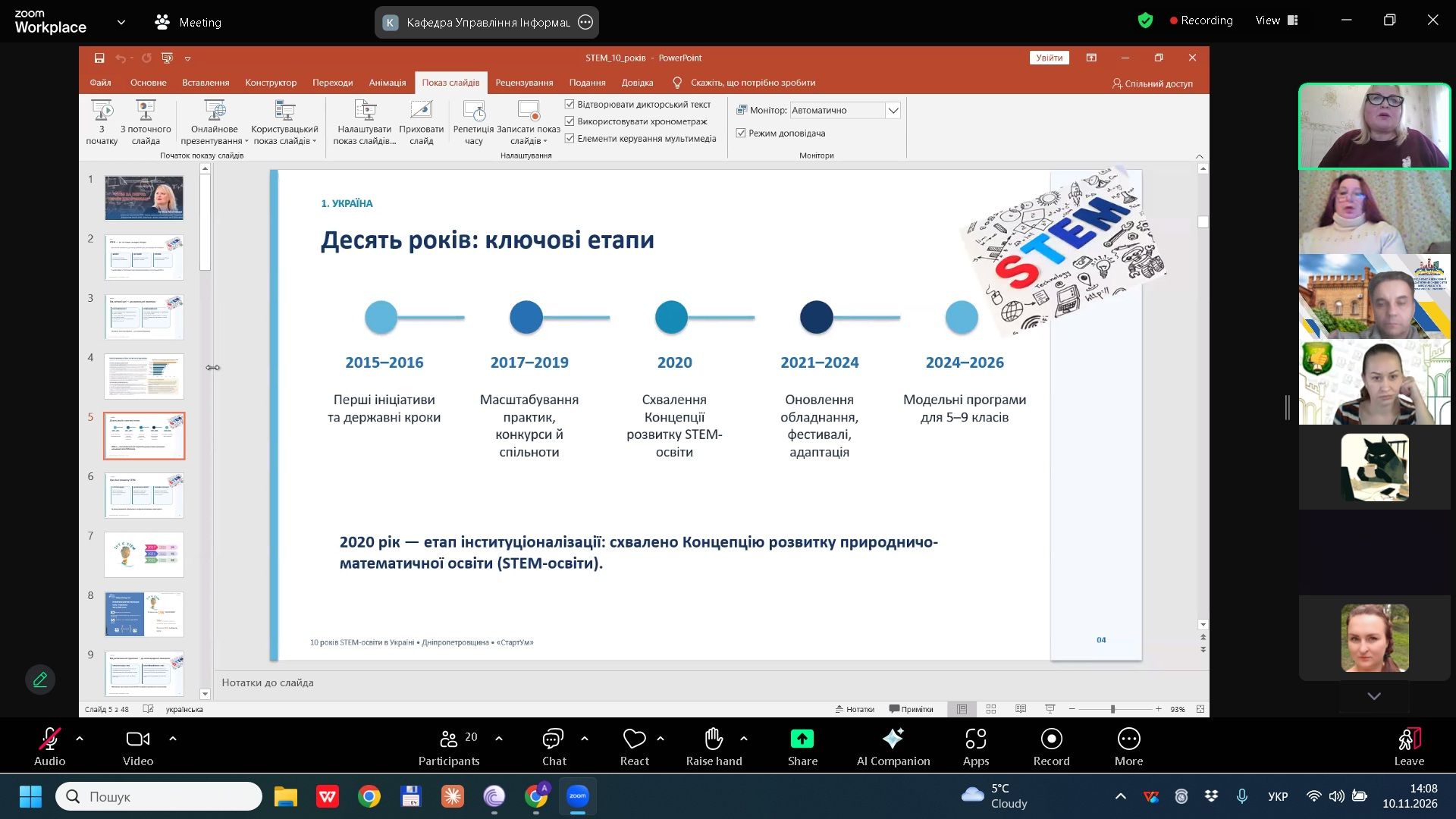
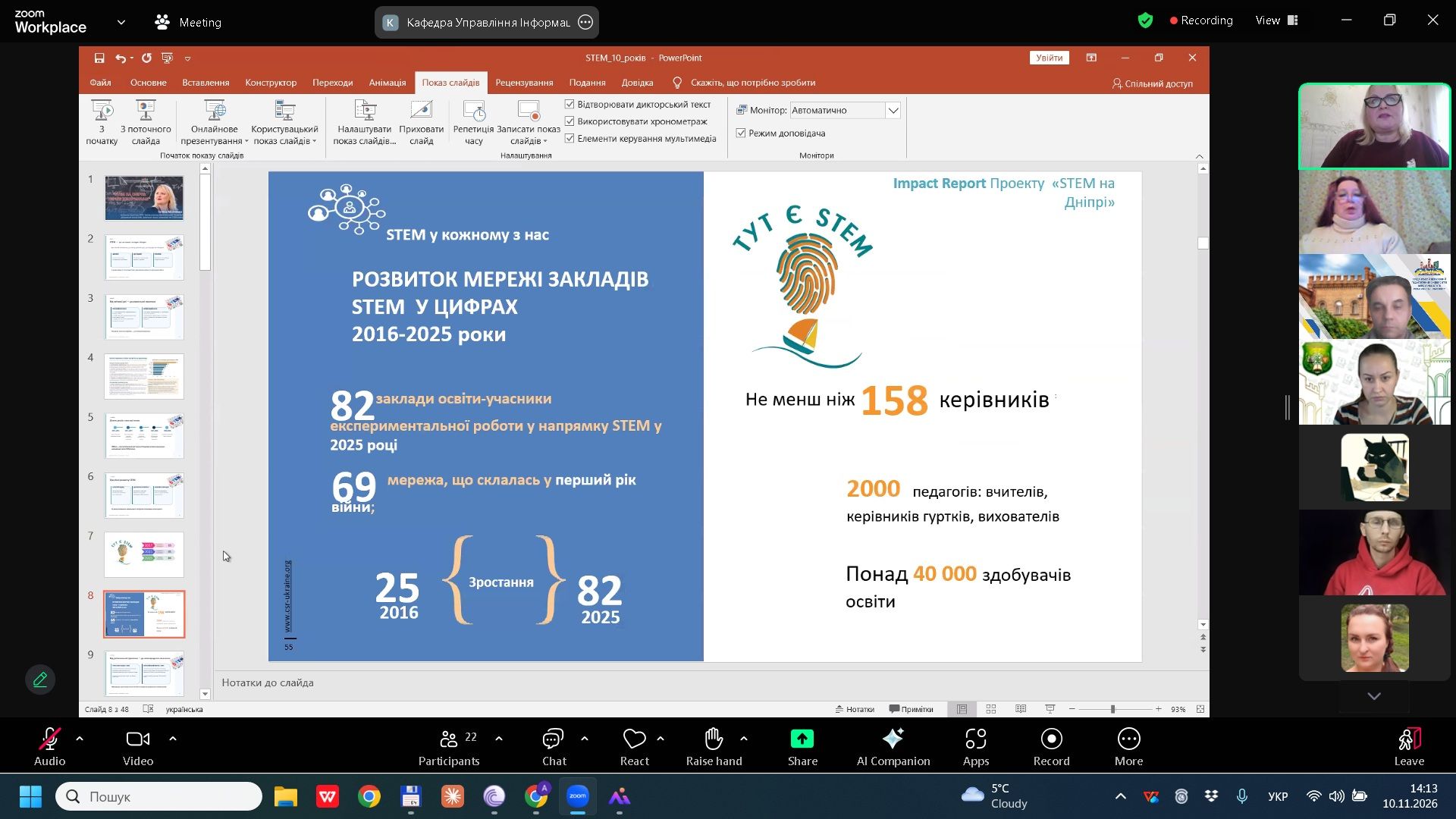
The speaker examined a decade of STEM education development in Ukraine, tracing its evolution from the first initiatives in 2015–2016 and the approval of the Concept for the Development of Science and Mathematics Education (STEM Education) in 2020 to the introduction of model curricula for Grades 5–9. The Dnipropetrovsk region provides a compelling example of this progress. The network of STEM centres operating under the «STEM Is Here» initiative expanded from 25 centres in 2017 to 84 in 2025, reaching more than 40,000 learners. Educational institutions, universities and businesses are all involved in supporting the network. The «STEM on the Dnipro» project has become a platform for developing innovative teaching materials, including STEM lesson plans and educational resource packages for teachers, as well as regional competitions, festivals and nationwide initiatives. One notable example is the «STEM Lives Here» STEM Day, which brought together more than 2,000 participants from different regions of Ukraine.
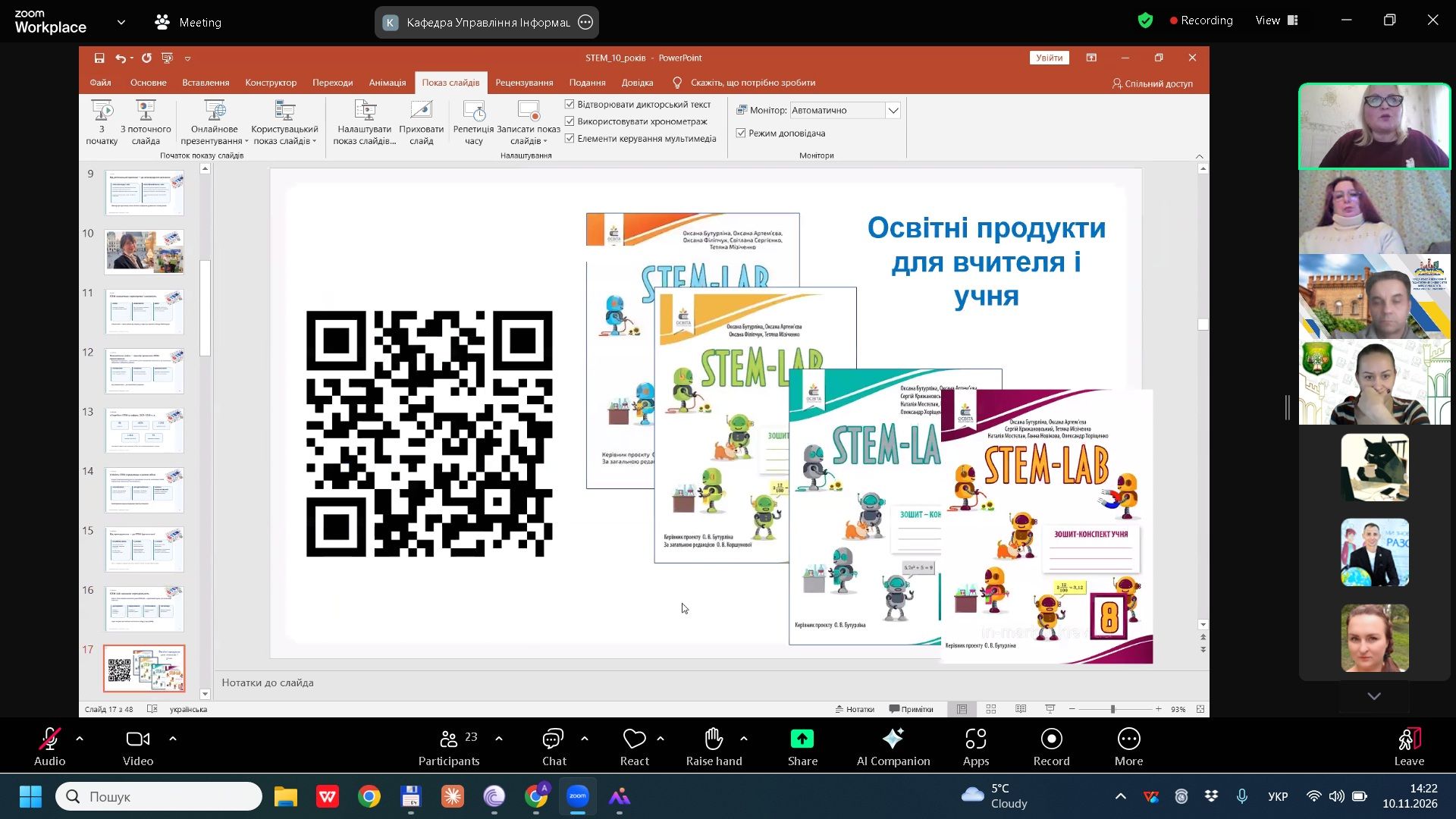
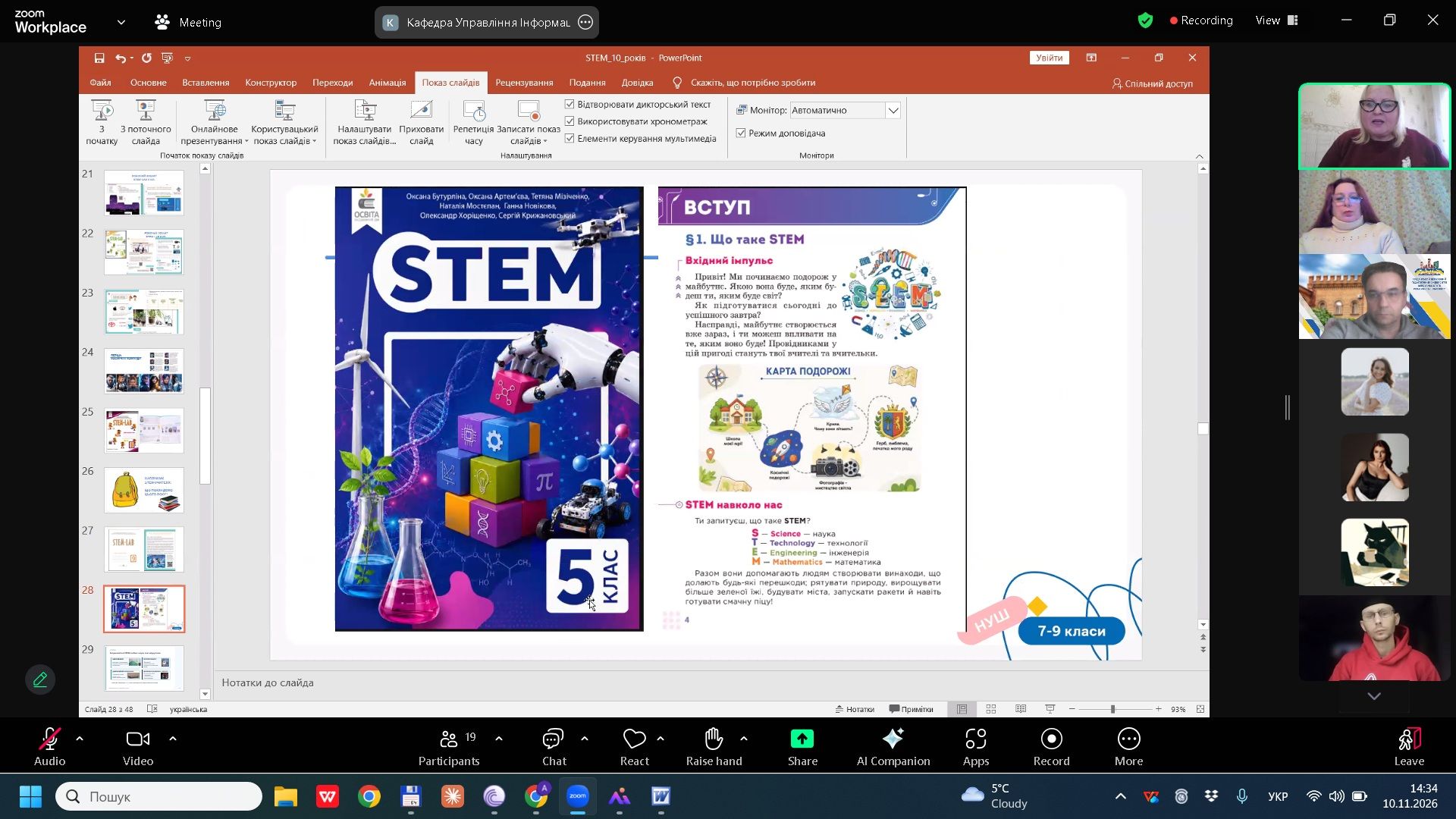
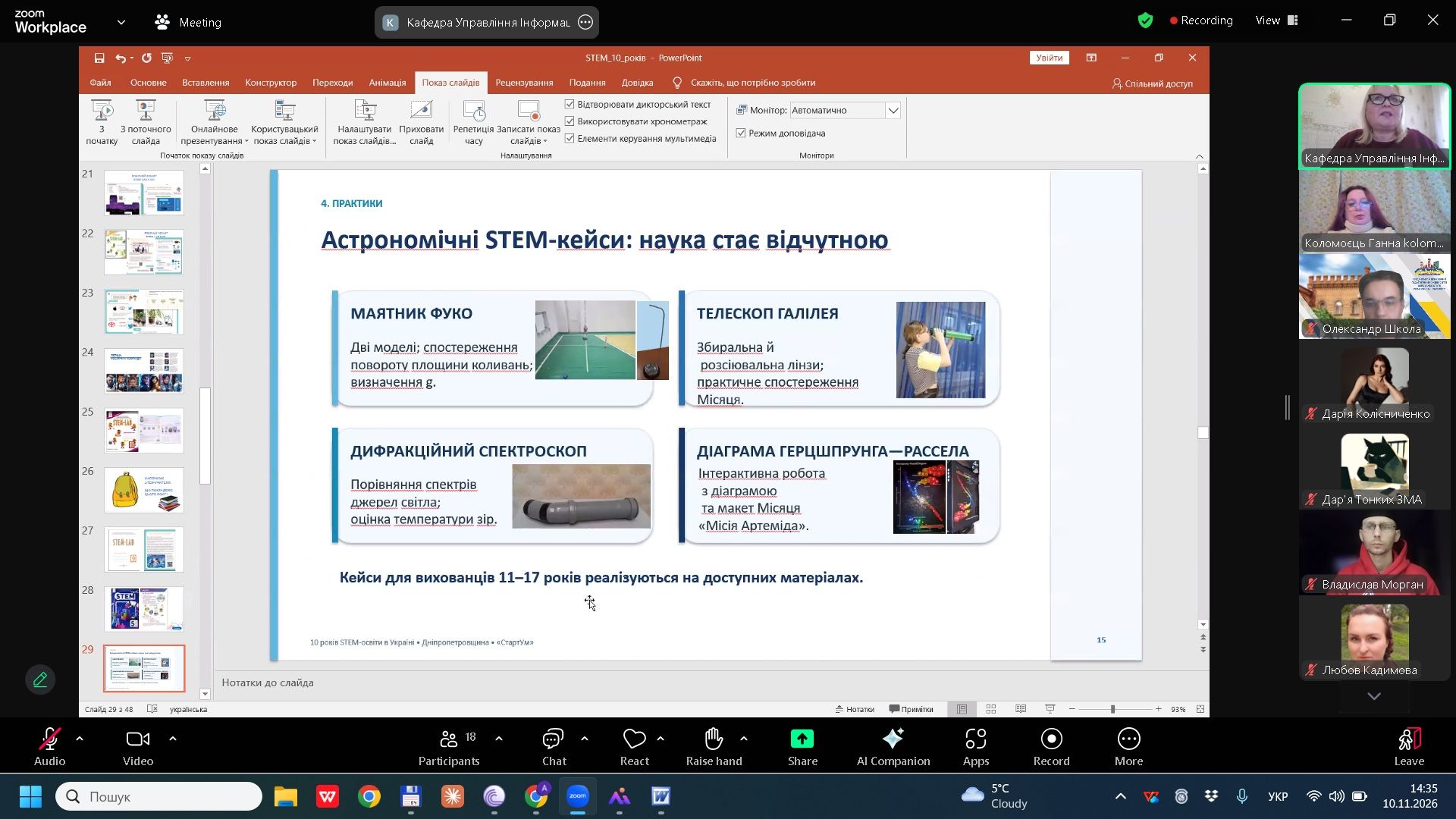
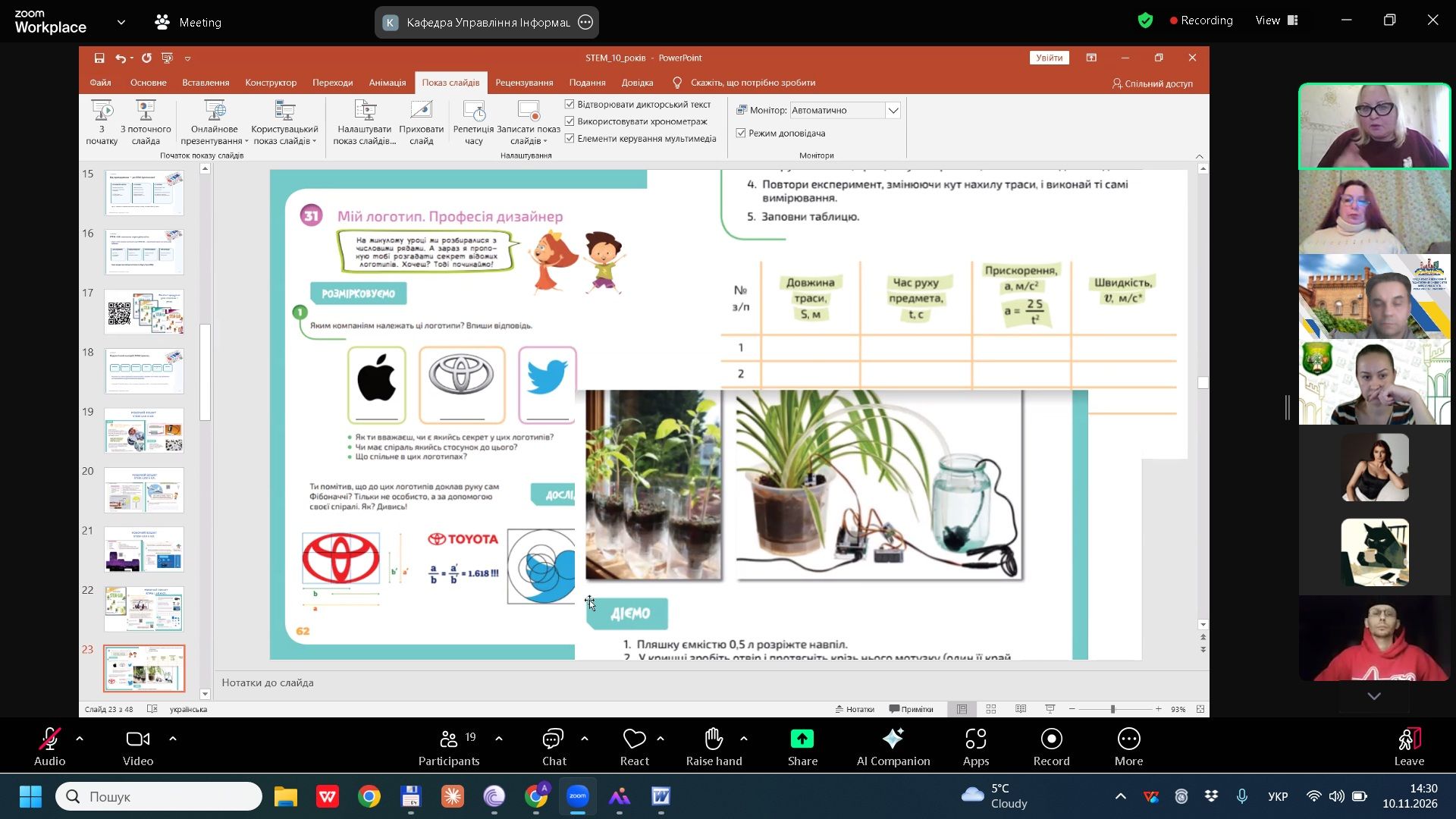
The practical component of the lecture attracted particular interest. The speaker presented a pedagogical framework for implementing a STEM project, STEM-LAB workbooks for Grades 5–9, and astronomy-related learning activities based on readily available materials. These included a Foucault pendulum, a Galilean telescope, a diffraction spectroscope and a Hertzsprung–Russell diagram. Examples of STEM activities across various fields were also demonstrated, including STEM art, the Electric Generator House project, chemical experiments using safe reagents, and the application of biomimetics in design. Particular attention was also given to the STEM Academy.UA platform, which provides teachers with a range of educational and methodological materials and resources.
In her concluding remarks, Tetiana Mykhailivna emphasised that the decade’s most significant achievement has been a fundamental shift in the approach to teaching and learning: instead of simply receiving ready-made knowledge, children are encouraged to investigate, seek answers independently and create something new. She also identified several pressing challenges, including the assessment of educational quality, ensuring continuity in children’s individual learning pathways, teacher training, and maintaining the resilience of the educational environment under wartime conditions.
The lecture proved valuable for both academic colleagues and future teachers of physics, astronomy and mathematics, providing an opportunity to explore practical teaching solutions for implementing the STEM approach in school education. We would like to thank the speaker and the organisers for this informative and engaging event and look forward to further fruitful cooperation!
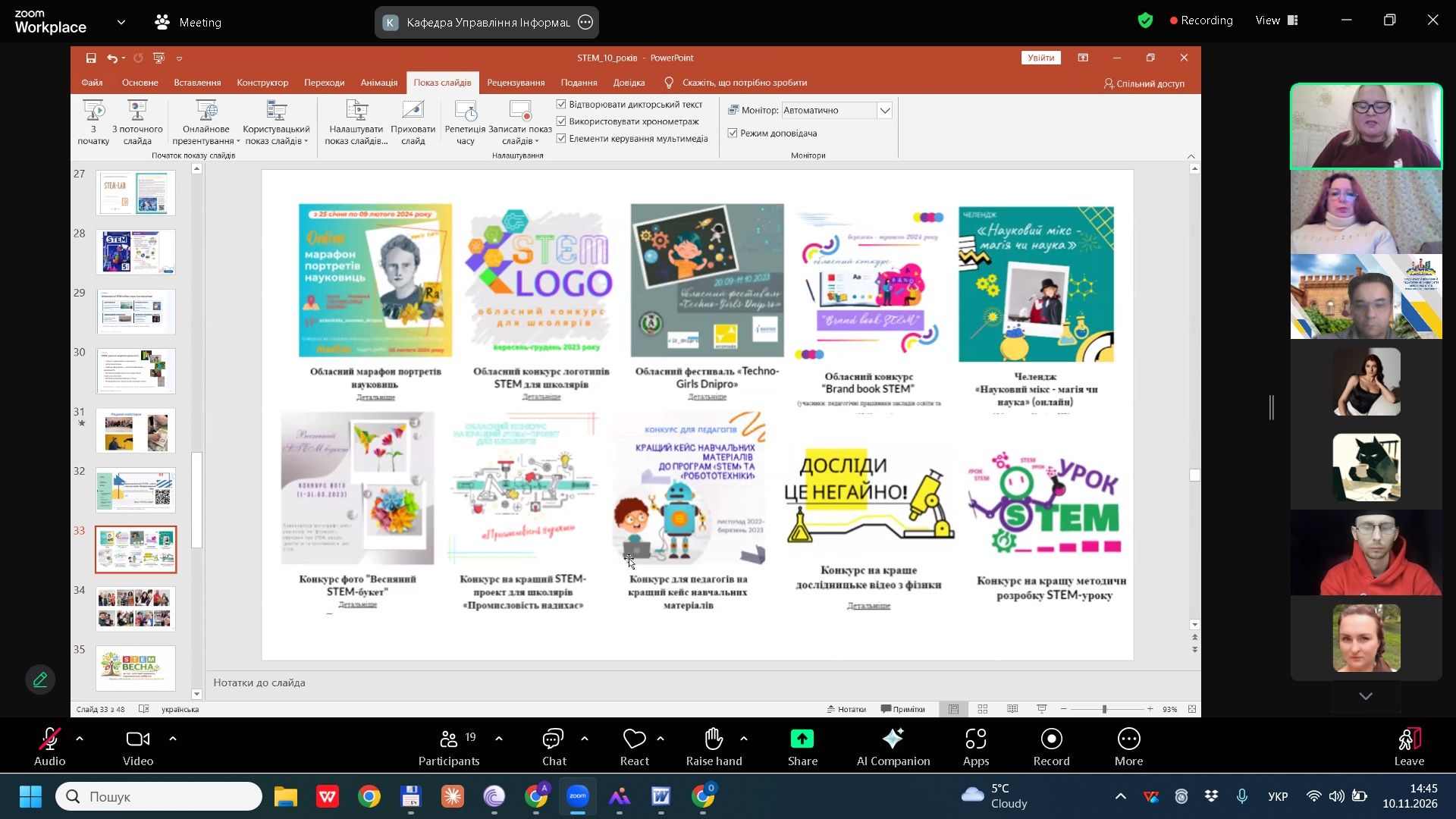
Based on materials provided by the Department of Physics,
Mathematics and Teaching Methods

Swiss Insights into Teacher Education: Guest Lecture by Dr. Laura Loder Buechel
On 11 November 2026, bachelor's students of the programmes "Secondary…
11 November 2026
2nd International Student Scientific and Practical Conference "Art Education: Theory, Methodology, Practice": Event Highlights
On November 5–6, 2026, the Department of Theory and Methodology…
11 November 2026
From Learning to New Opportunities: BDPU Representatives Join the Instructor School
Developing adaptive sport and supporting veteran initiatives On 9 November…
10 November 2026
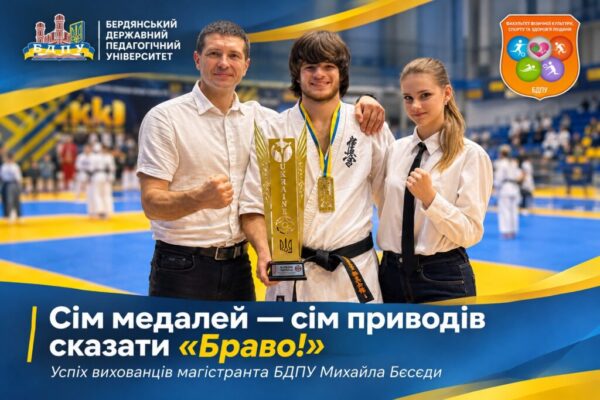
Seven Medals at the Ukrainian Cup: A Success for a BSPU Master’s Student’s Team
Seven medals, hundreds of competitors, and a notable result of…
10 November 2026