
The Geometry of Numbers: How Arithmetic Builds Polygons on a Plane and Polyhedra in Space
Admin
2 November 2026
A logic puzzle for the senior kindergarten group: Draw five red little squares in the shape of six yellow round triangles, making sure there are eight of them and that they are all green. Use a black pencil.
As we reported earlier, exploring the fascinating connections between arithmetic and geometry, members of the Mathematics Club of the Faculty of Physics, Mathematics, Computer and Technological Education at Berdyansk State Pedagogical University held two consecutive sessions devoted to figurate numbers as part of a five-session series. While the first two September meetings focused on triangular numbers and their arithmetic patterns, a separate session devoted to Bernhard Riemann provided a historical and mathematical interlude. The subsequent meetings significantly broadened the participants’ mathematical horizons, moving from two-dimensional point configurations to polygons and three-dimensional polyhedra.
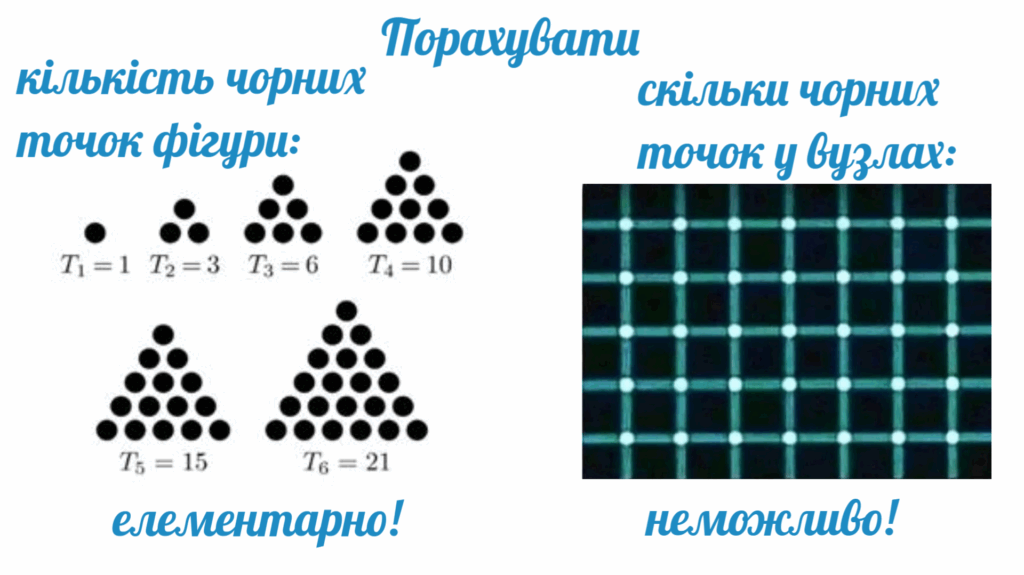
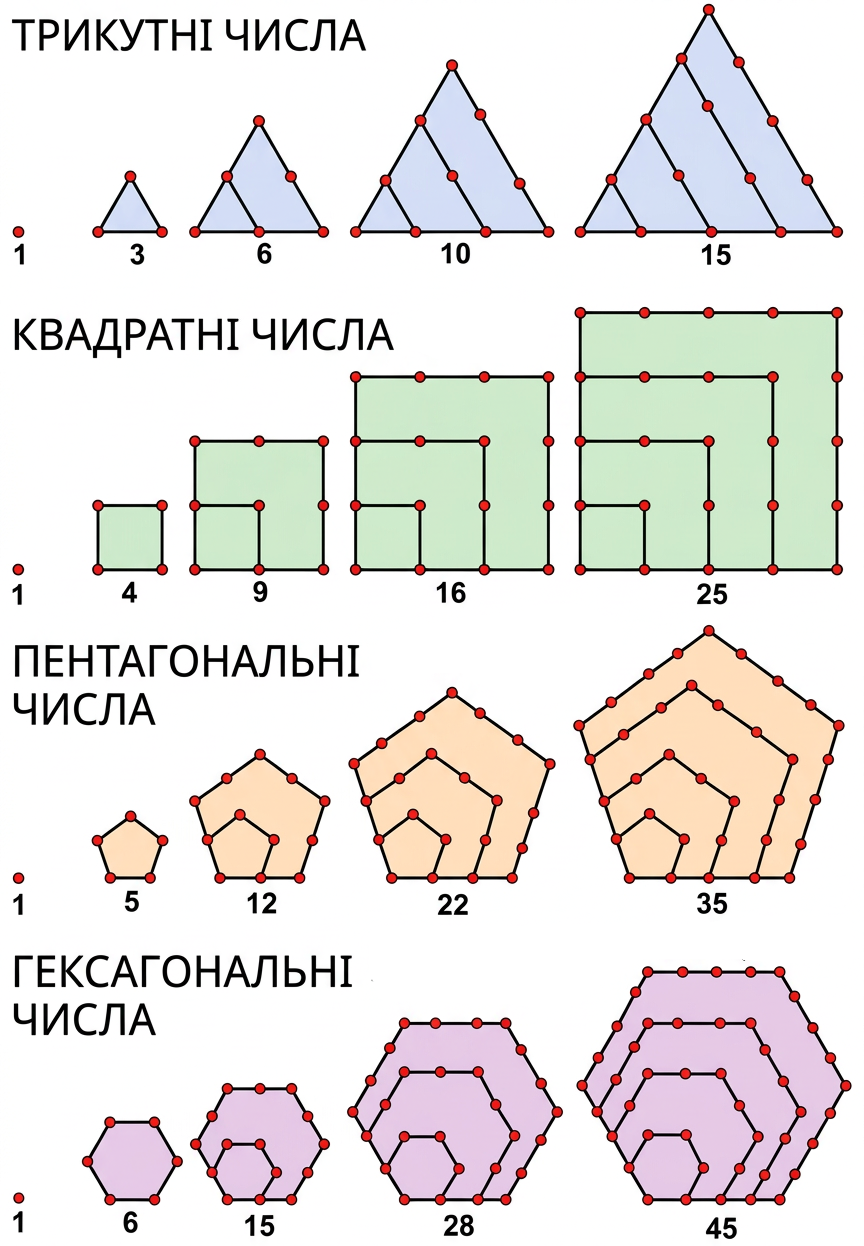
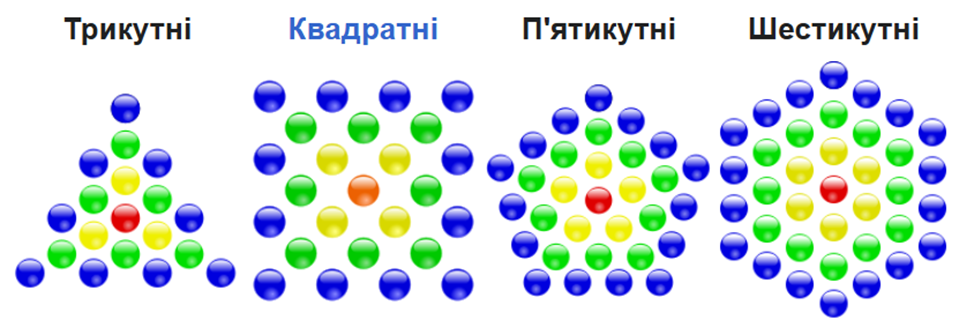
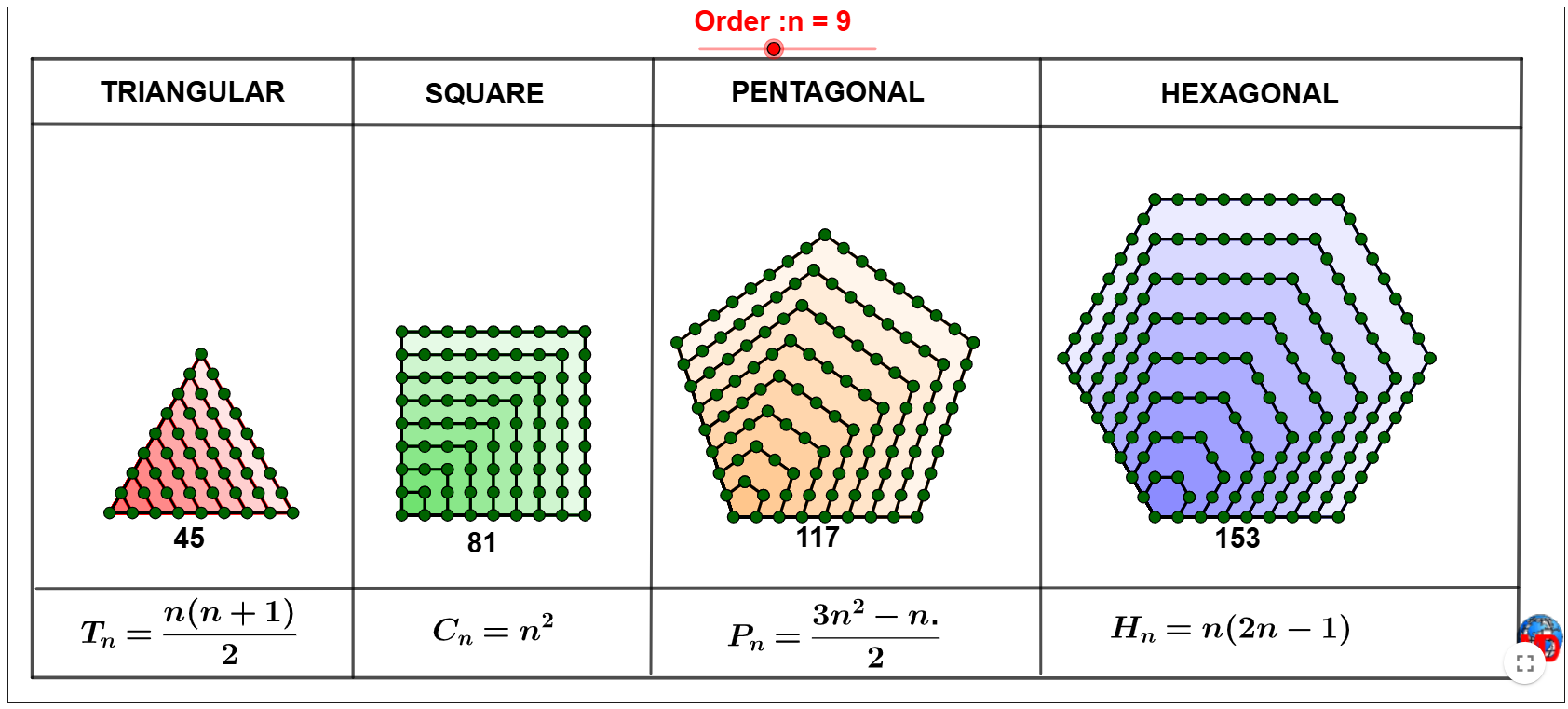
Figurate numbers offer a special way of representing natural numbers geometrically: a given number of points can be arranged to form geometric shapes. Triangles, squares, pentagons, hexagons, and even three-dimensional pyramids become unique “arithmetic sculptures” in which geometric shapes conceal fascinating numerical patterns.
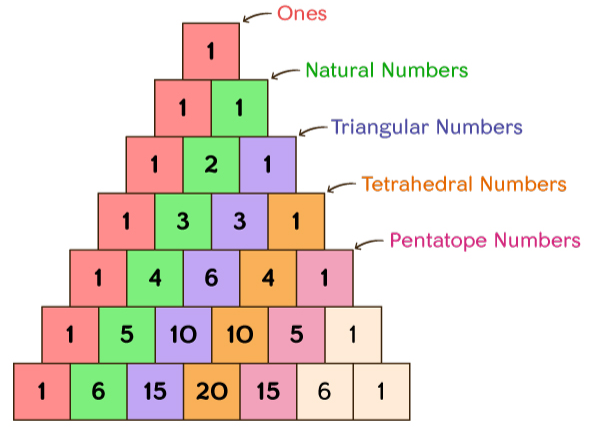
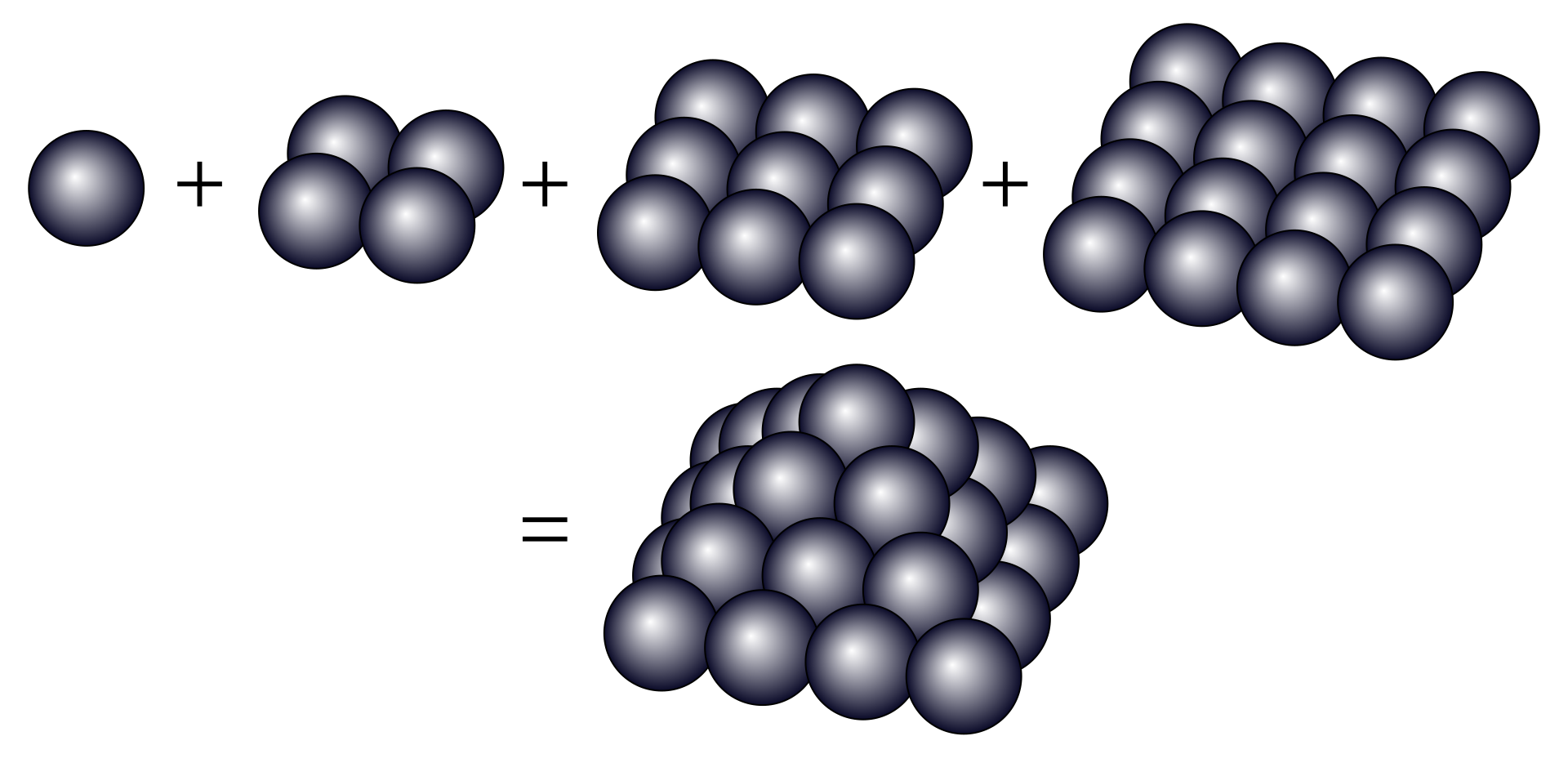
During the sessions, participants explored how simple arrangements of points give rise to entire families of numbers, investigated the principles underlying polygonal numbers, and examined the relationships between them. Particular attention was paid to the transition from plane figures to three-dimensional structures, including tetrahedral numbers and other polyhedral numbers. This helped participants discover that geometric patterns can serve not only as a visual representation of arithmetic sequences but also as a tool for mathematical investigation.
An interesting discovery for the participants was learning about the contribution of Phuong Anh Tran, a Ukrainian researcher of Vietnamese origin, to the study of figurate numbers. Her research activities provided an opportunity to discuss contemporary mathematical research, international scientific collaboration, and the opportunities available to young researchers to contribute to the development of fundamental mathematics.
Video materials also played an important role in the sessions. They helped participants visualize the geometric nature of numerical sequences, observe how figurate configurations are constructed, and better understand how abstract mathematical concepts can acquire a visual form.
Between the two thematic blocks – triangular and figurate numbers – a separate session was held to mark the 200th anniversary of the birth of the renowned German mathematician Bernhard Riemann (1826-1866) and to explore his mathematical legacy. His name is inextricably linked with the development of geometry, mathematical analysis, and number theory. Reflecting on Riemann’s work provided an opportunity to consider how fundamental mathematical ideas have transformed our understanding of space, numbers, and the structure of the mathematical universe. Interestingly, Bernhard Riemann was born on September 17, 1826, making him almost a contemporary of Berdiansk. In 2026, the city celebrates its 199th anniversary, and Riemann’s birthday falls on the same day as Berdiansk City Day!
The series of sessions demonstrated just how closely arithmetic and geometry are interconnected. Triangular and polygonal numbers, point configurations, and three-dimensional polyhedra reveal a whole universe of patterns in which every number can have its own geometric form.
The BSPU Mathematics Club continues to introduce students to the beauty of fundamental mathematics by combining historical discoveries, contemporary research, visualization, and independent exploration of mathematical patterns. After all, sometimes all it takes to discover the true beauty of a number is to arrange a few points in the right order!
Full version: https://www.researchgate.net/publication/417228380
Inattention, Procrastination or ADHD? How to Maintain Focus in the Digital Age
On 28 October 2026, a university-wide lecture entitled “Inattention, Procrastination…
2 November 2026
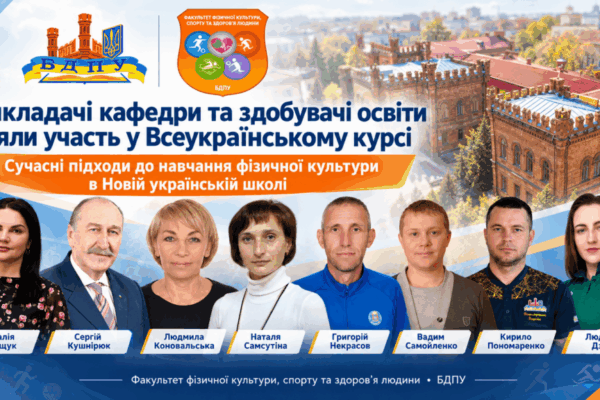
BDPU Lecturers and Students Join Nationwide Physical Education Course
On October 29–31, 2026, academic staff of the Department of…
1 November 2026

BSPU Student Wins Five Medals at the World Karate Championship. International Success for a BSPU Student
From 23 to 25 October 2026, the 26th FSKA/FSKAW World…
1 November 2026
Finance with a halloween twist: a meeting of the scientific club “Current issues of economics and finance ”
As part of the activities of the “Current Issues of…
31 October 2026