
Teaching Students to Explore: Current Trends in Science Education
Admin
25 September 2026
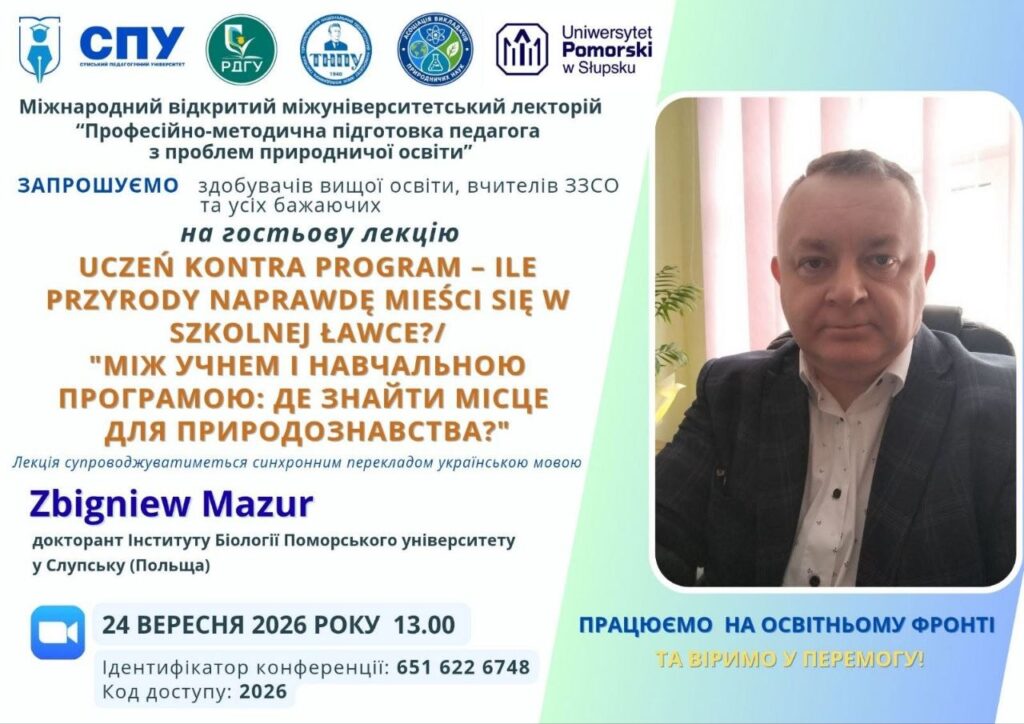
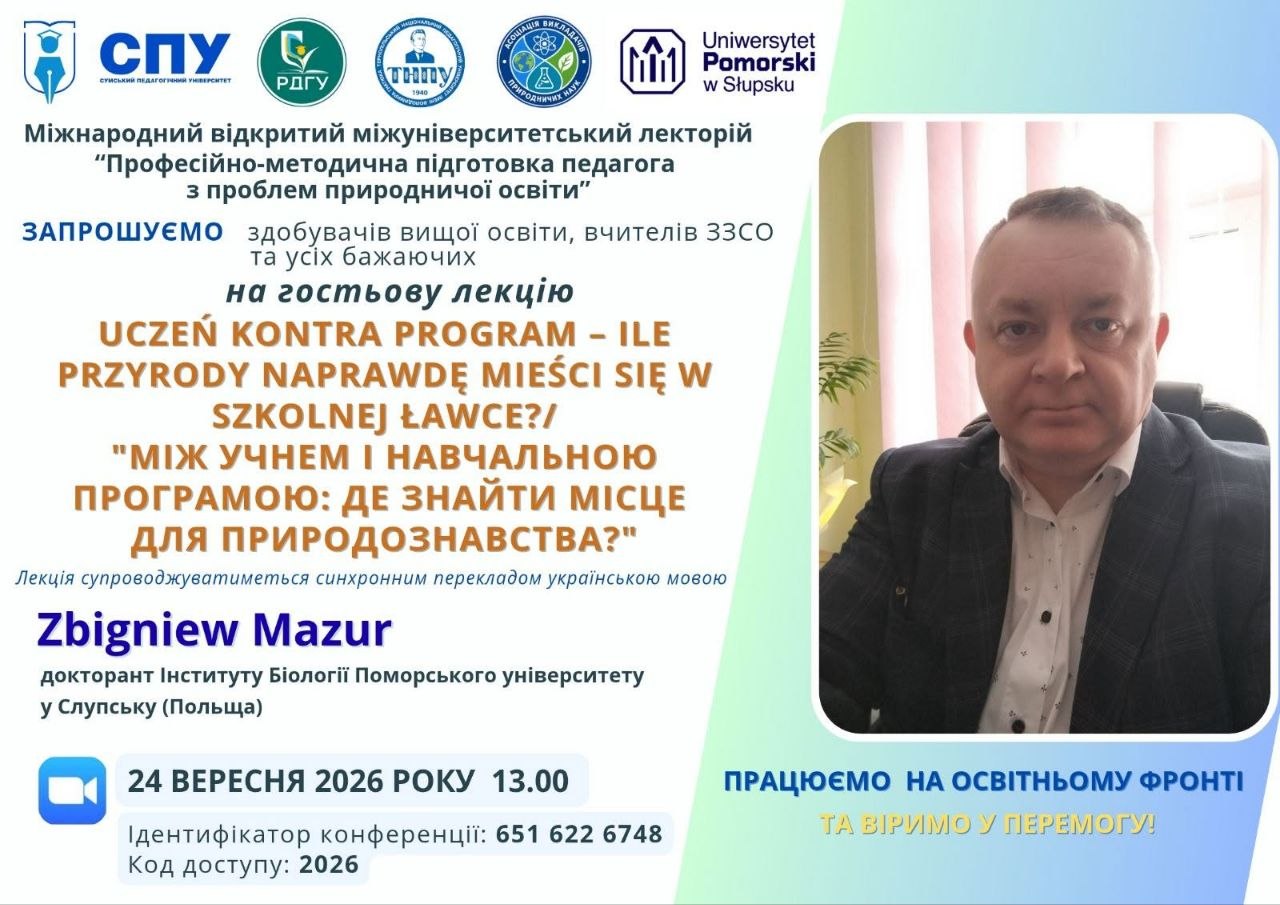
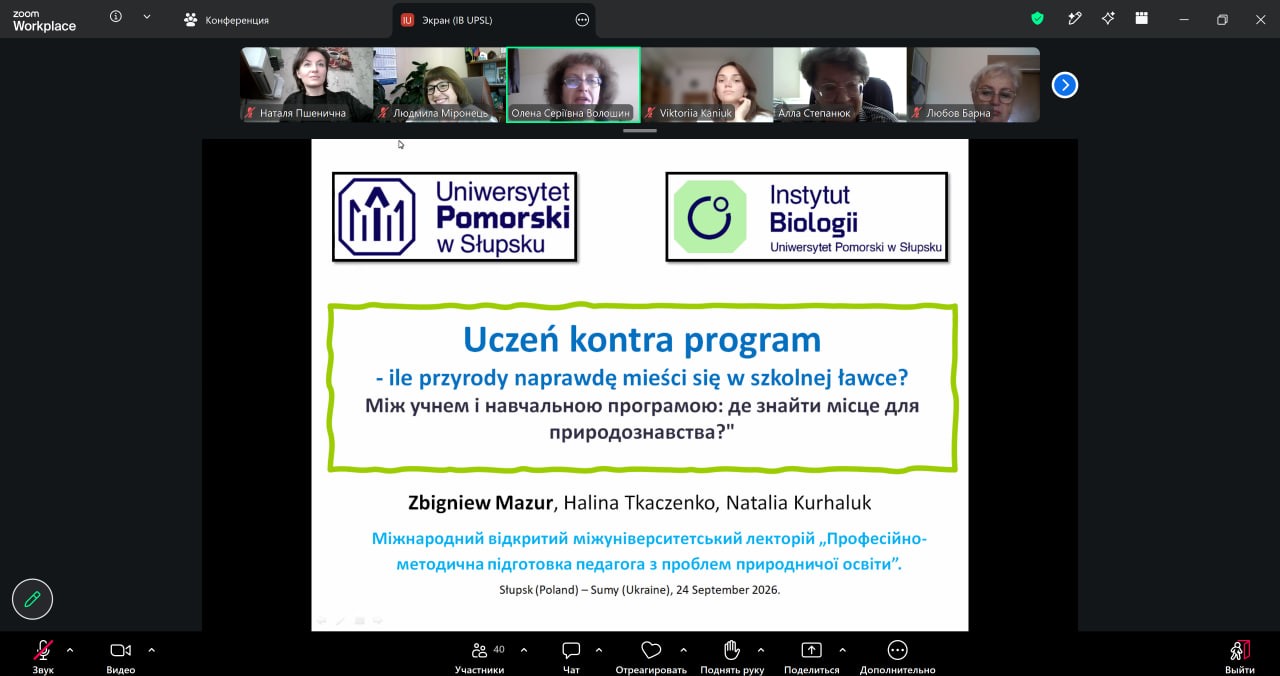
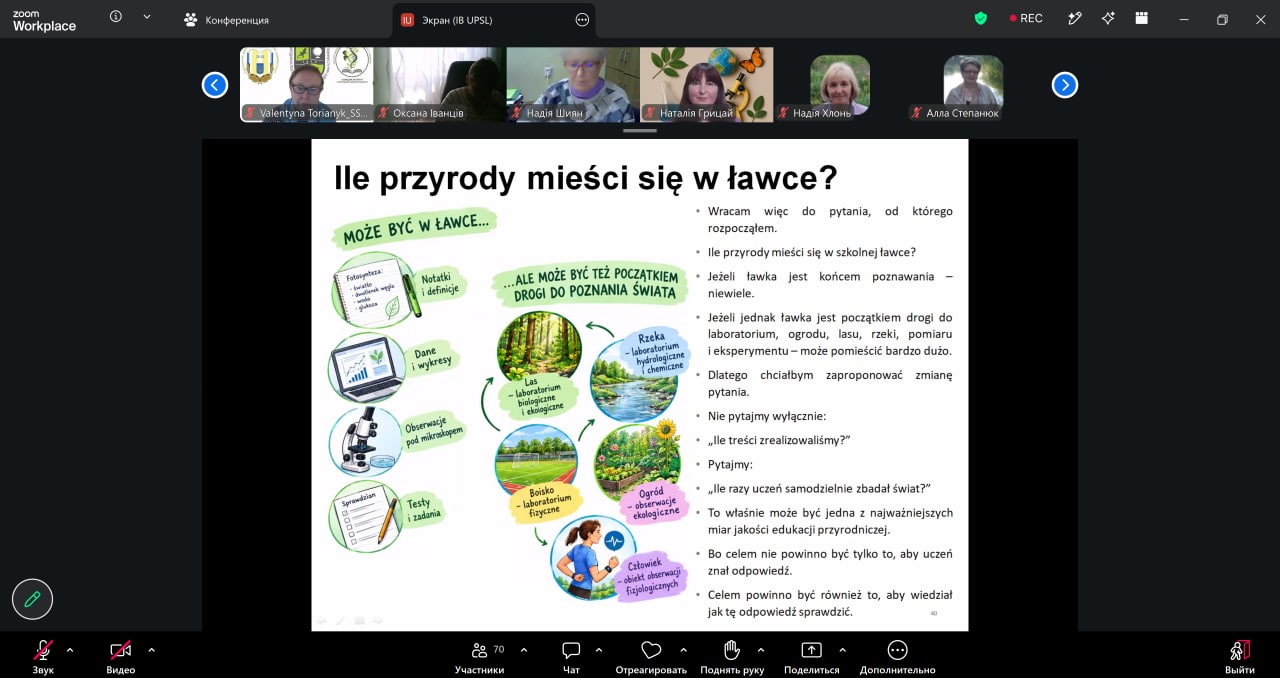
On September 24, 2026, lecturers of the Department of Biology, Human Health and Physical Rehabilitation and Master’s students enrolled in the educational and professional programmes “Secondary Education. Biology and Human Health” and “Biology and Human Health” attended the guest lecture “Between the Student and the Curriculum: Where Is the Place for Science Education?”, held within the framework of the International Open Inter-University Lecture Series “Professional and Methodological Training of Educators in Science Education.”
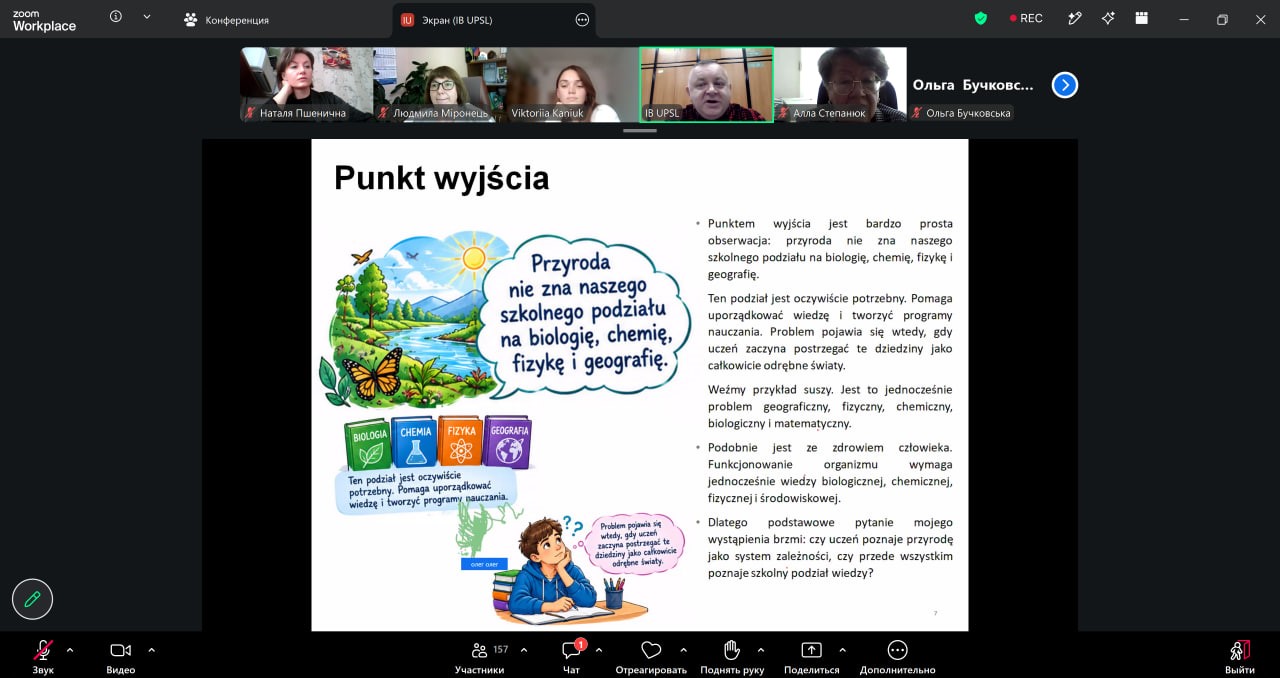
The lecture was delivered by Zbigniew Mazur, a doctoral student at the Institute of Biology, Pomeranian University in Słupsk (Poland). The lecture, accompanied by simultaneous interpretation into Ukrainian, gave future educators an opportunity to learn about the organisation of science education in Polish schools and, at the same time, to reflect on a much broader question: how much genuine inquiry remains in a lesson when students primarily reproduce ready-made knowledge?
One of the central topics of the meeting was the ongoing transformation of science education in Poland. From 2026, a new format of an integrated science course is being gradually introduced in Grades 4–6, combining biological, geographical, chemical and physical components. However, as the lecturer emphasised, changing the curriculum alone does not guarantee a change in the way students learn. What ultimately matters is what students actually do during the time allocated to science education.
Particular attention was paid to students’ inquiry-based activities. Observation, asking questions, formulating hypotheses, planning and conducting investigations, analysing collected data and drawing conclusions transform students from recipients of ready-made information into young researchers. In this context, an important idea was highlighted: an experiment in the classroom should not merely be an impressive addition to the teacher’s explanation but rather a means of finding an answer to a research question. Even a result that does not confirm the initial hypothesis should not be regarded as a failure – it can become the starting point for a new stage of inquiry.
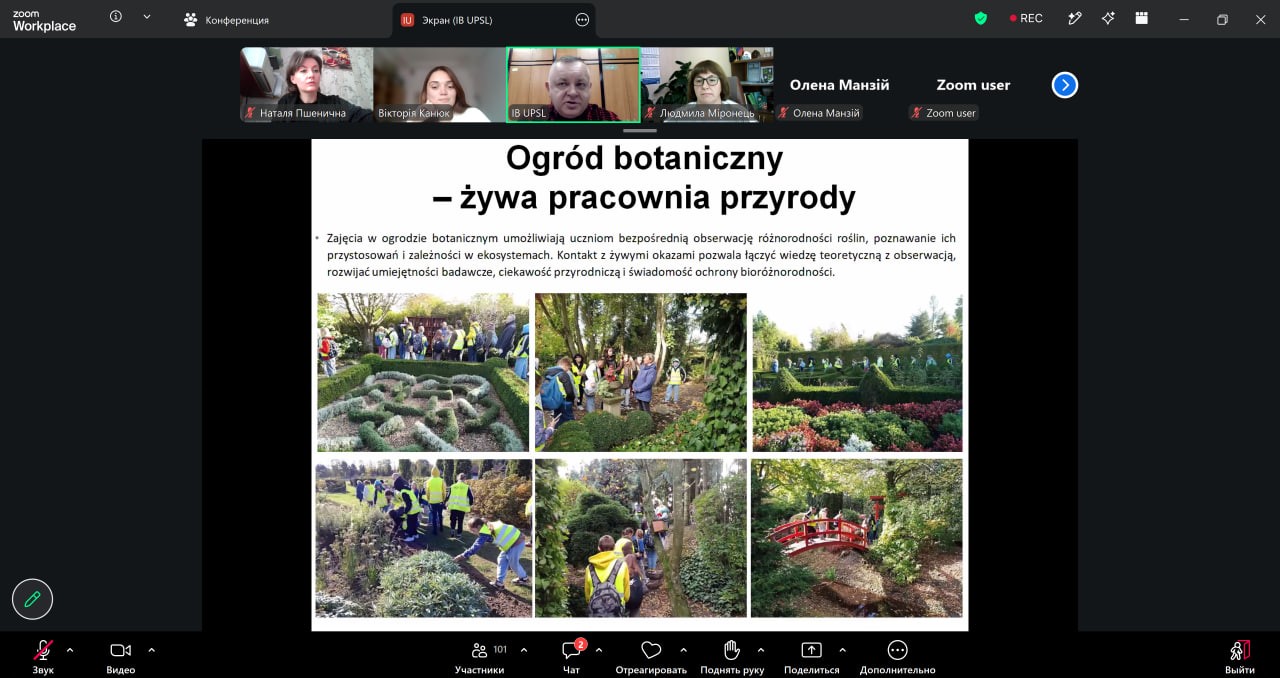
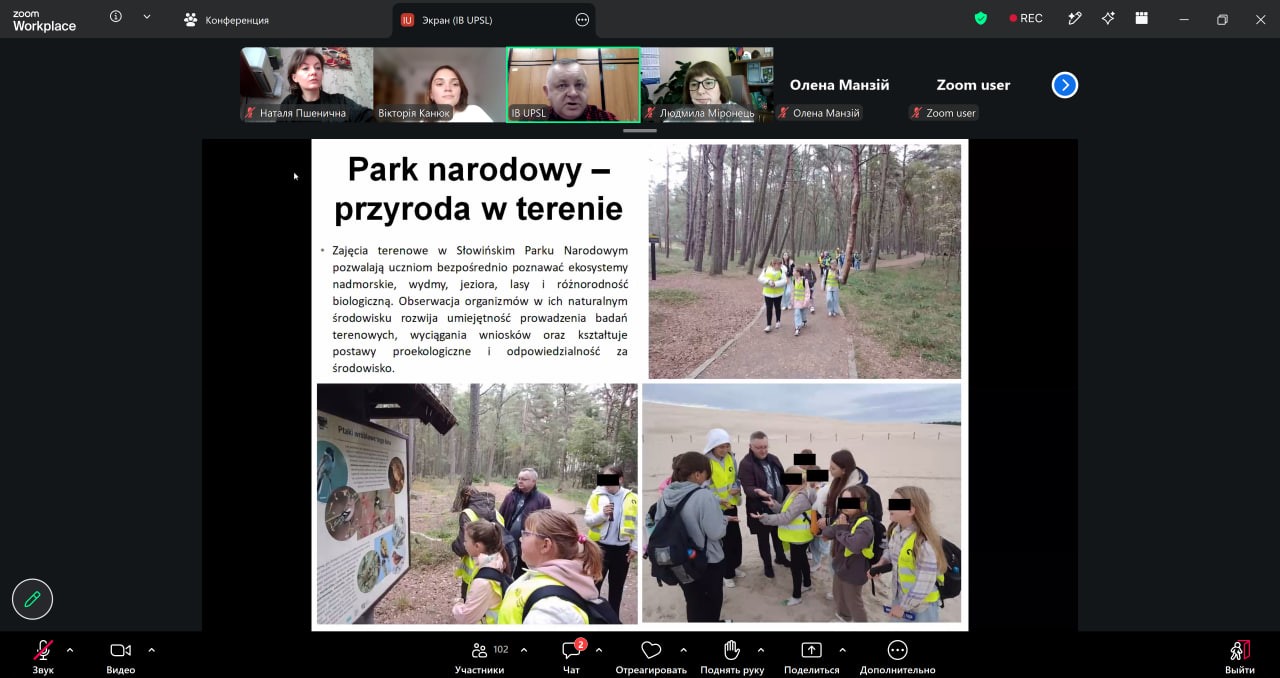
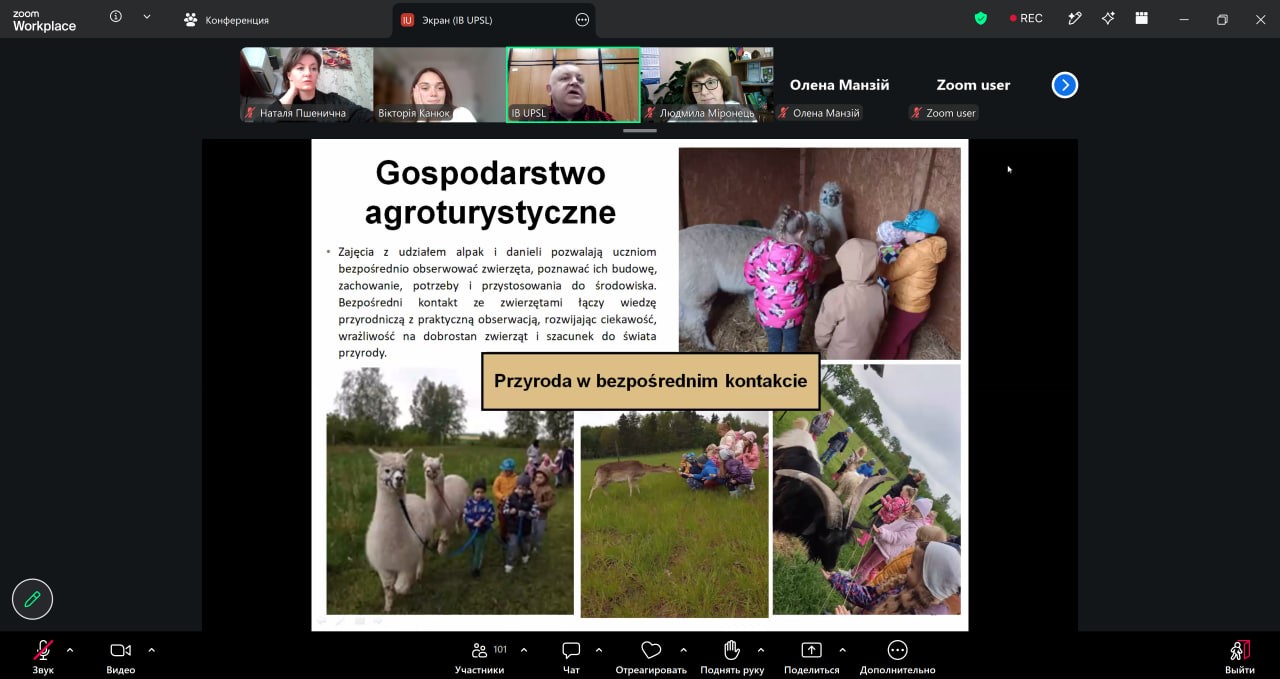
Another interesting aspect concerned the educational environment for studying nature. Science education is not confined to the school desk or laboratory: a botanical garden, forest, national park, zoo, agritourism farm, or even a plant growing inside a school building can become a place for observation and investigation. Genuine inquiry does not always require sophisticated equipment – sometimes simple measuring tools, a well-formulated question and an opportunity to observe a real object or process are enough.
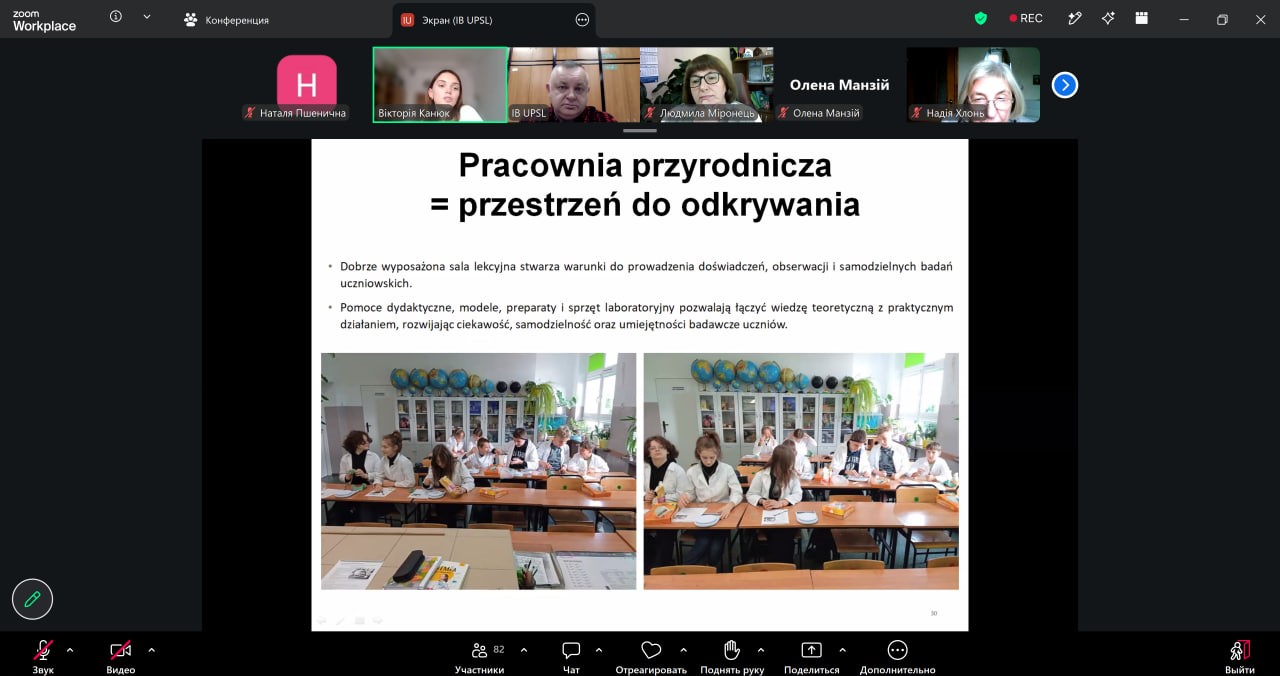
A separate part of the lecture focused on the facilities and equipment required for science education. A well-equipped laboratory, microscopes, measuring instruments, models and other resources create opportunities for practical work; however, they do not develop inquiry skills on their own. Equipment truly begins to “work” for education when students ask their own questions, prepare experiments, observe, record results and attempt to explain them.
Interdisciplinarity was another important issue discussed during the lecture. Real-world problems do not fit neatly within the boundaries of a single school subject: climate change is not exclusively a matter of geography, human health is not solely biology, and energy-related issues cannot be reduced to physics alone. Investigating air quality, the condition of ecosystems and other phenomena requires the simultaneous application of knowledge from biology, chemistry, physics, geography and mathematics. An interdisciplinary approach therefore enables students to see not isolated fragments of knowledge but a coherent picture of the world.
The discussion naturally continued with the issue of assessment. If the aim of education is to develop students’ ability to investigate and reason, assessment should not focus solely on the final correct answer. The question formulated by the student, the investigation plan, the quality of the data collected, the way the data are interpreted, the reasoning and the validity of the conclusions all matter. What is important is not only the answer a student arrives at, but also how they arrive at it.
For future teachers of biology and human health, participation in such events provides an opportunity to see how contemporary principles of science education are implemented in another European country, to compare different educational approaches, and to enrich their own methodological toolkit with practical ideas for their future professional activities.
Guarantor of the Educational and Professional Programme “Biology and Human Health”
Associate Professor of the Department of Biology,
Human Health and Physical Rehabilitation
Natalia Pshenychna
Natural Science Education in the NUS Senior Profile School
On September 21, 2026, lecturers of the Department of Biology,…
25 September 2026
First-year students from the faculty of physical culture, sports, and human health attend online tour of the BSPU library
On September 25, 2026, an introductory tour of the Berdyansk…
25 September 2026
First-year students of the faculty of physical culture, sports and human health learned more about academic and social scholarships
An information meeting dedicated to the awarding of academic and…
25 September 2026
BSPU library in the online space: resources and opportunities
Today, a university library is more than just book collections…
24 September 2026