
Digital Educational Resilience with BSPU: Artificial Intelligence in Teaching
Admin
27 October 2026
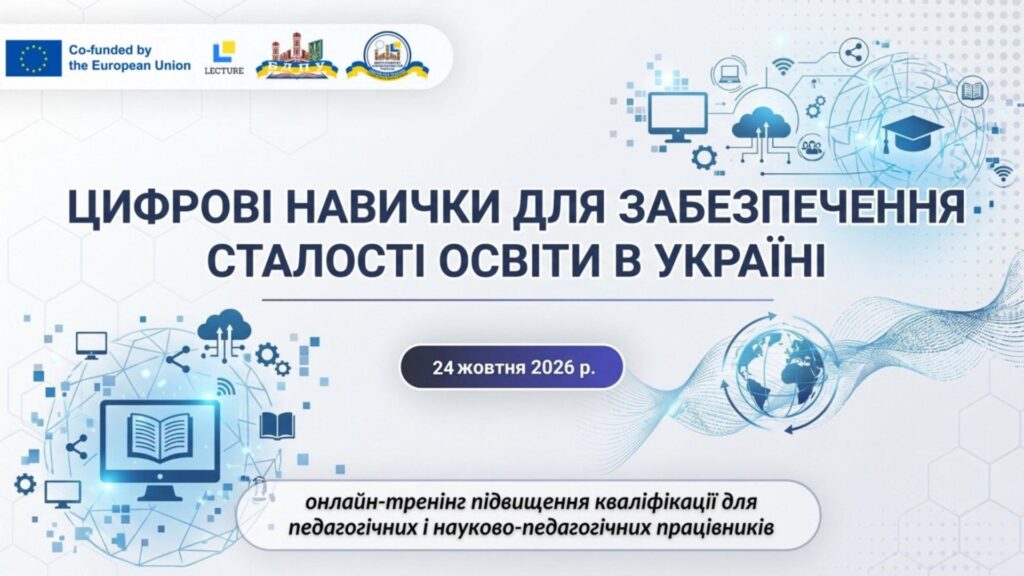
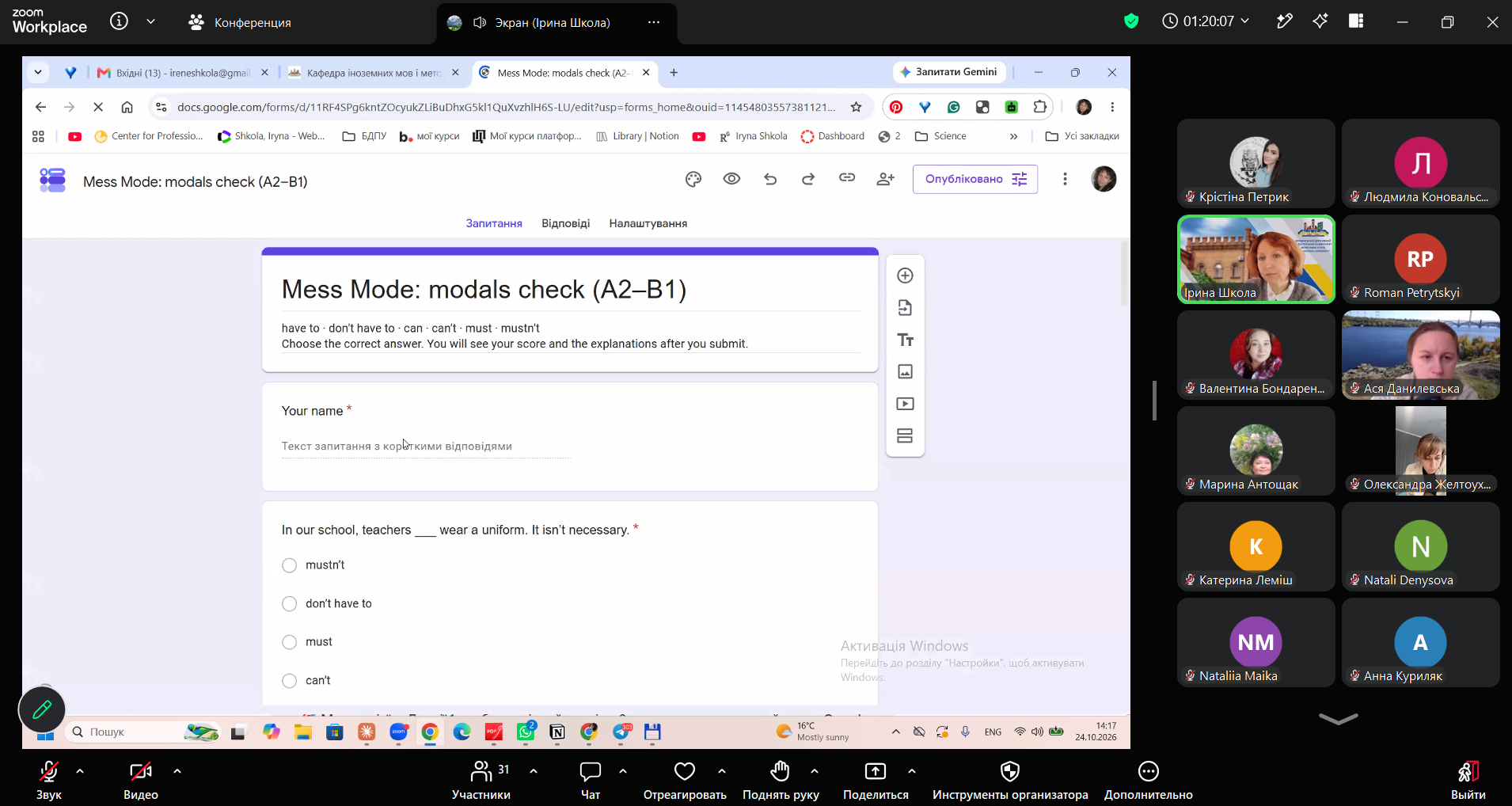
On 24 October 2026, Berdyansk State Pedagogical University held the online training “Digital Skills for the Sustainability of Education in Ukraine” for teaching and academic staff. The event took place within the international Erasmus+ KA2 project LECTURE, coordinated by First Vice-Rector, Doctor of Pedagogical Sciences, Professor Olha Hurenko. The training was held on Zoom and brought together more than 30 participants.
The speakers were Iryna Shkola, PhD in Philology, Associate Professor and Head of the Department of Foreign Languages and Teaching Methods, and Valentyna Bondarenko, Senior Lecturer at the Department of Computer Technologies and Informatics and Deputy Head of the Academic Affairs Office. At the start of the event, participants completed an entry survey.
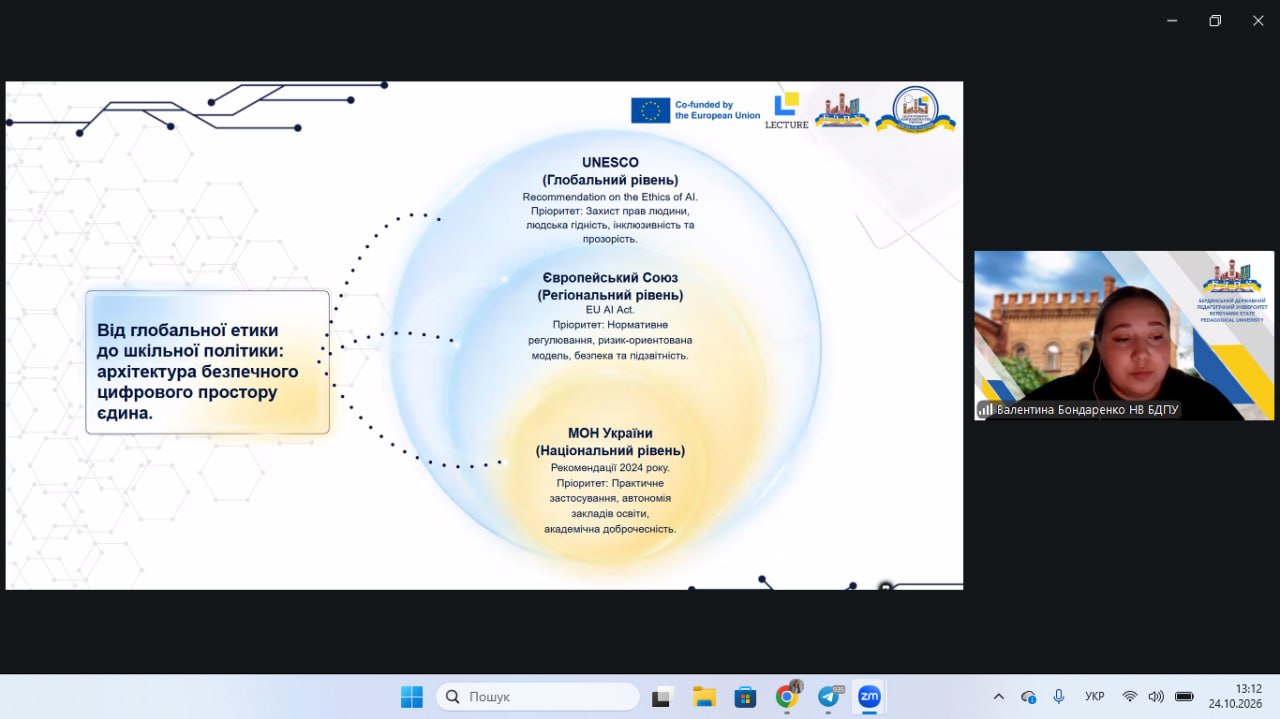
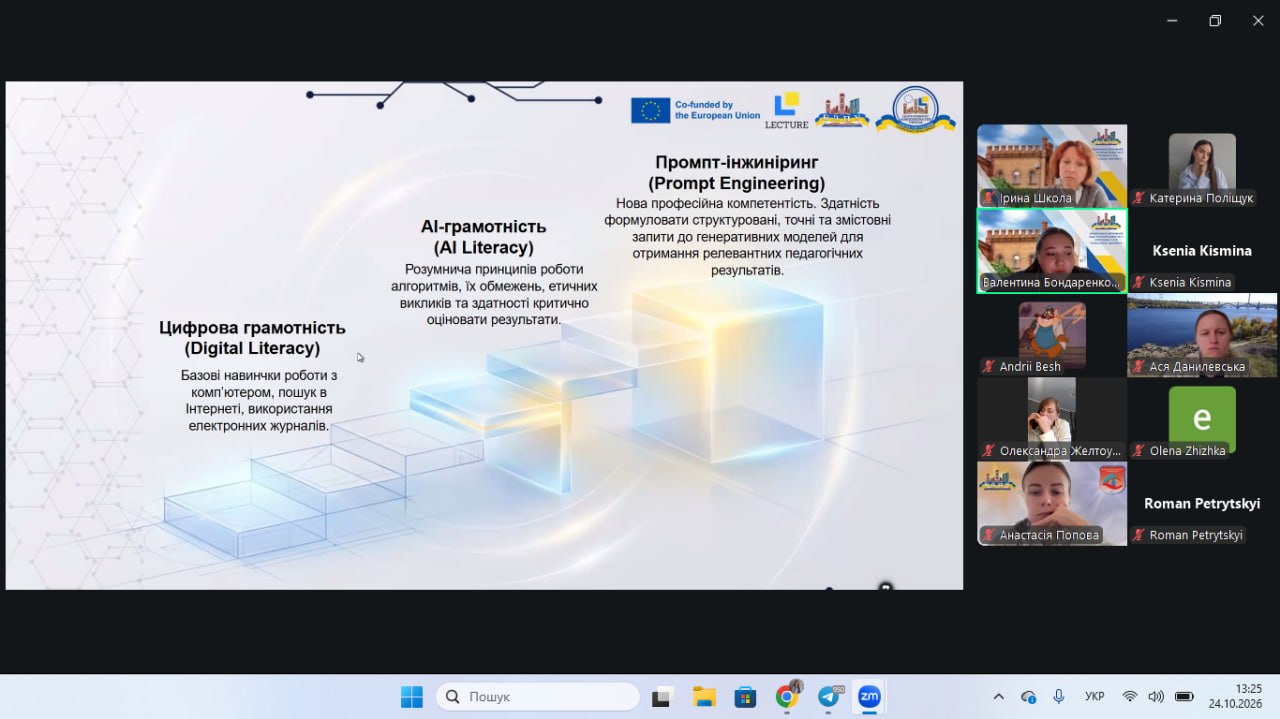
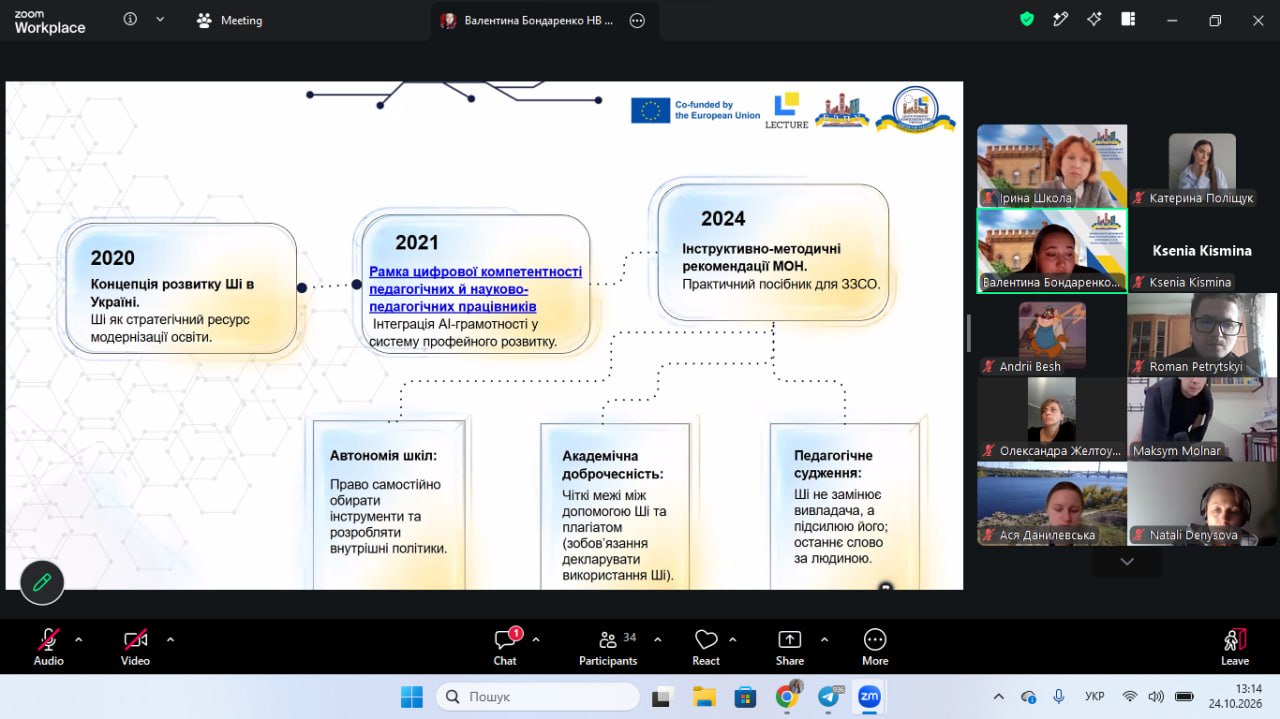
Valentyna Bondarenko spoke about the shift from the era of digitalisation to the era of artificial intelligence, in which technology becomes an intellectual partner and the key challenges are critical thinking, algorithmic transparency and accountability for decisions. She presented the levels of AI regulation: the UNESCO Recommendation on the Ethics of Artificial Intelligence, the EU AI Act and the 2024 guidelines of the Ministry of Education and Science of Ukraine. She paid special attention to academic integrity, the autonomy of educational institutions and the principle that AI strengthens the teacher rather than replacing them. Participants also discussed the path from digital literacy to AI literacy and prompt engineering, the components of teachers’ AI competence and the main areas of AI use in education.
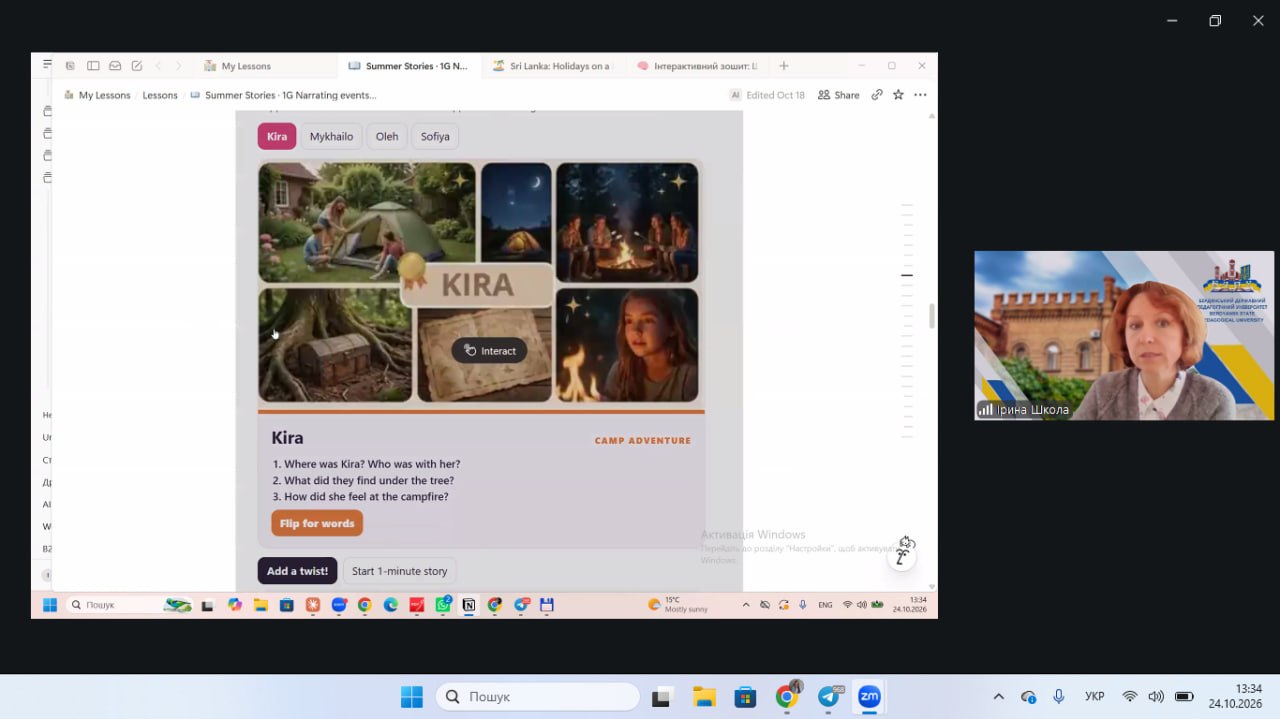
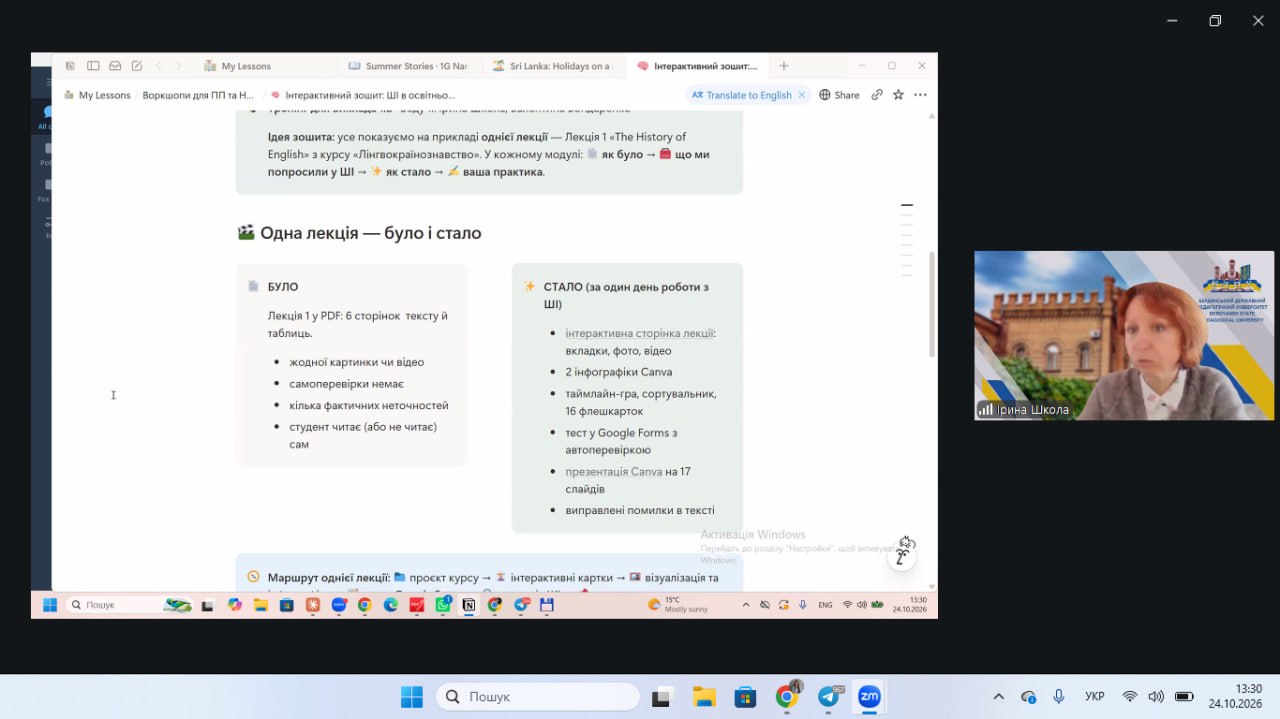
Iryna Shkola led the practical part using the interactive workbook “AI in the Educational Process: From a Lecture to an Interactive Course”. She demonstrated every tool on a single lecture, “The History of English”, from the course “Cultural Studies of English-Speaking Countries”: in one day of work with AI, a six-page PDF became an interactive page with photos and videos, infographics, flashcards, a timeline game, a self-grading Google Forms quiz and a presentation. Participants learned how to set up course projects in AI, write strong prompts, create interactive cards and games without coding, visualise lecture texts and generate high-quality tests. A separate module showed AI as a reviewer that helps detect factual inaccuracies in teaching materials, while the final decision always remains with the teacher.
Each module ended with a hands-on task, and at the end participants drew up their own plans for using AI in their courses. The training helped develop teachers’ digital competencies and promoted the responsible use of artificial intelligence in the university’s educational process.
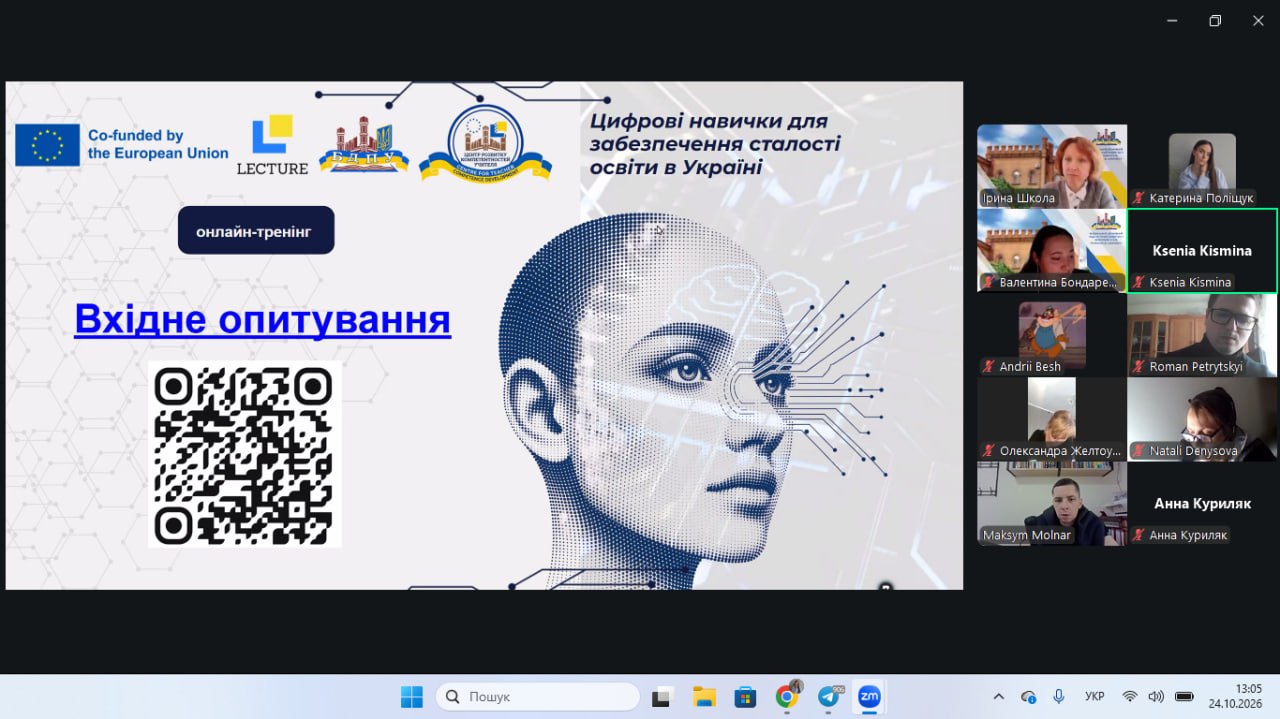
Based on materials from the Center for the Development of Teacher Competencies
From Theory to Practice in Master’s Studies: Future Preschool Education Leaders Develop Their Management Decision-Making Skills
Preparing future leaders in preschool education involves not only acquiring…
29 October 2026
Academic Writing: From Finding Sources to Producing a High-Quality Academic Text
First-year master’s students enrolled in the full-time and part-time study…
29 October 2026
BSPU Takes Part in the Fourth ReACT Partner Meeting
The fourth transnational partner meeting of the Erasmus+ ReACT project…
28 October 2026

From Academic Integrity to Professional Responsibility
On 23 October 2026, staff members of the library of…
28 October 2026