
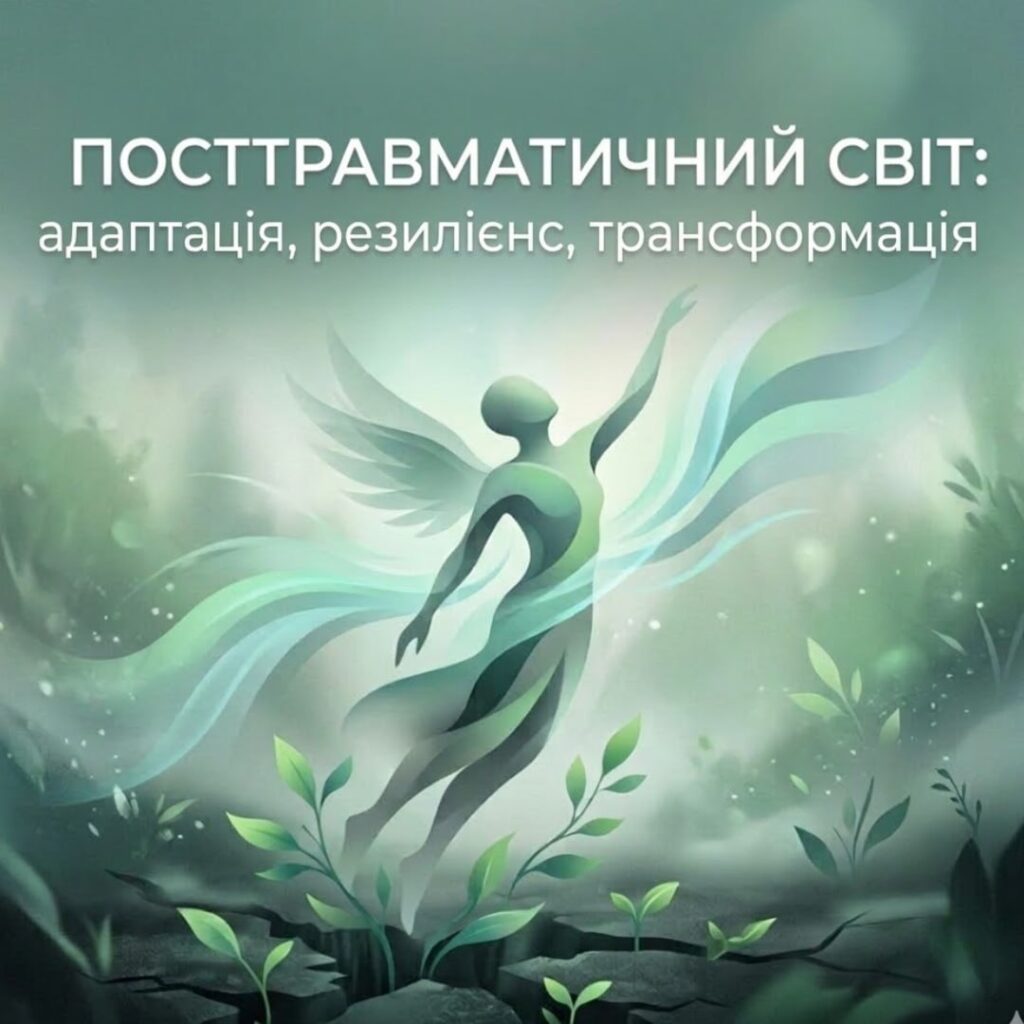
The post-traumatic world: adaptation, resilience, transformation
Admin
27 March 2026
How do we live after trauma? Is it possible not only to survive, but to become stronger? These questions became central to the educational intensive “The Post-Traumatic World: Adaptation, Resilience, Transformation”, organized by the Council of Young Scientists of the Faculty of Psychological and Pedagogical Education and Arts at BSPU. The speaker was Kateryna Saprankova, Assistant Lecturer at the Department of Psychology and a member of the Council of Young Scientists of the Faculty.
During the session, participants immersed themselves in the deep psychological processes that occur after experiencing trauma. The speaker outlined three key trajectories of post-traumatic existence: adaptation as a homeostatic mechanism, resilience as the ability to maintain integrity under pressure, and transformation as a qualitative change of personality.
Particular interest was sparked by the discussion on the five domains of post-traumatic growth. Participants reflected on the paradoxes of trauma: how vulnerability can become a source of true strength, how pain may lead to new meaning, and why hope should be realistic rather than illusory.
As a result, it was concluded that psychological support in the post-traumatic period should be based on creating a safe environment, respecting the time needed for recovery, and maintaining social connections. After all, what matters most is not what has happened to us, but who we become in the process of overcoming – and whether we preserve the ability to remain alive, vulnerable, and strong at the same time.

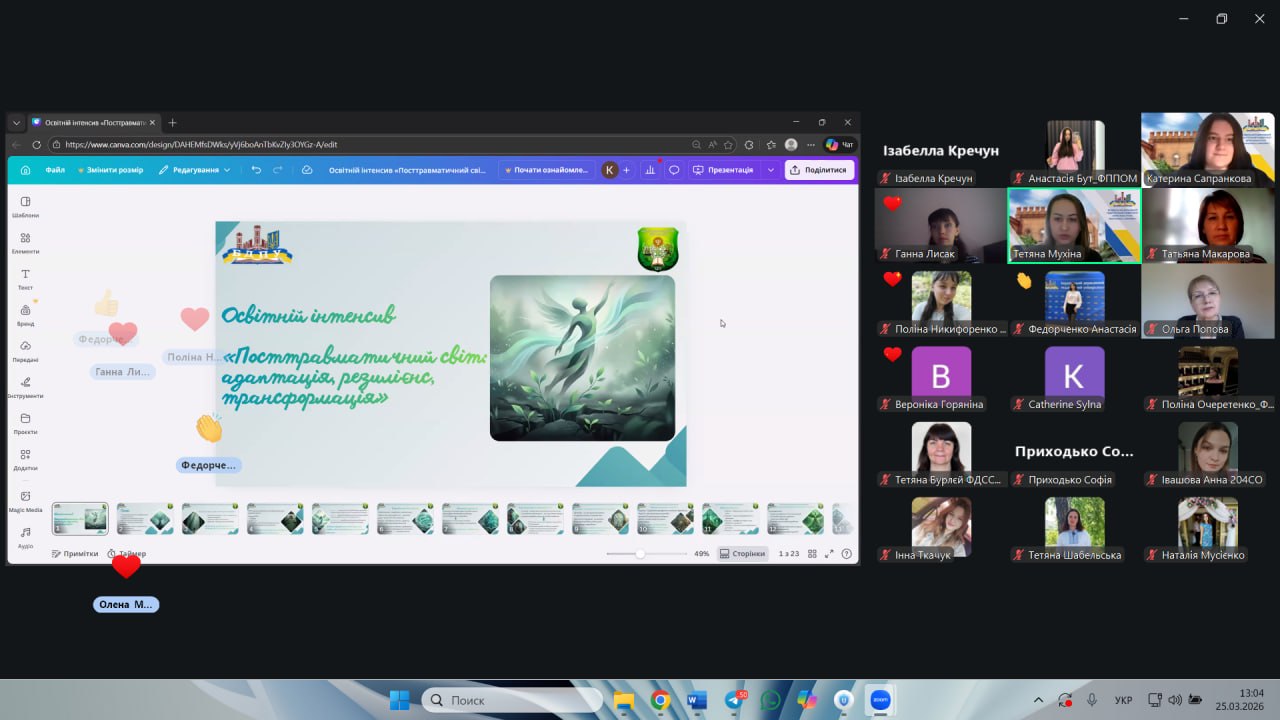
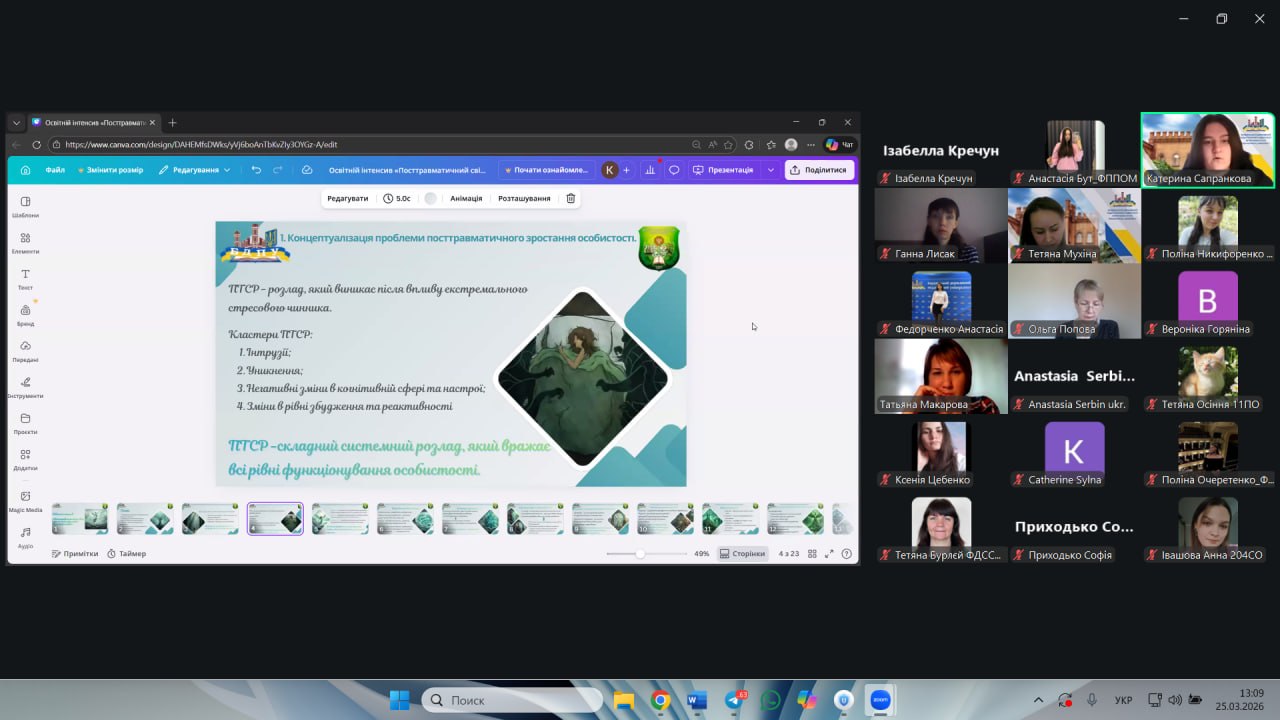
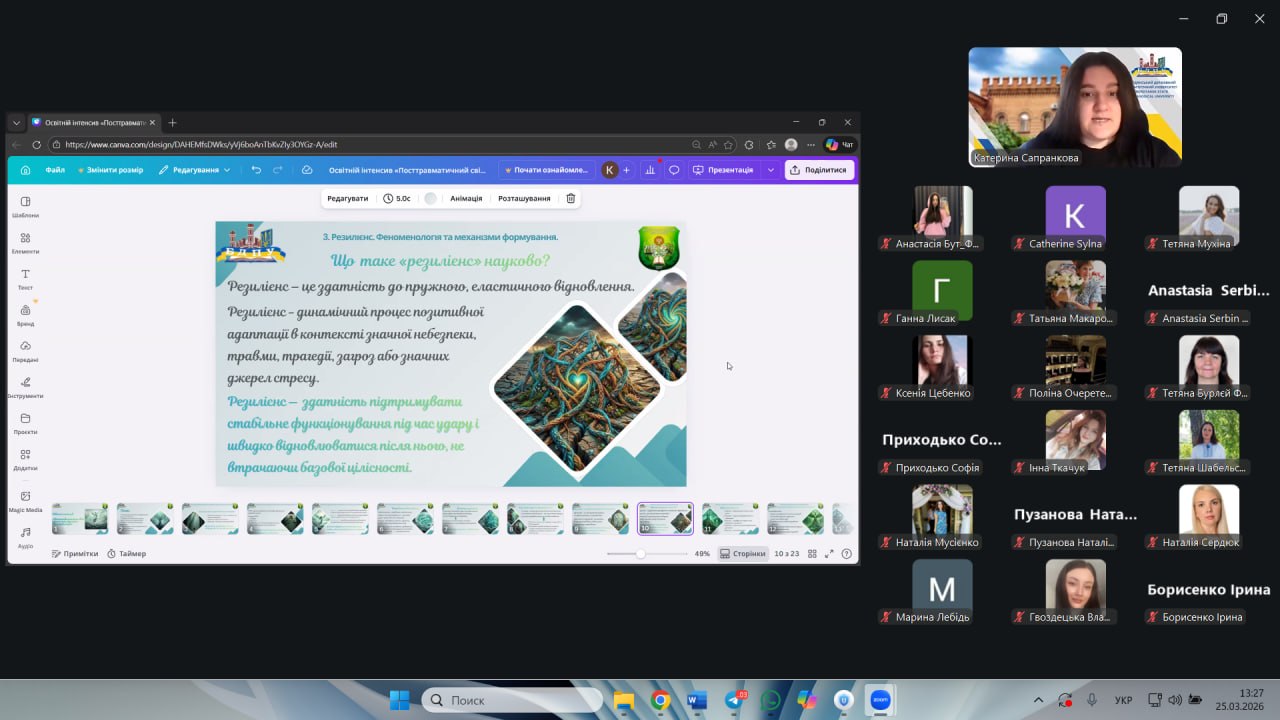
Based on materials from the Council of Young Scientists of the Faculty of Psychological and Pedagogical Education and Arts, BSP
«Find Out and Get Involved»: Student Life at BDPU Continues
Berdyansk State Pedagogical University (BSPU) hosted its traditional "Learn and…
28 September 2026
Significant Contribution of a BSPU Scholar to the Future of Quality School Legal Education
The New Ukrainian School (NUS) reform, which has fundamentally transformed…
28 September 2026
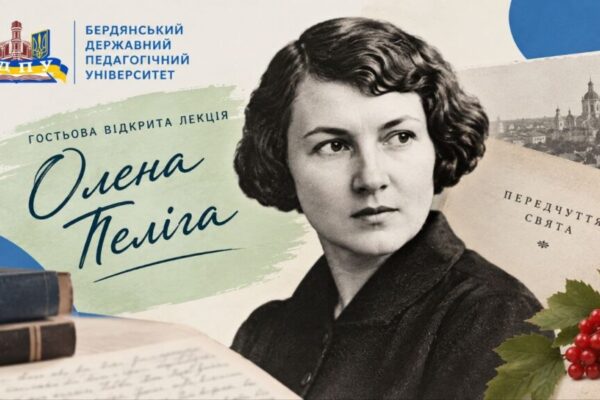
Guest Lecture on Olena Teliha Held at BDPU
On September 23, Berdyansk State Pedagogical University hosted an open…
28 September 2026
Stories That Hold Us Together
On 24–25 September 2026, Berdyansk State Pedagogical University hosted an…
28 September 2026