
Books that open up space for conversation

Admin
7 October 2026
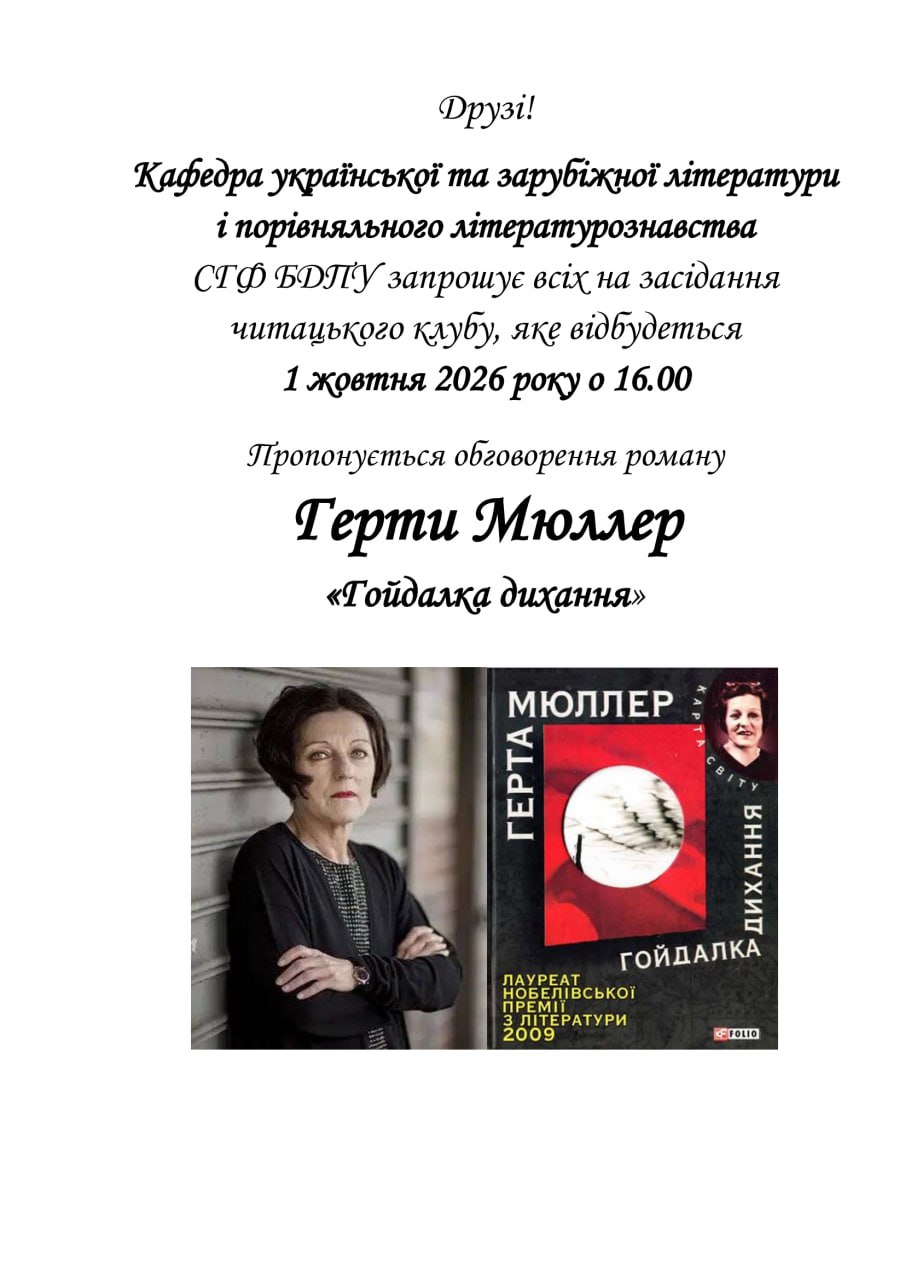
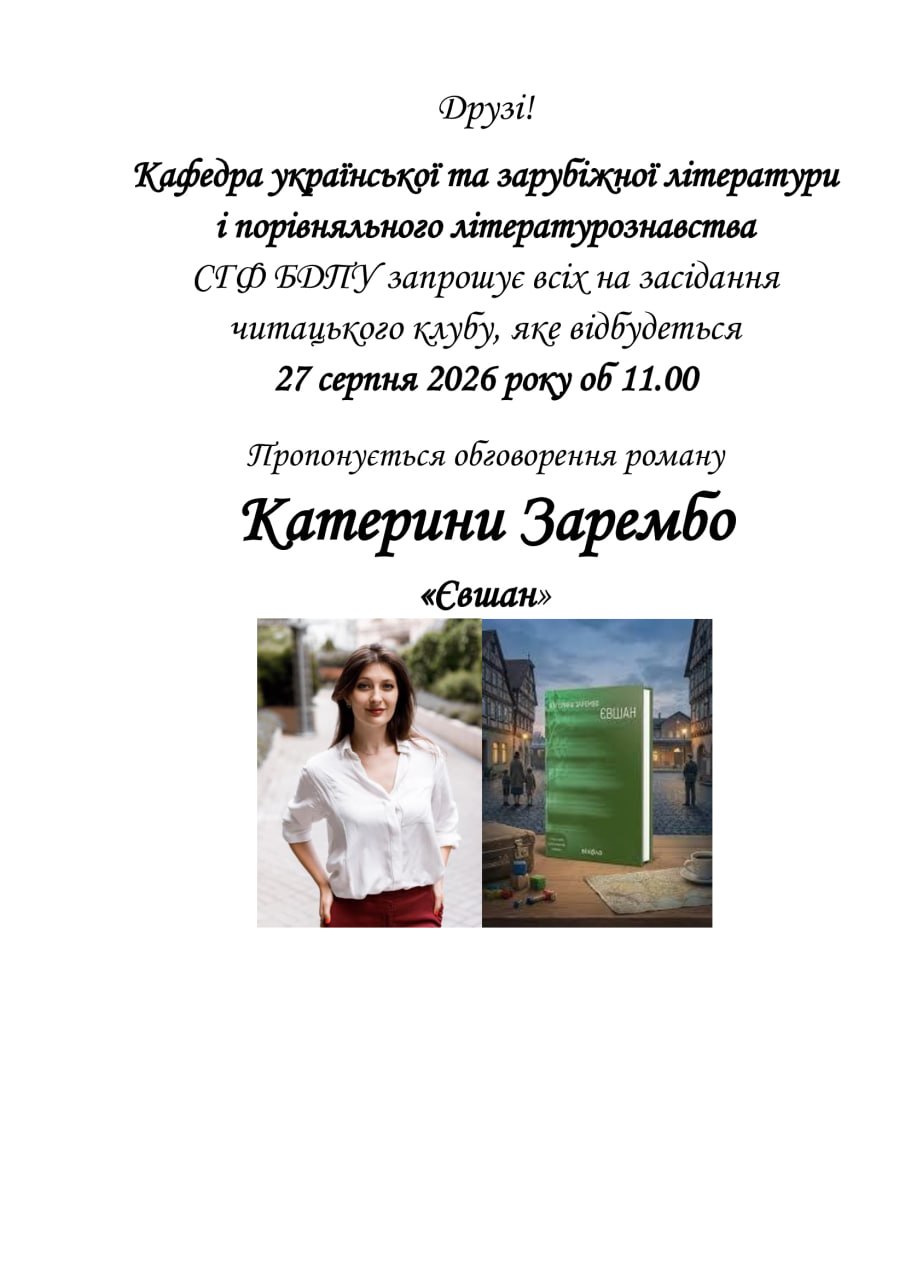
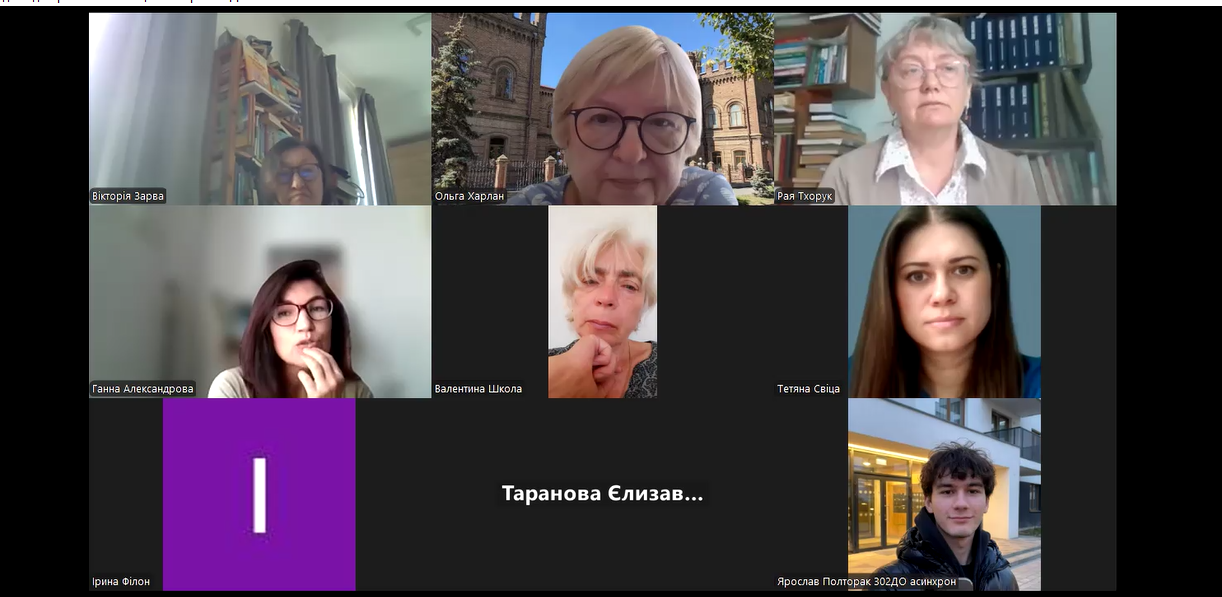
After the summer break, the reading club brought together faculty members, students, and guests once again. The final days of summer and the first day of autumn’s second month offered an opportunity to return to reading together and discuss works that explore human experience, memory, and hardship in different ways. On August 27, participants discussed Kateryna Zarembo’s novel Yevshan; on October 1, they turned to Herta Müller’s The Hunger Angel (Atemschaukel).
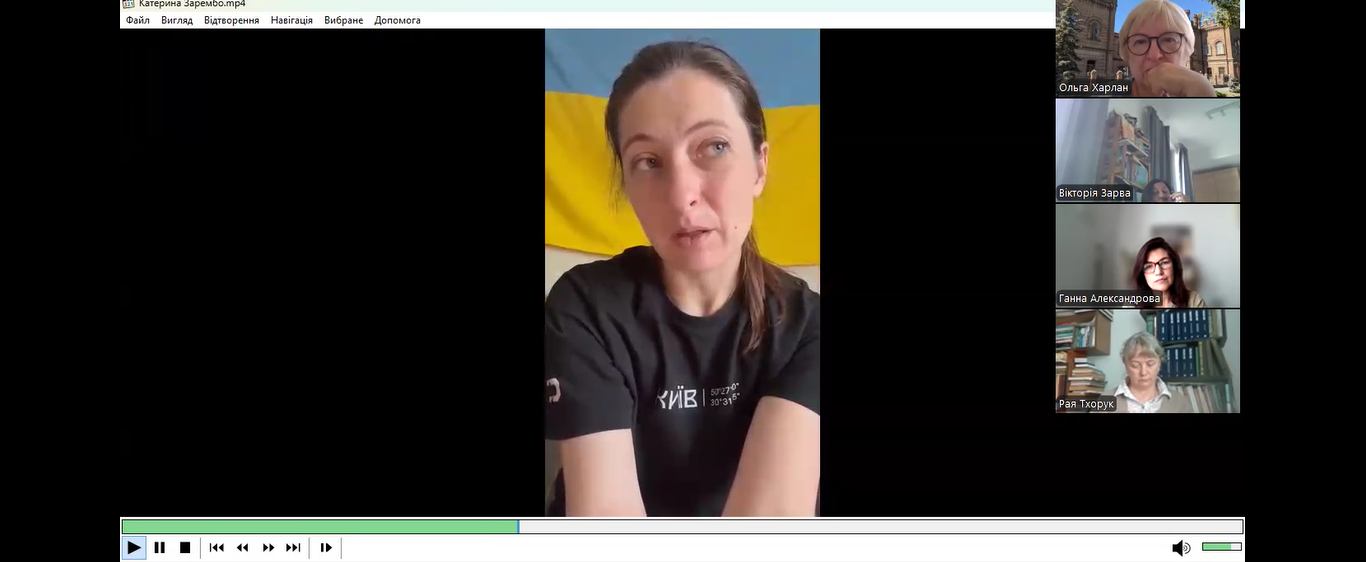
The August meeting was special because it marked the club’s return after the summer break. The group chose Yevshan for discussion – a novel that resonated with many attendees who had been forced to leave their homes. It also provided an opportunity to talk about the author’s original idea and the journey from that first idea to its realization in a work of fiction. Kateryna Zarembo was unable to join the meeting because of her military service, but she sent a video address. In it, she greeted the club members and spoke about how the idea for the novel came about and how she worked on it.
The video address became an important part of the meeting: readers heard the author’s perspective on the book’s creation and gained a glimpse into her creative process. A discussion of the novel’s origins helps readers see how an initial impulse grows into a complete text, how the author finds a form for her story, and how she builds its fictional world. At the same time, engaging with a book goes beyond hearing the author’s explanation: every reader brings their own experience, questions, and associations to it. In this way, the club’s discussion continues the conversation begun by the novel.
At the second meeting, on October 1, participants discussed Herta Müller’s The Hunger Angel – a novel about human tragedy. The reading had a different tone, drawing attention to the fragility of human life, the experience of pain, and the effort to endure circumstances that put a person to the test. The title itself invites reflection on breath as a sign of life, and on how its rhythm can change under the pressure of fear, exhaustion, and loss. In a work like this, what matters is not only what happens, but also a person’s inner experience: how they live through tragedy and what helps them hold on to themselves.
The discussion of Müller’s novel reminds us that literature can address difficult experiences with care and without oversimplification. Reading becomes an encounter with a story that calls for empathy while also prompting reflection. What does it mean to remain human in inhumane circumstances? How does memory hold on to what has been endured? To what extent can words convey pain, and where are the limits of expression? Such questions naturally arise in a discussion of the novel and stay with readers after the meeting ends.
The two meetings were united by a shared interest in books as spaces for dialogue. Zarembo’s novel offered an opportunity to hear the story of forced relocation to another country following the full-scale Russian invasion; Müller’s book turned attention to human tragedy and the experience of endurance. Different in subject and mood, these readings showed how varied literature’s paths to its readers can be: through an account of the creative process, an intense emotional experience, or questions that have no simple answers.
The participation of faculty members, students, and guests gave the meetings an open and welcoming character. The reading club brings people together through attentive reading, giving them a chance to share their impressions and hear other perspectives. Here, a book becomes common ground, and talking about it offers an opportunity to better understand both the text and one’s own response to it. The autumn meetings showed that reading together does not end with the final page. It continues through the questions, reflections, and dialogue that arise among readers. More books, topics, and reading club meetings lie ahead.
Tetiana Svitsa, Deputy Dean of the Faculty of Social Sciences and Humanities

AІ week at FPPEA: from experiment to original projects
Artificial intelligence writes texts, creates images, analyzes information and helps…
7 October 2026

From first introduction to partnership: First-year students begin their educational journey
On 1 October 2026, the Department of Social Work and…
5 October 2026

Artificial Intelligence as a Tool for Modernizing the Professional Training of Future Psychologists
The rapid development of generative artificial intelligence opens up new…
5 October 2026

From financial bubbles to modern financial pyramids: money illusions and lessons from history in focus of the scientific club “Current issues of economics and finance”
On September 30, 2026, the next meeting of the Scientific…
5 October 2026