
Quality of Education Through the Lens of Partnership: Outcomes of the Meeting of the Employers’ Council for the Specialty I10 Social Work and Counseling
Admin
4 November 2026
The current development trajectory of higher education in the social sphere in Ukraine is focused on dynamic adaptation to the evolving demands of society and the labor market. The modernization of professional training requires a systemic rethinking of educational approaches, taking into account emerging social challenges. In this context, the institution of Employer Councils serves as a key instrument for ensuring educational quality, facilitating the effective integration of theoretical instruction with the practical requirements of the sector.
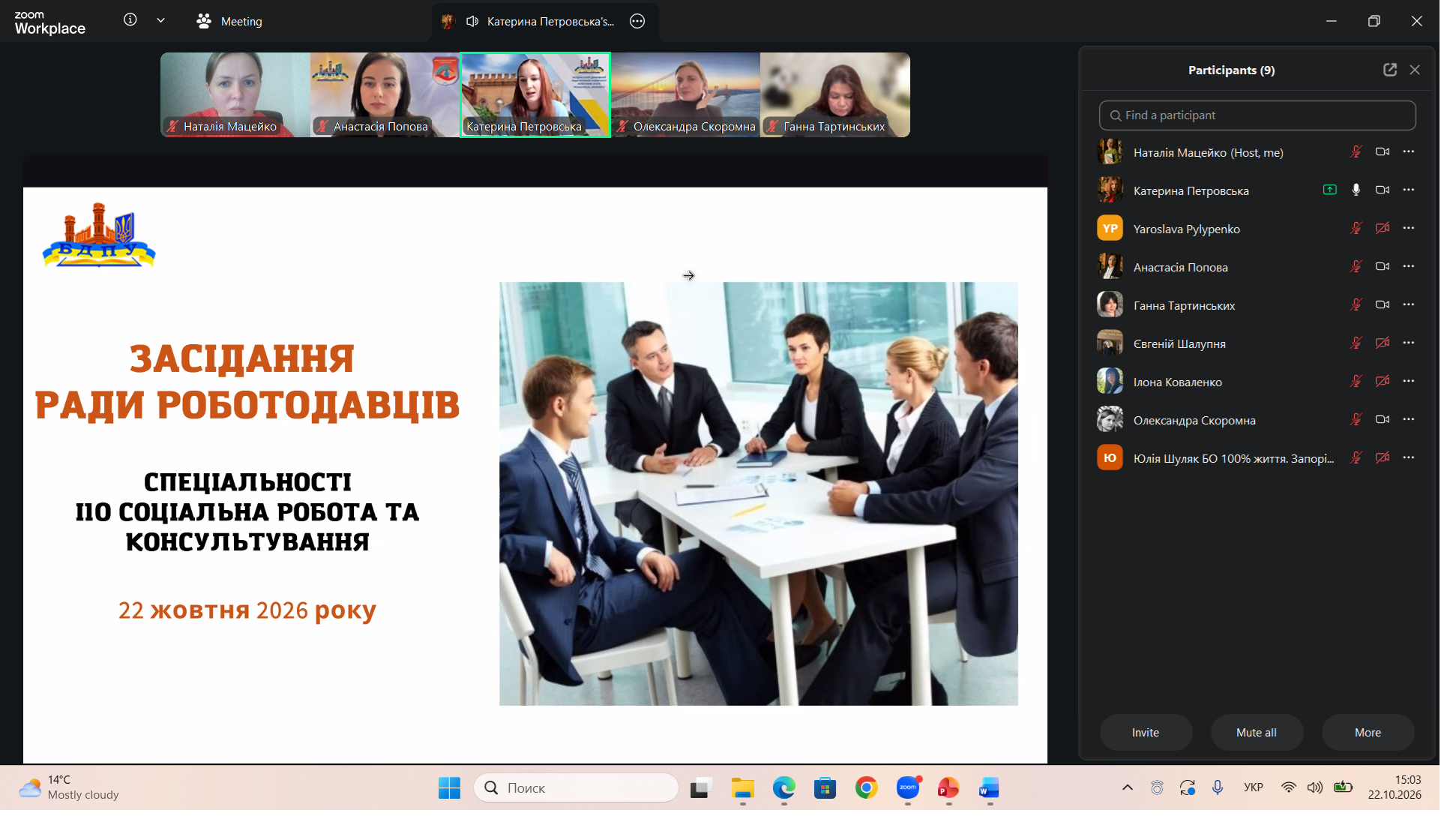
The latest meeting of the Employers’ Council for the specialty “Social Work and Counseling” (code 110), held on October 22, served as a representative forum for discussing a number of important issues regarding:
- updating and approving the composition of the Employers’ Council for the specialty I10 “Social Work and Counseling”;
- approving the long-term work plan for the 2026–2027 academic year;
- analyzing preliminary results of the accreditation review for the educational-professional program “Post-War Socio-Psychological Reintegration” (Level II – Master’s degree);
- presenting the draft pre-graduation internship program for students enrolled in the “Post-War Socio-Psychological Reintegration” educational program (Level II – Master’s degree).
The discussion was joined by the department’s long-standing partners—heads of social institutions from the public and civil society sectors in the Zaporizhzhia, Dnipropetrovsk, and Vinnytsia regions. This year, the regional representation within the Council has expanded: Oleksandra Skoromna—Deputy Director and Head of the Specialized Service for Primary Socio-Psychological Counseling for Victims of Domestic and/or Gender-Based Violence at the Darnytskyi District Family Center in Kyiv—has become a member.
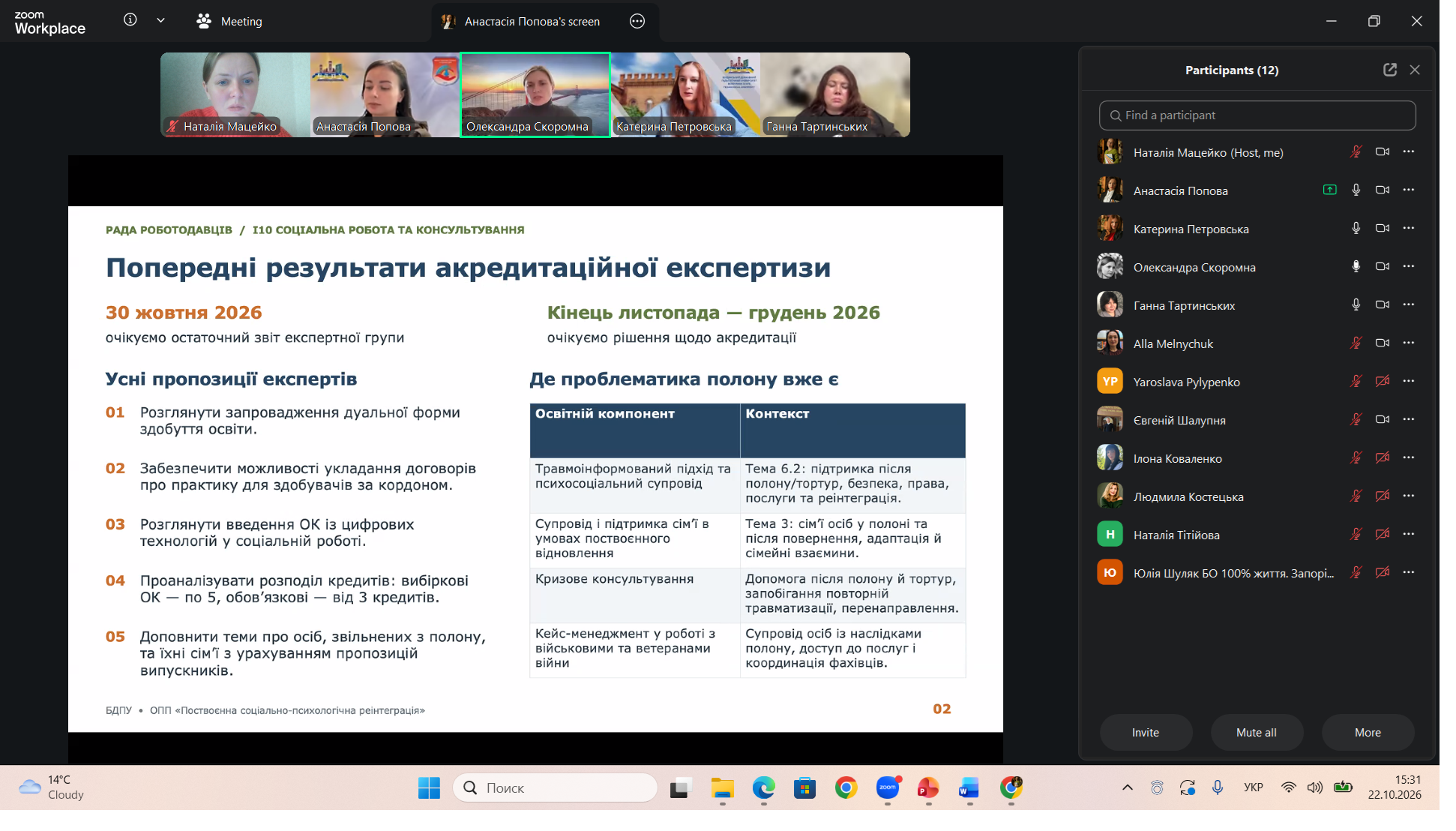
An important stage of the meeting was the collective analysis of the interim results of the accreditation review for the educational-professional program “Post-War Socio-Psychological Reintegration” at the second (Master’s) level of higher education. The department’s academic staff, together with stakeholders, examined five key recommendations from the expert panel that highlight directions for the program’s modernization—specifically regarding the potential for introducing a dual-education model; development of international cooperation in the context of concluding agreements with foreign institutions for the completion of practical training by students residing outside Ukraine; refinement of the allocation of ECTS credits among educational components within the compulsory and elective blocks; expanding the program content through the introduction of a new educational component focused on the use of digital technologies in social work, as well as incorporating topics related to psychosocial support for individuals released from captivity and their family members into existing educational components. The joint discussion made it possible to outline directions for improving the educational-professional program—taking into account the results of an external expert assessment, internal resource potential, and the current demands of professional practice—within the context of the final stage of the accreditation procedure, for which a decision is expected in late November or December 2026.
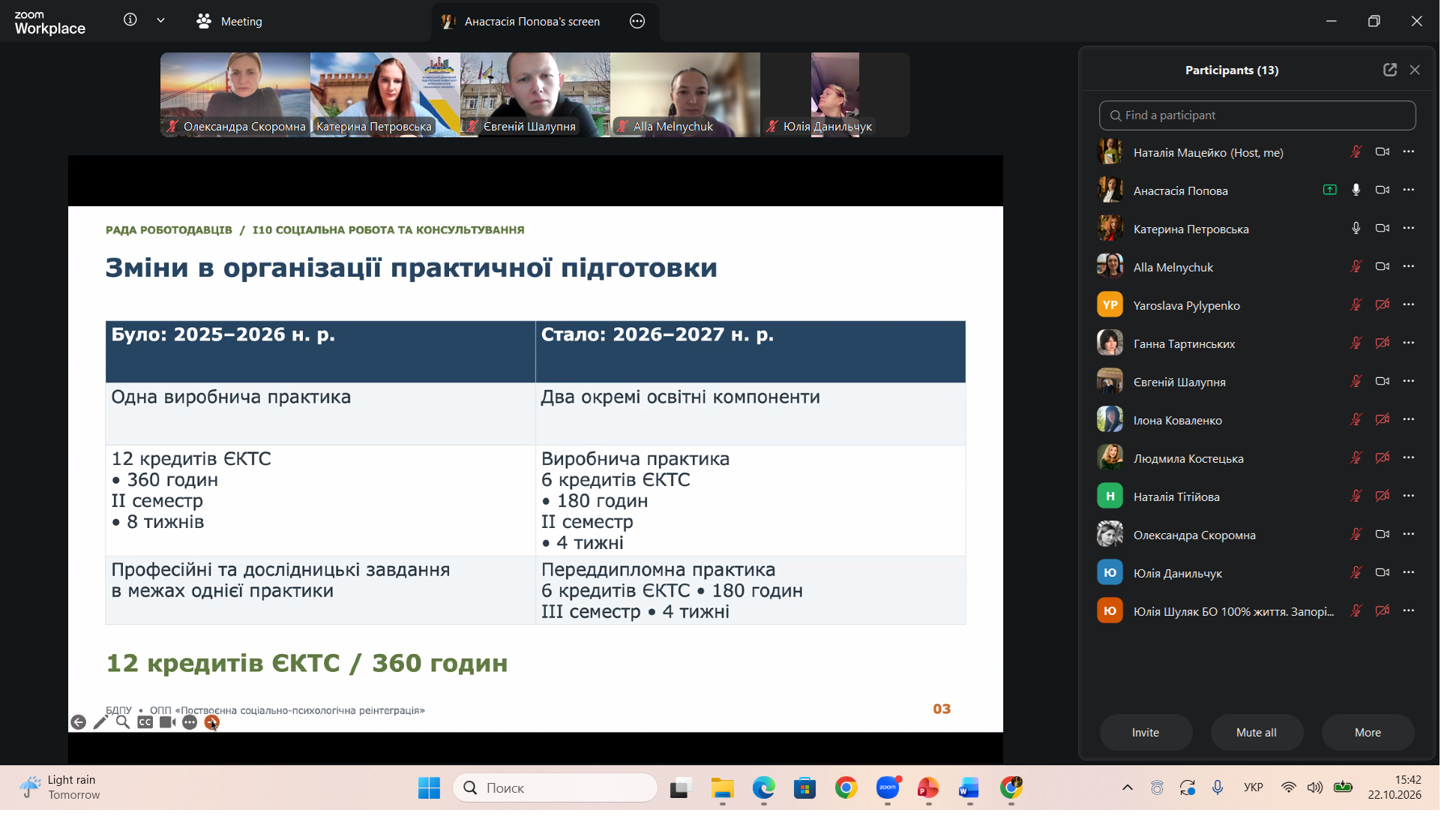
During the meeting, employers were presented with a transformation in the content of practical training for master’s students, involving a shift from a unitary model of professional internship to a differentiated structure. Instead of a single practical block (comprising 12 ECTS credits in the 2025-2026 academic year), two autonomous educational components have been introduced for the current 2026-2027 academic year: a professional internship (Semester 2, 6 credits) and a pre-graduation internship (Semester 3, 6 credits). This approach ensures consistency and continuity in the practical training of learners, implemented through the gradual deepening of their professional and research activities: from familiarization with the operational specifics of social sector institutions, studying the needs of service recipients, engaging in professional duties, collecting and analyzing research materials, and developing and initially testing practical solutions during the professional internship—to the in-depth analysis and critical evaluation of the results of the qualifying research, their expert review, testing, and refinement, as well as the determination of conditions, opportunities, and prospects for their practical application in professional activity during the pre-graduation internship.
Sincere thanks to our stakeholder colleagues for a constructive dialogue and a significant contribution to improving the quality of training for future social sector professionals! We look forward to continued fruitful cooperation!
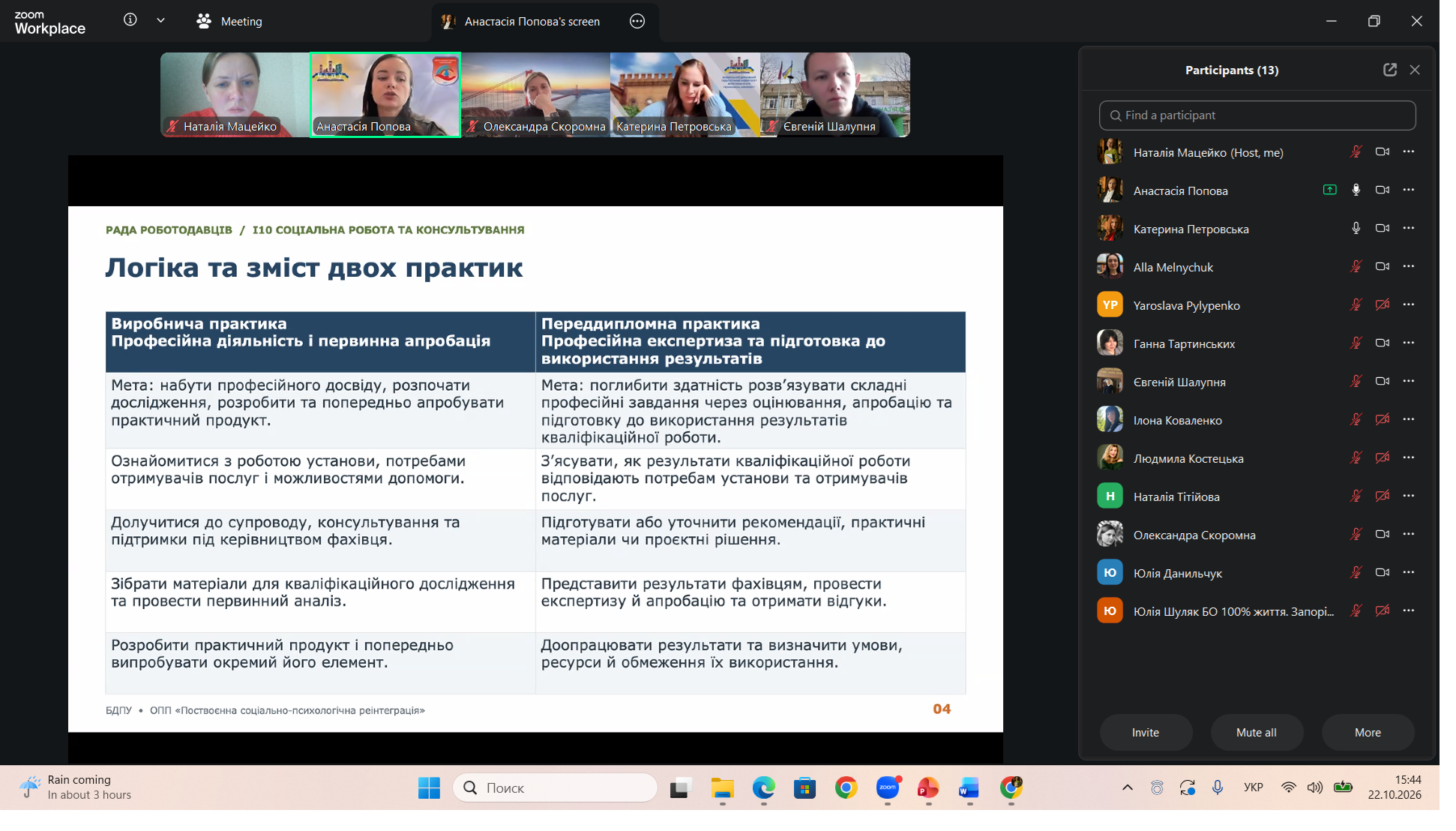
Based on materials from the Department of Social Work and Inclusive Education
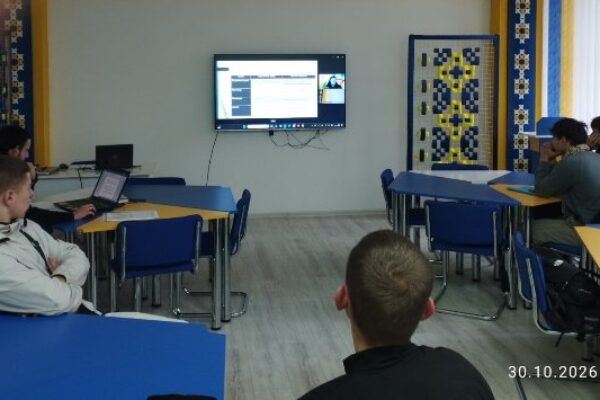
Partnership Development: A Guest Lecture for Students of Specialty A5 Vocational Education at Ternopil Volodymyr Hnatiuk National Pedagogical University
On October 27, Doctor of Pedagogical Sciences, Professor Viktoriia Zhyhir,…
4 November 2026

Building the social ranking together: a meeting at FPPEA
How is the student social ranking compiled, and what criteria…
4 November 2026
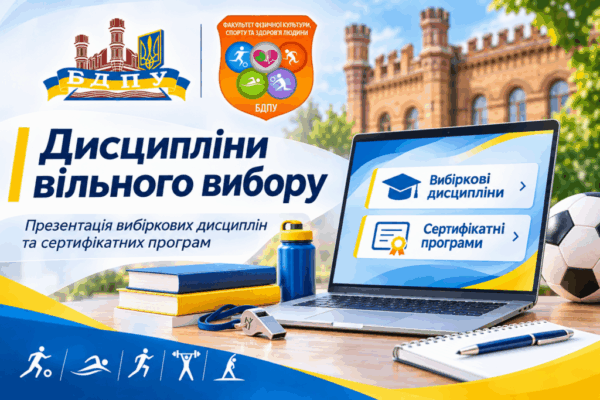
Individual learning pathway: new opportunities for professional development
On November 2, 2026, the Faculty of Physical Culture, Sports…
3 November 2026
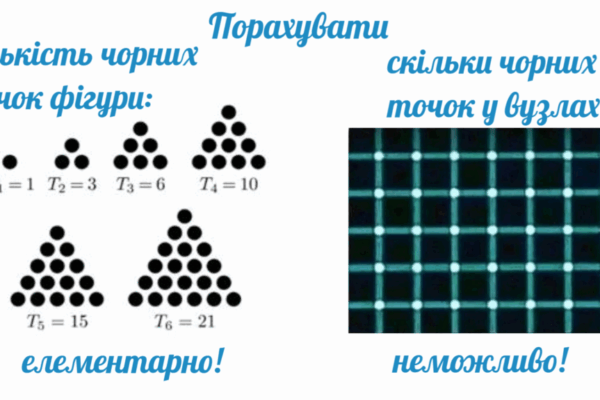
The Geometry of Numbers: How Arithmetic Builds Polygons on a Plane and Polyhedra in Space
A logic puzzle for the senior kindergarten group: Draw five…
2 November 2026